Do heroes get special mortgage rates? We debunk eight hero home loan myths: GNND, DPA, nurse and teacher loans, overtime income, and commission rebates.
HUD Good Neighbor Next Door: 50% Off a Home – the Real Rules
The Good Neighbor Next Door program is a HUD home sales program that lets full-time law enforcement officers, pre-K through 12th grade teachers, firefighters, and emergency medical technicians buy a HUD-owned home for 50% off the list price. It is real, it is federal, and it is far narrower than most articles about it suggest.
The limits are the whole story: only HUD foreclosure listings inside HUD-designated revitalization areas qualify, the discount is secured by a second mortgage instead of handed to you in cash, and you must live in the home for 36 months. Every rule below comes from HUD’s own program page for Good Neighbor Next Door and the program regulation at 24 CFR Part 291, and HUD can change program terms at any time.
Good Neighbor Next Door at a glance
Here is the entire program in one table. Everything after this is the fine print that decides whether it works for you.
| What it is | A HUD sales program on HUD-owned (foreclosed) homes, not a loan product |
|---|---|
| Who qualifies | Full-time law enforcement officers, pre-K through 12th grade teachers at state-accredited schools, firefighters, and EMTs |
| The benefit | 50% off the HUD list price (program term – confirm current) |
| Where | Only HUD listings located in HUD-designated revitalization areas |
| Commitment | Live in the home as your sole residence for 36 months |
| How the discount is held | A silent second mortgage for the discount amount, released after 36 months |
| Financing | FHA financing carries a $100 down payment option; other financing types may be permitted – confirm current with HUD |
| How you buy | A HUD-registered real estate broker submits your bid; multiple offers go to random lottery |
| Biggest limitation | Very few eligible listings at any given time — often zero in a given market (check current listings) |
Good Neighbor Next Door is one narrow slice of the broader landscape of home loans for heroes in Colorado, and for most buyers it will not be the slice that applies. That is not a criticism of the program. When a qualifying listing does appear, a 50% price reduction is a far larger benefit than loan terms alone can produce.
Who qualifies for the Good Neighbor Next Door program
HUD limits eligibility to four occupations, and each one carries a full-time employment test plus a connection between the area your employer serves and the home you are buying.
Law enforcement officers
You must be employed full-time by a law enforcement agency of the federal government, a state, a unit of general local government, or an Indian tribal government, and you must be sworn to uphold and make arrests for violations of law. Your employment must serve the locality where the home is located. Roles that do not carry sworn arrest authority may not meet the test, so confirm your specific position against HUD’s definition before you rely on it.
Teachers
You must be employed full-time as a teacher by a state-accredited public or private school that provides direct services to students in grades pre-kindergarten through 12, and the school must serve students from the area where the home sits. Note that the accreditation attaches to the school, not to a personal certification. Post-secondary instructors fall outside the pre-K through 12 definition; for other school roles, confirm eligibility with HUD rather than assuming. Teachers who do not find an eligible listing still have conventional and agency options worth reviewing, which we cover in our guide to teacher home loans.
Firefighters and emergency medical technicians
You must be employed full-time as a firefighter or emergency medical technician by a fire department or emergency medical services responder unit of the federal government, a state, a unit of general local government, or an Indian tribal government serving the locality where the home is located.
What disqualifies an otherwise eligible buyer
- You or your spouse owning any residential real property during the year before the date you submit your bid.
- Having previously purchased a home under the Good Neighbor Next Door program or its predecessor Officer Next Door and Teacher Next Door programs. This is a one-time-only program, not a restriction that expires.
- Failing to certify in good faith that you intend to occupy the home for the full 36 months.
- Being unable to document full-time employment in a qualifying role at the time of purchase.
Police officers, firefighters, and EMTs in the same position should look at the wider set of first responder home loans before assuming the discount is the only path worth chasing.
How the 50% discount actually works

This is where most explanations go wrong. You do not get a check, and you do not get a 50% smaller mortgage balance on paper the day you close. You get a purchase price cut in half, and HUD keeps a claim on the other half until you have earned it.
The math, illustrated
Take an illustrative HUD list price of $300,000. Your purchase price becomes $150,000, and your first mortgage is sized against that $150,000, not the $300,000. These figures are illustrative only and are not a quote or an available listing.
The silent second mortgage
The discount amount is documented as a second mortgage and note in HUD’s favor, equal to the difference between the list price and the discounted selling price. It carries no interest and requires no payments as long as you satisfy the occupancy requirement. Under the program regulation the balance is reduced by one thirty-sixth on the last day of each month you occupy the home, so it burns off month by month across the three years rather than all at once at the end.
What you actually bring to closing
You still owe a down payment, closing costs, and an earnest money deposit. Deposit amounts vary by listing and list price, so confirm the current requirement on the specific property rather than budgeting from a published figure. The 50% discount reduces the price, not your obligation to qualify for and fund the remaining half.
Where the homes are, and the honest scarcity problem
The program only applies to homes HUD already owns, which means homes that went through foreclosure on an FHA-insured mortgage and reverted to HUD. From that inventory, only the properties sitting inside HUD-designated revitalization areas are offered under this program.
What a revitalization area is
HUD designates revitalization areas using three measures: household income, homeownership rate, and FHA-insured mortgage foreclosure activity. The designation is set by HUD, not by the seller, the agent, or the buyer, and it changes over time.
Why the listing count is the real gate
Two filters stack: the home must already be HUD-owned, and it must be in a designated revitalization area. Nationally that produces a small rotating list. In many metro areas there are no eligible listings at all on a given day, and a market can go long stretches without one. Check HUD’s listing site for current counts rather than relying on any published number, including this one.
What this means in Colorado Springs
HUD-owned inventory in the Colorado Springs area is typically thin, and the count of eligible program listings is frequently zero. Our take: set the program up as a watch item, not a plan. Build a financing strategy that works without it, and treat a qualifying listing as upside if one appears.
How bidding and the lottery work
The purchase process does not look like a normal Colorado Springs transaction, and the differences matter more than the discount when you are competing for a home.
The program window
Qualifying homes are posted on HUD’s listing site and made available for purchase through the program for seven days. If you are not watching during that window, the opportunity is simply gone.
You cannot bid directly
Bids must be submitted by a real estate broker registered with HUD. That is a hard procedural requirement, not a preference. Line the broker up before a listing appears, because the window is too short to go find one after.
When two eligible people want the same house
There is no highest-bidder auction here. The price is fixed at 50% of list, so when more than one person submits an offer on a single home, the selection is made by random lottery. Being first in the queue does not help, and offering more does not help.
Condition and inspections
HUD REO homes are generally sold in as-is condition, so confirm the condition terms on the specific listing. You are allowed to inspect, and you should, but you are buying a foreclosed property in whatever condition it sits, and repair costs generally land on you after closing. Budget for that before you fall in love with the discount.
Financing a Good Neighbor Next Door purchase
The program governs the sale. Your mortgage is a separate transaction with normal underwriting, normal credit review, and normal income documentation.
FHA financing
FHA is the most commonly used path, and the program regulation provides a $100 down payment when you use FHA financing on a program purchase (program term – confirm current). The $100 down option is an FHA product feature layered on top of the HUD sale, so the usual FHA loan requirements in Colorado still apply, including mortgage insurance.
VA financing
Buyers with VA entitlement should confirm current financing options with HUD and their lender before planning around VA financing on a program purchase. VA purchase loans require you to live in the home you are buying, and VA allows no down payment as long as the sales price is not higher than the appraised value. A VA funding fee may apply. Where both sets of rules are in play, the stricter occupancy requirement governs your behavior.
Conventional financing and cash
Conventional financing and cash purchases are commonly discussed for program purchases; confirm what HUD currently permits on the specific listing. On a price already cut in half, some buyers find a conventional loan with a modest down payment produces a lower total monthly cost than FHA once mortgage insurance is compared. That comparison is worth running rather than assuming, and results vary by borrower.
What underwriting still looks at
- Credit history and score, evaluated against the specific loan program’s guidelines.
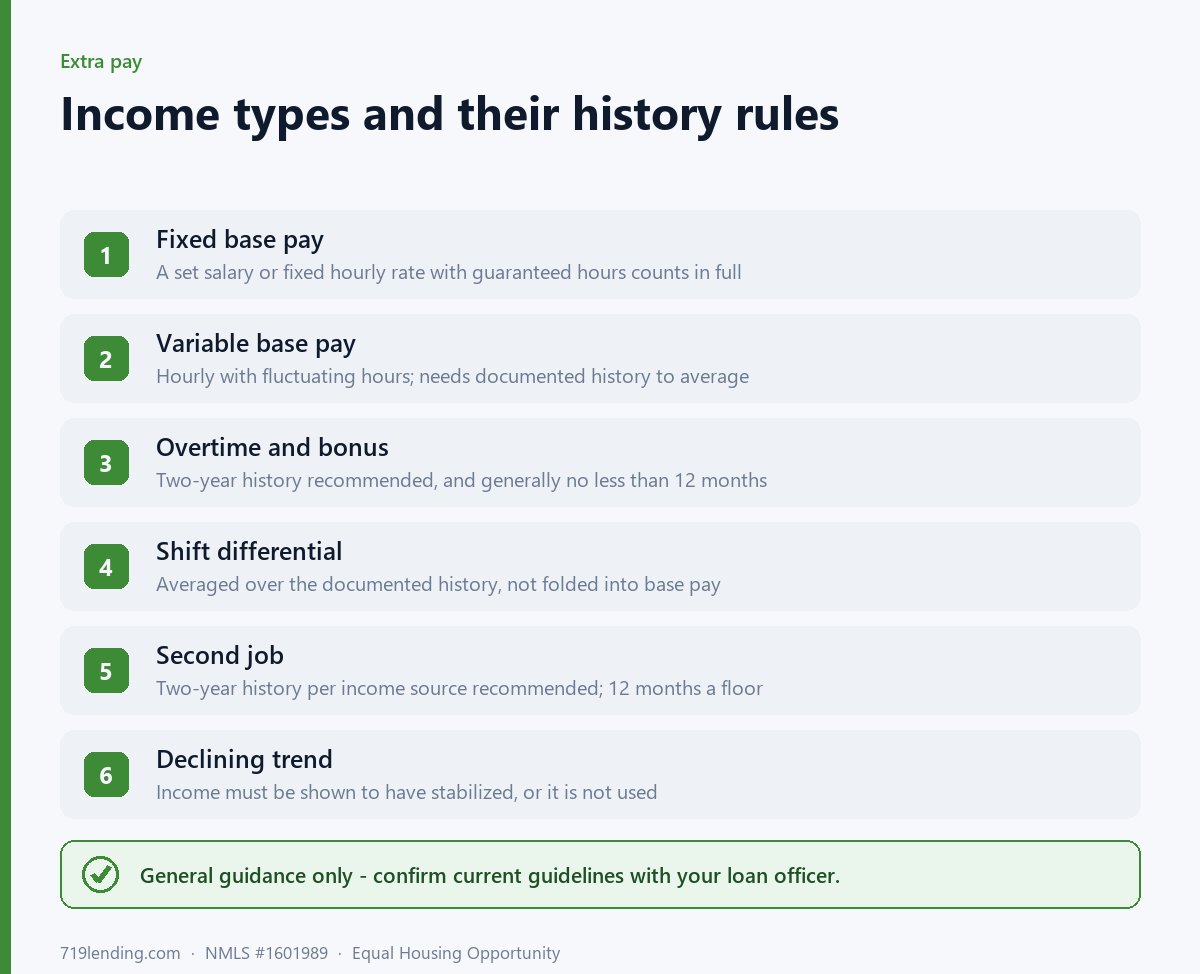
- Documented income. For overtime, bonus and tip income, Fannie Mae recommends a two-year history and allows as little as 12 months with offsetting positive factors, with the income averaged over the period.
- Debt-to-income ratio on the new payment, taxes, and insurance.
- Reserves and funds to close, including the earnest money already posted.
Working with a mortgage broker in Colorado Springs lets you compare wholesale lender pricing on the same file instead of taking one lender’s quote as the market. The Consumer Financial Protection Bureau publishes a plain-English walkthrough of comparing loan offers that is worth reading before you commit to one lender.
The 36-month occupancy commitment and what breaks it

The occupancy requirement is the price of the discount, and it is enforced by a recorded instrument, not an honor system. Treat it as a three-year contract with a real balance attached.
What counts as occupancy
The program regulation requires the home to be your sole residence for the full 36 months, while HUD’s consumer program page describes it as your principal residence. Either way you live there, you do not convert it to a rental, and you do not use it as a second property while living elsewhere. Before you rent out a room or set up any other arrangement, get HUD’s current position in writing rather than assuming it is permitted.
Selling or refinancing before 36 months
Selling before the term ends triggers repayment of the outstanding second, which under the regulation is the original amount reduced by one thirty-sixth for each month you occupied the home. Refinancing the first mortgage generally requires HUD to subordinate its second, which is a request with paperwork and processing time rather than a routine refinance. Confirm the current subordination procedure with HUD before you plan around it.
Documentation during the term
HUD requires annual certification that you still occupy the home, so keep proof for the full period: utility bills, tax records, voter registration, and license address history. Reconstructing three years of evidence after the fact is far harder than filing it as you go.
Is Good Neighbor Next Door worth chasing?
Yes, when a qualifying home exists that you would actually want to live in for three years. No, as the centerpiece of a home buying plan, because you cannot control whether a qualifying home appears.
Where this program sits among hero offers
It helps to keep three very different things separate:
- Government and state housing programs. HUD’s Good Neighbor Next Door, state programs such as CHFA down payment assistance, and the FHA and VA baselines. These are defined by rule, and program terms vary – confirm current terms with the administering agency.
- Commercial rebate networks. Marketing programs that arrange real estate commission rebates and fee credits. They can be real dollars in some transactions, but they are not loan products and they do not set your interest rate.
- Lender products. Portfolio and profession-specific loan programs with occupation-based underwriting. These generally change qualification rather than price, and they vary widely by lender.
Our take
Our take: Good Neighbor Next Door is one of the few hero-branded offers where the benefit is unmistakably large, because half the purchase price is not a marketing number. For the overwhelming majority of teachers, officers, firefighters, and EMTs who will never see an eligible listing, the biggest lever is still loan pricing shopped across multiple wholesale lenders plus any down payment assistance you qualify for. If you want the side-by-side, our breakdown of hero home loan programs compared lays out how the offers compare.
How to get started
If you want a real shot at a qualifying home, do the preparation before a listing appears, because the program window is too short to start from zero.
- Confirm your role meets HUD’s full-time employment definition and that your agency or school serves the area you are shopping.
- Get a full credit and income review done so you know your qualifying range and program fit before you bid.
- Identify a real estate broker registered to submit HUD bids, and confirm they have done it before.
- Set a watch on HUD’s listing site for your county and check it consistently rather than in bursts.
- Build a financing plan that works on an ordinary listing, so a missed lottery is a delay and not a dead end.
Frequently asked questions
Who is eligible for the Good Neighbor Next Door program?
Full-time law enforcement officers, full-time teachers at state-accredited pre-K through 12th grade schools, firefighters, and emergency medical technicians whose employment serves the locality where the home is located. Neither you nor your spouse may have owned residential real property during the year before you bid, and you must intend to occupy the home as your sole residence for 36 months.
Do I really only pay half the list price?
Your purchase price and first mortgage are based on 50% of HUD’s list price. The other half is recorded as a silent second mortgage with no interest and no payments, and it is released after you complete 36 months of occupancy. On an illustrative $300,000 list price, you would buy at $150,000 with a $150,000 second held by HUD. These figures are illustrative only.
What happens if I move out before 36 months?
The silent second becomes collectible. Under the program regulation the balance is reduced by one thirty-sixth for each month you occupied the home, so selling early usually means paying the remaining portion at closing. Confirm the exact calculation with HUD before making any move that shortens the term.
Can I use a VA loan with Good Neighbor Next Door?
Confirm current financing options with HUD and your lender. The program regulation specifically provides a $100 down payment option when FHA financing is used. VA purchase loans separately require you to live in the home and allow no down payment when the sales price does not exceed the appraised value, and a VA funding fee may apply. Where both sets of occupancy rules apply, follow the stricter one.
Why are there so few listings?
Two filters stack. The home must already be HUD-owned through an FHA foreclosure, and it must sit inside a HUD-designated revitalization area, which HUD designates using household income, homeownership rate, and FHA-insured foreclosure activity. In markets with low FHA foreclosure activity the eligible count is frequently zero, and the Colorado Springs area has often had no listings at all (general observation — check HUD’s current listings).
Do I need a real estate agent to submit a bid?
Yes. Bids must be submitted by a real estate broker registered with HUD, and you cannot submit one yourself. Because homes are available through the program for only seven days, identify that broker before you start watching listings.
Does the forgiven second mortgage create a tax issue?
Release of a recorded debt can have tax implications that depend entirely on your situation, and we do not give tax advice. Consult a tax professional before you close and again in the year the second is released.
719 Lending Inc., NMLS #1601989 · Equal Housing Opportunity
719 Lending Inc. is not affiliated with or endorsed by HUD, FHA, VA, CHFA, or any government agency.
Last updated: July 2026

Related Posts