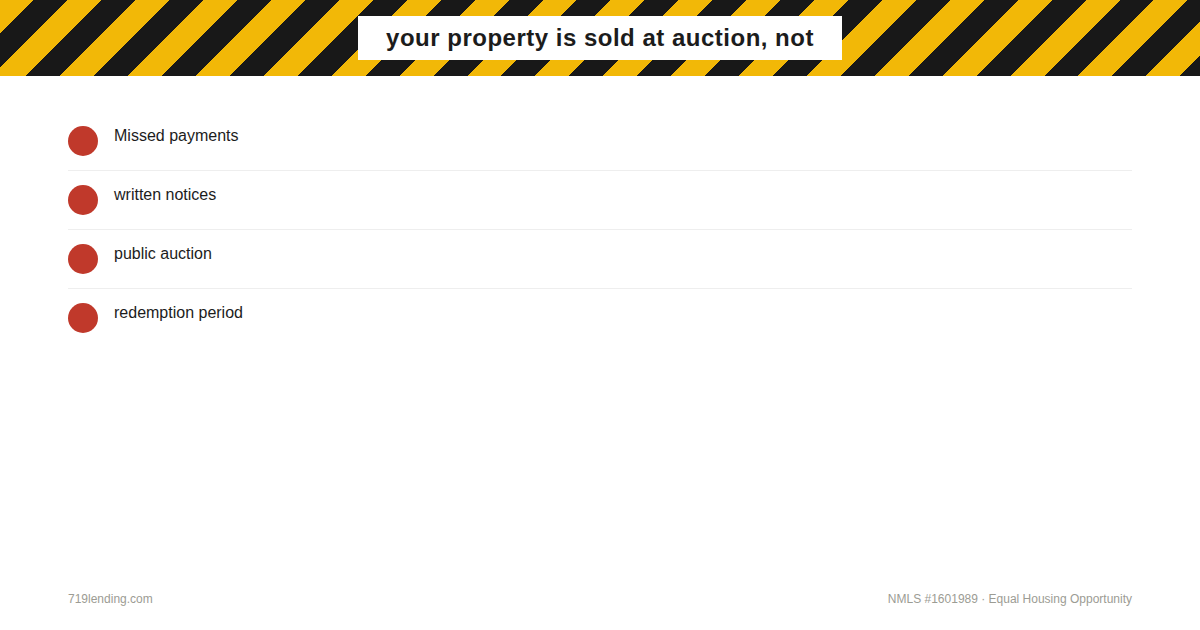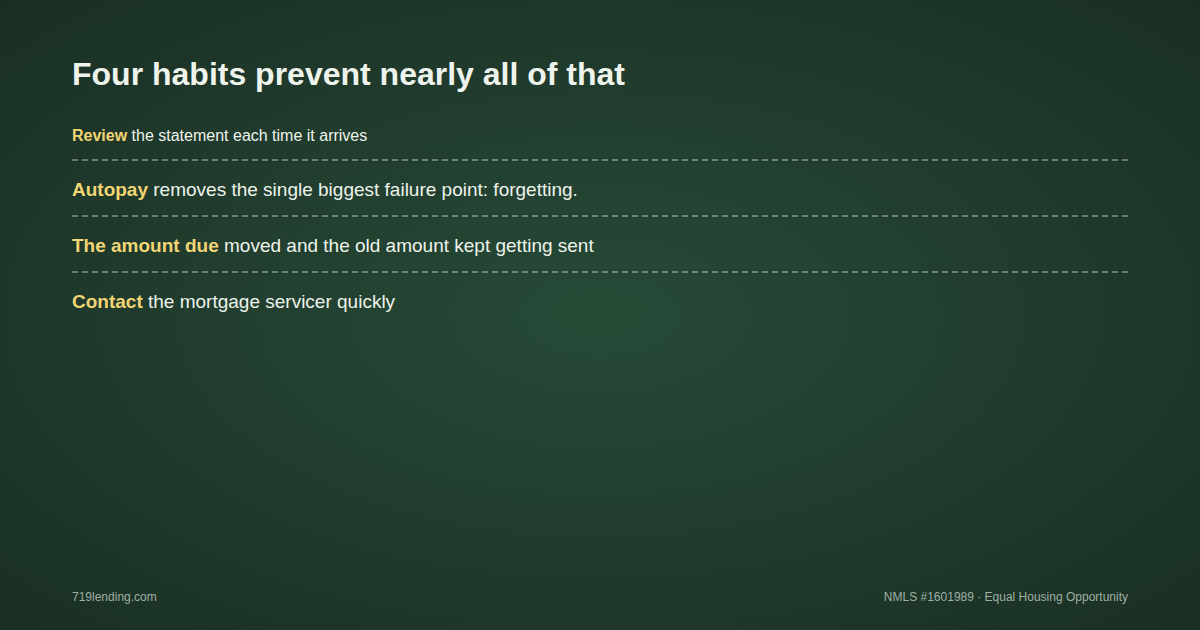
In a nonjudicial foreclosure, the lender follows a series of required written notices under the power of sale clause in your deed of trust, then sells the property at a public auction to the highest bidder — all without filing a lawsuit. Here is the step-by-step sequence, what you control, and where Colorado and military borrowers can get help.
FHA Loan Colorado: Requirements, Limits & How to Qualify
The short answer: An FHA loan in Colorado lets you buy a home with as little as 3.5% down and a minimum credit score of 580. The Federal Housing Administration insures the loan, which makes lenders more flexible on credit and debt-to-income ratio. In exchange, you pay an upfront mortgage insurance premium of 1.75% plus an annual MIP — a tradeoff many Colorado Springs first-time buyers gladly accept.
Last updated: June 29, 2026 — figures (FHA 3.5% down, 580 minimum score, 1.75% upfront MIP, the 2026 $832,750 conforming loan limit, and VA funding-fee ranges) are general and current as of this date; confirm current numbers for your scenario.
If you searched for an FHA loan in Colorado, here’s the short version: it’s a government-insured mortgage built for buyers with modest savings or imperfect credit, and it’s one of the most common ways first-time buyers in Colorado Springs and along the Front Range get into a home. This guide covers requirements, costs, mortgage insurance, and how FHA compares to VA, conventional, and USDA financing.

FHA loan Colorado: the key numbers at a glance
Before the deep dive, here are the figures that matter most for Colorado borrowers.
| Item | FHA detail |
|---|---|
| Minimum down payment | 3.5% |
| Minimum credit score | 580 (for 3.5% down) |
| Upfront mortgage insurance (MIP) | 1.75% of the loan amount |
| Annual MIP | Paid monthly; lasts the life of the loan with under 10% down |
| MIP with 10%+ down | Ends after 11 years |
With the basics on the table, let’s look at what the program actually is.
What is an FHA loan?
An FHA loan is a mortgage insured by the Federal Housing Administration, an agency within the U.S. Department of Housing and Urban Development (HUD). The government doesn’t lend you the money — a lender does — but the FHA insurance protects the lender if you default.
That insurance is why FHA underwriting is more forgiving than conventional underwriting. Lenders can approve lower credit scores, higher debt-to-income ratios, and smaller down payments because the Federal Housing Administration shares the risk.
That flexibility is exactly why FHA loans are popular with Colorado first-time buyers — which brings us to the requirements.
FHA loan requirements in Colorado
Credit score and down payment
FHA loans allow 3.5% down with a minimum credit score of 580. That low entry bar is the program’s signature feature.
Keep in mind that pricing still improves with credit: scores of 740 or above typically earn the best pricing tiers on any loan program, FHA included.
Debt-to-income ratio
Your debt-to-income ratio compares your monthly debt payments to your gross income. FHA guidelines tend to allow more debt relative to income than conventional guidelines, which helps in higher-cost Colorado markets.
Property and occupancy rules
FHA loans are for primary residences, and the home must pass an FHA appraisal that checks both value and basic safety and habitability standards. Single-family homes, FHA-approved condos, and 2-4 unit properties (if you live in one unit) can all qualify.
Requirements are only half the picture — the other half is what FHA mortgage insurance costs you.
How much does FHA mortgage insurance cost?
Every FHA loan carries a mortgage insurance premium, or MIP, instead of the private mortgage insurance (PMI) you’d see on a conventional loan.
Upfront MIP
FHA charges an upfront MIP of 1.75% of the loan amount. Most borrowers roll this into the loan rather than paying it in cash at closing.
Annual MIP
On top of the upfront premium, FHA charges an annual MIP that’s paid monthly as part of your mortgage payment.
How long FHA MIP lasts
Here’s the part buyers most often miss: with less than 10% down, FHA MIP lasts for the life of the loan. With 10% or more down, it ends after 11 years.
Compare that to conventional PMI, which under the federal Homeowners Protection Act auto-terminates at 78% loan-to-value based on the original value, and can be requested for removal at 80% loan-to-value. Many Colorado FHA borrowers eventually refinance into a conventional loan to drop MIP once they’ve built equity.
So how does FHA stack up against the other major programs available to Colorado buyers?
FHA vs. VA, conventional, and USDA loans in Colorado
FHA vs. VA loans
Colorado Springs is a heavily military market — Fort Carson, Peterson Space Force Base, Schriever, and the Air Force Academy all anchor the local economy. If you’re eligible for a VA loan, it usually wins: VA loans require no down payment for eligible borrowers with full entitlement, and VA loans never carry monthly mortgage insurance.
VA loans do charge a one-time funding fee, ranging from 0.5% on an Interest Rate Reduction Refinance Loan (IRRRL) to 3.3% for subsequent use with under 5% down. For most eligible veterans and active-duty service members, FHA is the backup plan, not the first choice.

FHA vs. conventional loans
Conventional programs allow down payments as low as 3% to 5%, so the down payment gap is smaller than many buyers assume. The real differences are credit and mortgage insurance.
Conventional loans with less than 20% down typically require private mortgage insurance, since Fannie Mae and Freddie Mac require PMI on sub-20%-down loans they purchase on the secondary mortgage market. PMI typically costs about 0.5% to 1.5% of the original loan amount per year — on a $400,000 loan, roughly $2,000 to $6,000 per year, or about $167 to $500 per month — but it’s cancelable, and strong-credit borrowers often pay near the bottom of that range.
Rule of thumb: strong credit favors conventional; thinner credit or higher debt-to-income favors FHA.
FHA vs. USDA loans
USDA loans offer 100% financing for eligible rural buyers — think eastern El Paso County, Peyton, Calhan, and similar areas. USDA loans charge an upfront guarantee fee plus an annual fee rather than PMI, and they carry income and location limits FHA doesn’t.
You can compare all of these side by side on our loan options page. Next: how loan limits work in Colorado.
FHA loan limits and Colorado home prices
FHA loan limits are set county by county and track the FHFA conforming loan limits used for conventional loans. For reference, the 2026 conforming loan limit for El Paso County and most of Colorado is $832,750.
FHA limits in a given county can differ from the conforming limit, so check your county’s current FHA ceiling before you shop. If your price point exceeds the limits in your county, a conventional or jumbo loan may be the better path.
Loan limits set the ceiling — down payment assistance can lower the entry cost.
Can you use down payment assistance with an FHA loan?
Yes. The Colorado Housing and Finance Authority (CHFA) offers down payment assistance programs that pair with FHA loans, subject to income limits and homebuyer education requirements.
Even FHA’s 3.5% down payment is a real number at Colorado prices, so CHFA assistance can be the difference between buying this year and waiting. FHA also allows gift funds from family for the down payment and closing costs.
Don’t forget the full cost of ownership in your budget: property taxes, homeowners insurance, and closing costs all stack on top of the down payment. Our team can run CHFA eligibility alongside your FHA scenario in the same conversation.
If FHA sounds like your fit, here’s how the process actually unfolds.
How to get an FHA loan in Colorado Springs
Step 1: Get prequalified
A lender pulls your credit report, reviews income and assets, and tells you what you qualify for. This is where you’ll lock in whether FHA, conventional, VA, or USDA pencils out better for you.
Step 2: Shop with a realistic budget
Build your budget around the full monthly payment — principal, interest, MIP, property taxes, and homeowners insurance — not just the sticker price.
Step 3: Go under contract and close
After your offer is accepted, the lender orders the FHA appraisal, finalizes underwriting, and you lock your rate. From there you review closing costs, sign, and get the keys.
One more thing worth knowing: FHA flexibility extends to refinancing too.
FHA streamline refinance: the exit ramp
If you already have an FHA loan, the FHA streamline refinance lets you lower your rate with reduced documentation and, in many cases, no new appraisal. Refinance closing costs commonly run about 2% to 5% of the loan amount, so weigh the monthly savings against the cost.
And once you’ve built enough equity, refinancing into a conventional loan can eliminate MIP entirely.
Next step
If you’re weighing an FHA loan in Colorado, the fastest way to get a real answer is a quick scenario review — credit, income, down payment, and county limits all checked in one pass. Contact 719 Lending at (844) 719-5363, or see what other Colorado borrowers say in our reviews. 719 Lending Inc., NMLS #1601989, is a Colorado Springs mortgage broker — not a government agency — and we’ll tell you straight if FHA isn’t your best option.
Frequently asked questions
What credit score do I need for an FHA loan in Colorado?
FHA loans allow 3.5% down with a minimum credit score of 580. Higher scores still help your pricing — 740 or above typically earns the best pricing tiers on any program.
How much is the down payment on an FHA loan?
The minimum FHA down payment is 3.5% of the purchase price. Gift funds from family and CHFA down payment assistance programs can both be used to cover it.
Does an FHA loan have PMI?
FHA loans carry a mortgage insurance premium (MIP) instead of PMI: an upfront MIP of 1.75% of the loan amount plus an annual MIP paid monthly. With less than 10% down, FHA MIP lasts for the life of the loan; with 10% or more down it ends after 11 years.
Is FHA or conventional better in Colorado?
Conventional usually wins with strong credit because PMI is cancelable — it auto-terminates at 78% loan-to-value and can be removed at 80%. FHA usually wins with lower credit scores or higher debt-to-income ratios. PMI on a $300,000 conventional loan runs roughly $1,500 to $4,500 per year (about $125 to $375 per month) at the typical 0.5% to 1.5% annual rate.
Should military buyers in Colorado Springs use FHA or VA?
If you have VA eligibility, the VA loan usually wins: no down payment with full entitlement and no monthly mortgage insurance, versus FHA’s 3.5% down and lifetime MIP at lower down payments. FHA is typically the fallback for buyers without VA eligibility.
Can I refinance out of FHA mortgage insurance?
Yes. Once you’ve built enough equity, refinancing into a conventional loan can eliminate MIP. Refinance closing costs commonly run about 2% to 5% of the loan amount, so compare that cost against your monthly MIP savings.
719 Lending Inc. is a private mortgage broker and is not affiliated with the U.S. Department of Veterans Affairs, FHA, HUD, or any government agency.
719 Lending Inc., NMLS #1601989 · Equal Housing Opportunity · This article is educational only, is not a commitment to lend, and not all applicants will qualify. Rates referenced are national survey averages, not offered rates.

Related Posts