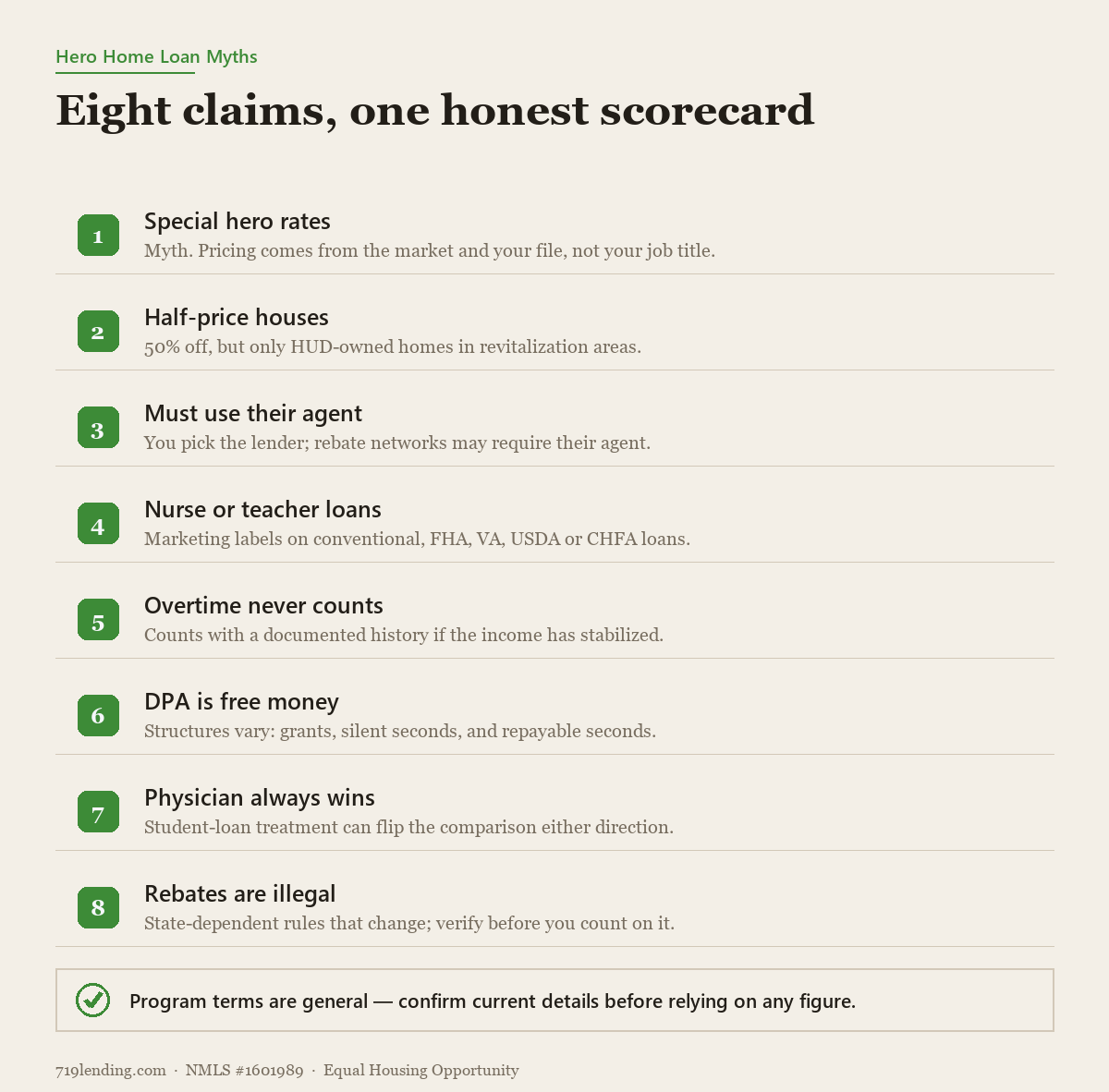
Do heroes get special mortgage rates? We debunk eight hero home loan myths: GNND, DPA, nurse and teacher loans, overtime income, and commission rebates.
Down Payment Help for Heroes in Colorado: CHFA, Stacking & the Fine Print
Yes — down payment assistance is available to Colorado heroes, and most of it comes from programs that are open to every profession. The Colorado Housing and Finance Authority (CHFA) runs the statewide backbone, city and county funds sit underneath it, and one federal program offers a discount tied directly to your job.
What does not exist is a single hero down payment program that automatically hands teachers, nurses, or first responders money. Sorting which bucket a program belongs to is the difference between stacking real assistance and chasing branding.
Down Payment Assistance for Colorado Heroes at a Glance
Three different things get marketed under the same “hero” umbrella. Keeping them separate is most of the work.
| Category | Examples | Hero-specific? |
|---|---|---|
| Government assistance | CHFA assistance, city and county funds, FHA and VA baselines | No — FHA is open to any qualified buyer; VA is service-based |
| Government hero program | HUD Good Neighbor Next Door | Yes — eligibility is tied to your job title |
| Commercial rebate networks | Agent-commission rebates and lender fee credits | Marketing arrangements, not loan products |
The short version, before the detail:
- CHFA assistance is capped by household income and purchase price by county — not by profession.
- Assistance arrives as a grant, a forgivable second, or a repayable second, and the structure matters more than the headline dollar amount.
- Good Neighbor Next Door is the one widely available federal discount reserved for teachers, law enforcement officers, firefighters, and EMTs.
- Rebate networks pay a credit at closing; they do not change your approval, your ratios, or your rate.
- For most buyers, shopping the first-mortgage pricing across wholesale lenders moves more money than the branded program does.
CHFA Down Payment Assistance: The Statewide Backbone
CHFA is a state-chartered finance authority, not a retail bank you walk into. Its loans are originated by approved lenders and brokers, and the assistance rides on top of a CHFA first mortgage.
How CHFA structures its assistance
CHFA has historically offered assistance either as a grant or as a second mortgage sized as a percentage of the first mortgage loan amount, subject to a dollar cap. The percentages and the caps are set by CHFA, differ by program, and change — treat every figure you see quoted anywhere as general and confirm current directly with CHFA.
The grant version requires no repayment. The second-mortgage version is typically a silent second: no monthly payment, but the balance comes due when you sell, refinance, or pay off the first mortgage.
Both versions are paid for somewhere. In practice, the first-mortgage rate on an assistance-paired loan often prices higher than the same borrower’s rate without assistance (general — confirm current).
Income and purchase price limits
CHFA eligibility runs on household income caps and maximum purchase prices, both set by county. Those caps change by county and by program, so treat any figure you read as general — confirm current CHFA income limits before you shop.
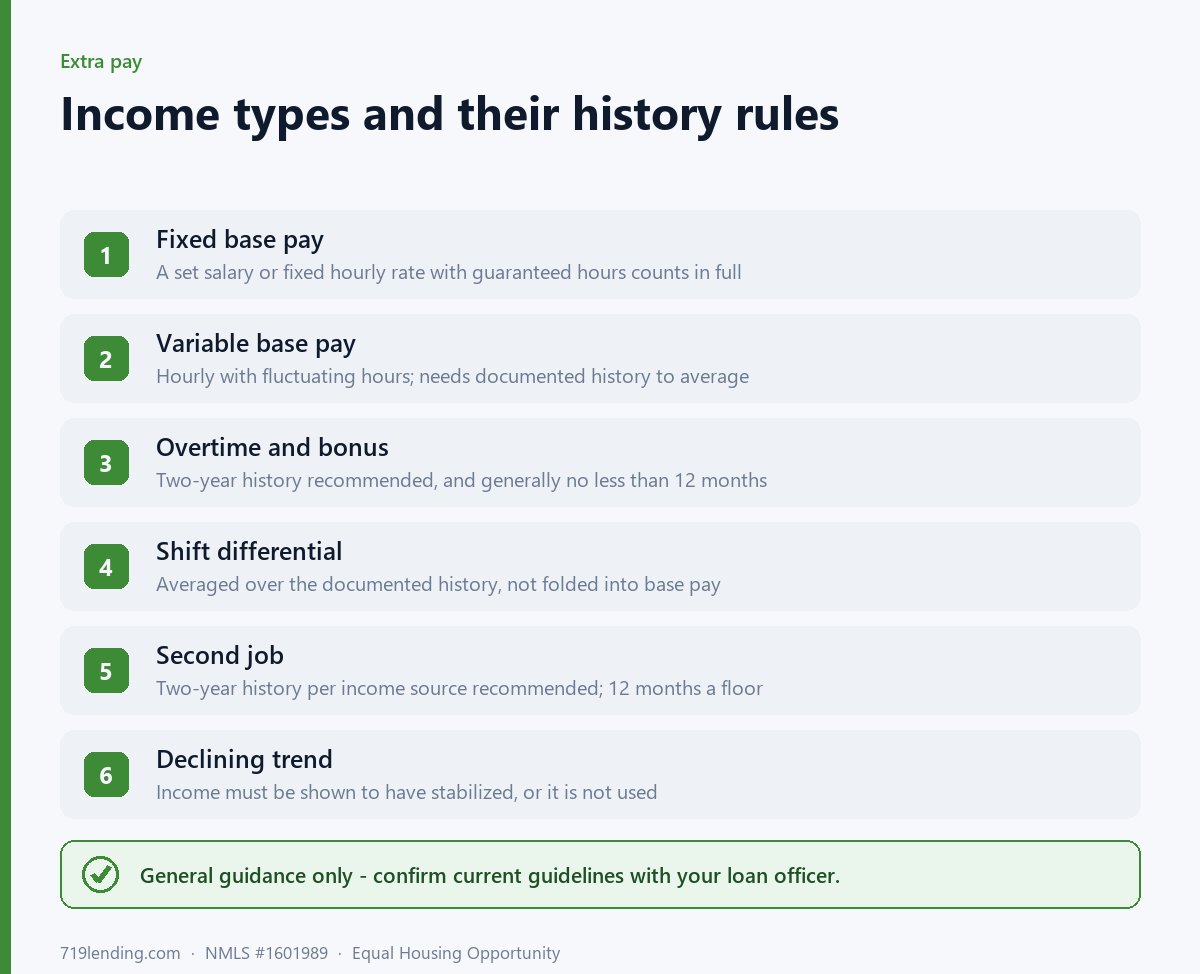
A two-income hero household with steady overtime can land over the cap. If overtime and shift differential are what push you over, how that income is counted deserves a real conversation before you assume you are ineligible.
Targeted CHFA programs
CHFA has periodically offered targeted products aimed at particular buyer groups. Program names, availability, and terms change from year to year, so confirm current offerings directly with CHFA rather than relying on any article, including this one.
These targeted products are the closest thing Colorado has to a state-level hero program, and they still run on the same income and price caps as everything else.
What CHFA does not do
CHFA does not underwrite you — the lender does. It does not promise an outcome, and it does not price your first mortgage against the broader wholesale market. That comparison is your broker’s job.
Repayable Versus Forgivable Down Payment Assistance

The single most useful question about any assistance offer is this: do I ever pay this back, and when? The answer changes both your monthly payment and your approval.
Repayable seconds
A repayable second is a real loan with a rate and a term. It reports on your credit, and its payment counts in your debt-to-income ratio, which reduces how much house the same income supports.
That trade can still be worth it if the alternative is waiting two years to save cash while prices move.
Forgivable seconds and grants
A forgivable second carries no monthly payment and burns off over an occupancy period set by the program (periods and structures vary by program — general, confirm current). A true grant is never repaid.
Forgivable money usually carries a clawback: sell or refinance early and some or all of it comes due. If a balance is ever forgiven, ask how the program reports it and consult a tax professional about how it affects you.
Silent seconds sit in between
A silent second has no monthly payment, but the full balance is due at sale or refinance. Assistance amounts are set by each individual program — commonly as a flat dollar grant, or as a percentage of the loan amount with a dollar cap — and those amounts change, so treat anything you are quoted as general and confirm current before you plan around it.
Local Assistance in Colorado Springs and Along the Front Range
Underneath the state programs sit city, county, and nonprofit funds. They are smaller, they run out of money, and they come back — availability is general; confirm current before you plan a purchase around one.
Colorado Springs and El Paso County
Local homebuyer assistance in the Pikes Peak region has moved between administering agencies and funding cycles over the years, and the active program names change with them. Ask what is funded this month, not what was funded last year.
The practical shortlist for El Paso County buyers is short enough to check in one afternoon, and it changes: start with what is open today for down payment assistance in Colorado Springs, then work backward to the loan type.
Denver metro and statewide options
The Denver metro area has its own down payment assistance program, commonly known as metroDPA, available to buyers in participating jurisdictions (availability, boundaries, and terms are general — confirm current).
A current map of Colorado down payment assistance programs is the fastest way to see what your county offers this quarter.
Some hospital systems, school districts, and municipal employers also run relocation or homebuyer benefits. These almost never appear in mortgage advertising, so ask HR directly.
How Hero Programs Actually Stack

Stacking works, but only in a specific order — and some combinations quietly cancel each other out.
The order that works
- Choose the first mortgage — FHA, VA, or conventional — because it dictates which assistance can pair with it.
- Attach the state or local assistance that is approved for that first mortgage.
- Handle Good Neighbor Next Door separately, because it is a purchase discount rather than financing.
- Treat any commission rebate as a closing-table credit, applied last.
- Re-price the entire package across wholesale lenders before you lock anything.
Where stacking collides
Two assistance sources on one transaction often conflict. Many programs restrict or prohibit an additional subordinate lien, and interested-party contributions such as seller credits are capped — on conventional loans by occupancy and by loan-to-value, and by separate rules on FHA and VA loans.
VA loans complicate the math further. A VA-backed purchase loan requires no down payment for eligible borrowers as long as the sales price is not higher than the home’s appraised value, so assistance is frequently better aimed at closing costs — including the VA funding fee, where it applies — than at a down payment you were never going to make.
Our take: the stack that saves the most money is usually a well-priced first mortgage plus one clean assistance layer — not four programs fighting over the same closing statement.
Good Neighbor Next Door: The One Hero Discount That Is Real Money
HUD’s Good Neighbor Next Door program offers eligible teachers, law enforcement officers, firefighters, and emergency medical technicians a 50% discount off the list price of certain HUD-owned homes in designated revitalization areas.
HUD defines eligible teachers as pre-Kindergarten through 12th grade, and the discount above is the program term HUD publishes rather than a figure we set — confirm current before you rely on it.
The catch is inventory. Eligible listings are limited, geographically specific, and often need work. Buyers also commit to living in the property as their principal residence for 36 months, secured by a second mortgage and note for the discount amount — a silent second requiring no interest or payments provided the occupancy requirement is met (program terms per HUD; confirm current).
HUD publishes the eligibility rules and the current list of participating homes, and the list turns over constantly.
Our take: if a qualifying property appears somewhere you would genuinely live, no rebate network or branded hero loan comes close to a 50% price reduction. If nothing is listed near you, the program is simply unavailable — that is the honest version.
What a Silent Second Does to Your Underwriting
Assistance is not free of underwriting consequences, and this is where files get delayed.
Approval and ratios
A repayable second adds a monthly obligation to your debt-to-income ratio. A silent second with no payment generally does not, but it still must be documented, subordinated, and accepted by the first-mortgage investor.
On conventional loans, Fannie Mae’s subordinate financing rules require the junior lien to be evidenced by a promissory note, reflected in a recorded security instrument, and clearly subordinate to the first mortgage.
Rate and total cost
Assistance-paired first mortgages usually price higher than standard loans. Over a long hold, a higher rate can outrun a modest one-time credit, so run both scenarios instead of assuming assistance wins.
The CFPB’s homebuying guide is a neutral place to see how loan offers compare side by side.
Timeline
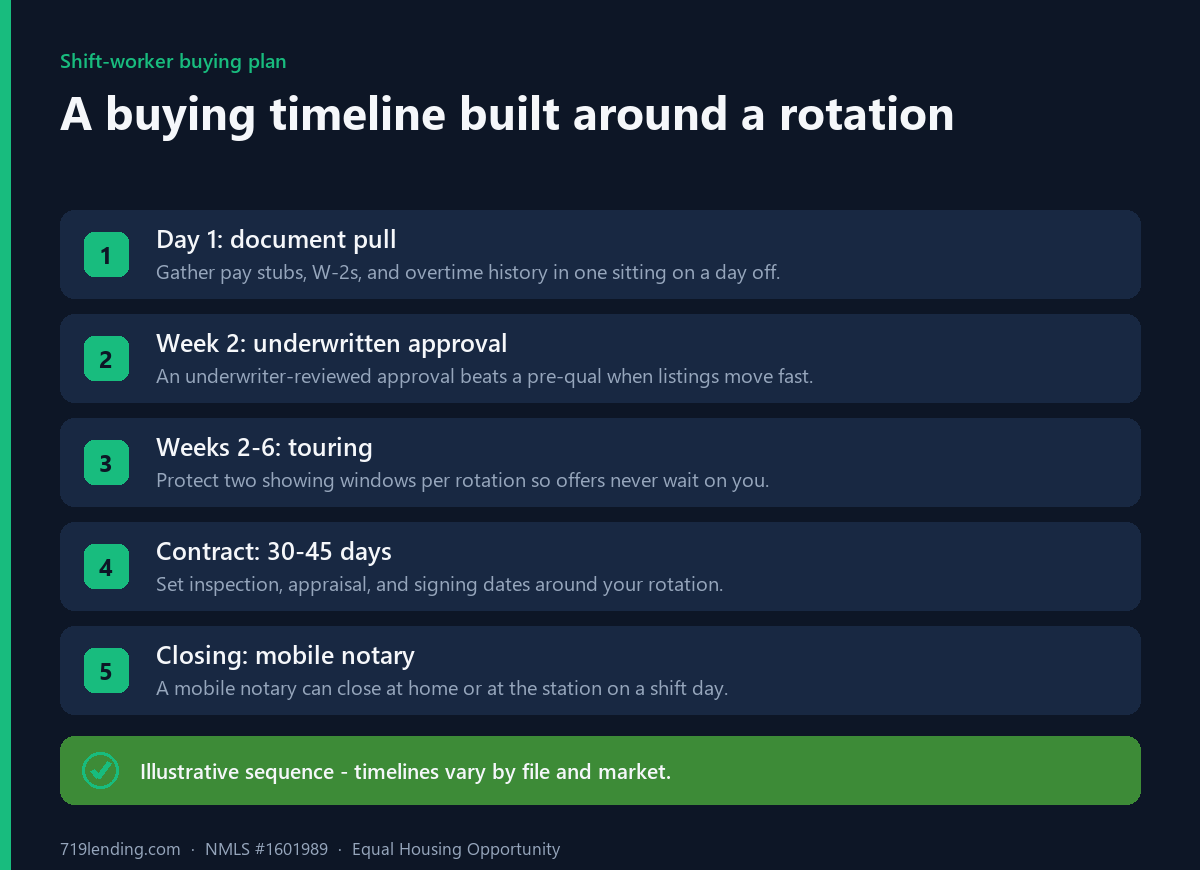
Programs add steps: reservation windows, homebuyer education certificates, and separate program approvals. Build an extra week or two into your contract timeline so the assistance does not become the reason you miss closing.
Our Take: Where the Savings Actually Come From
Our take: for most heroes buying in Colorado, the biggest lever is not the branded program — it is the pricing on the first mortgage, shopped across multiple wholesale lenders, plus one assistance layer that genuinely fits the file.
Good Neighbor Next Door is real money when the inventory exists. CHFA assistance is real help when you are short on cash and plan to stay put. Rebate networks are a credit at closing, worth exactly what the check says — no more, no less.
As a broker, we compare the same file across lenders rather than defending one product. If you are early in the process, start with the overview of home loans for heroes in Colorado and then bring your actual numbers.
Frequently asked questions
Is there down payment assistance only for heroes in Colorado?
Not really. CHFA and most local assistance are open to all professions, subject to income and purchase price limits. The main occupation-based exception is HUD’s Good Neighbor Next Door discount, which is restricted to teachers, law enforcement officers, firefighters, and EMTs.
Do I have to pay back CHFA down payment assistance?
It depends on the structure you choose. Grant-style assistance is not repaid; second-mortgage assistance is typically a silent second repaid when you sell, refinance, or pay off the first mortgage. Ask which structure you are being quoted before you sign anything.
Can I use assistance with a VA loan?
Often yes. A VA-backed purchase loan requires no down payment for eligible borrowers as long as the sales price is not higher than the appraised value, so assistance is usually aimed at closing costs instead. Program pairing rules vary by lender and change periodically — general, confirm current.
Does down payment assistance raise my interest rate?
Usually the first-mortgage rate on an assistance-paired loan prices higher than the same borrower’s rate without assistance. Whether that trade is worth it depends on how long you plan to stay. Compare both scenarios in dollars, not percentages.
Do commission rebate programs count as down payment funds?
No. Agent-commission rebates and fee credits are applied at the closing table under lender and state rules, and they are not qualifying income or a substitute for verified assets. Disclose any rebate to your loan officer early so it is handled correctly.
Will a silent second hurt my loan approval?
A silent second with no monthly payment generally does not affect your debt-to-income ratio, but it must be documented, subordinated, and approved by the first-mortgage investor. A repayable second does add a payment to your ratios.
What if overtime pushes my household over the income limit?
Variable income such as overtime and shift differential is evaluated on your documented history of receipt and whether it is expected to continue, and the program’s own income calculation can differ from the lender’s qualifying income. Run the numbers with a broker before you assume you are over the cap.
719 Lending Inc., NMLS #1601989 · Equal Housing Opportunity
719 Lending Inc. is not affiliated with or endorsed by HUD, FHA, VA, CHFA, Fannie Mae, or any government agency.
Last updated: July 2026

Related Posts