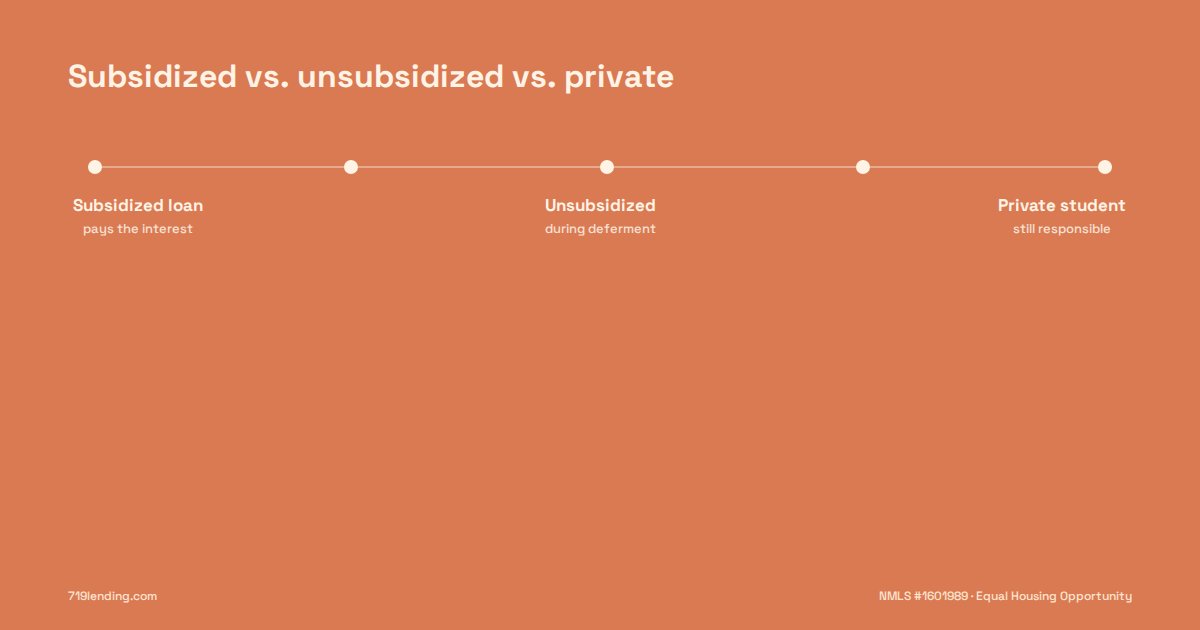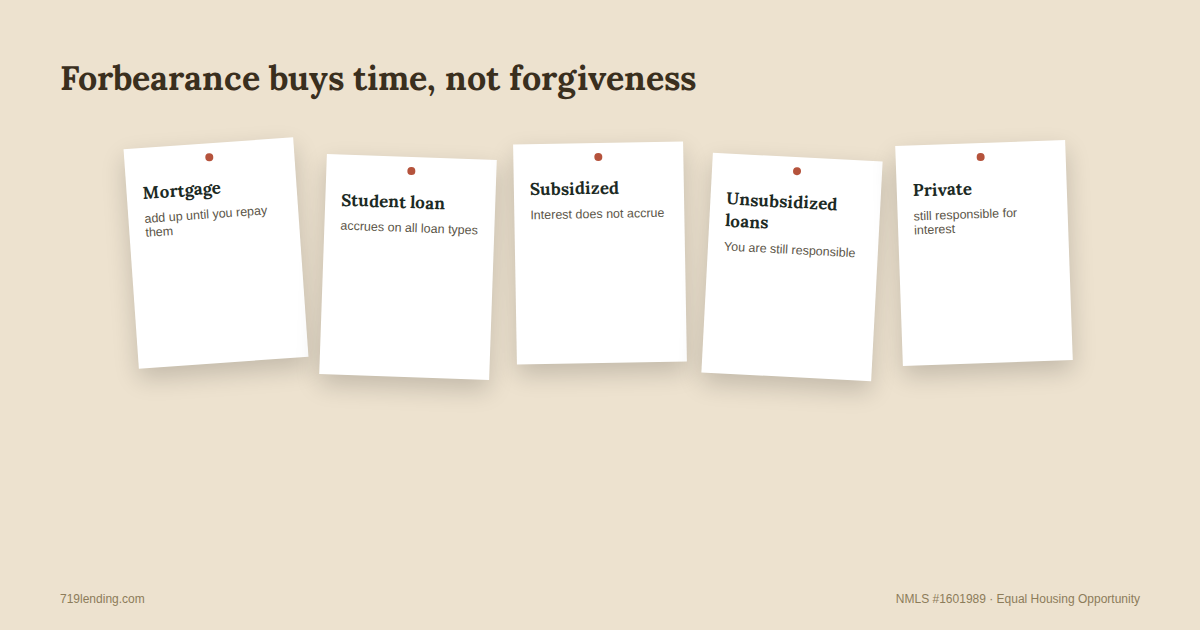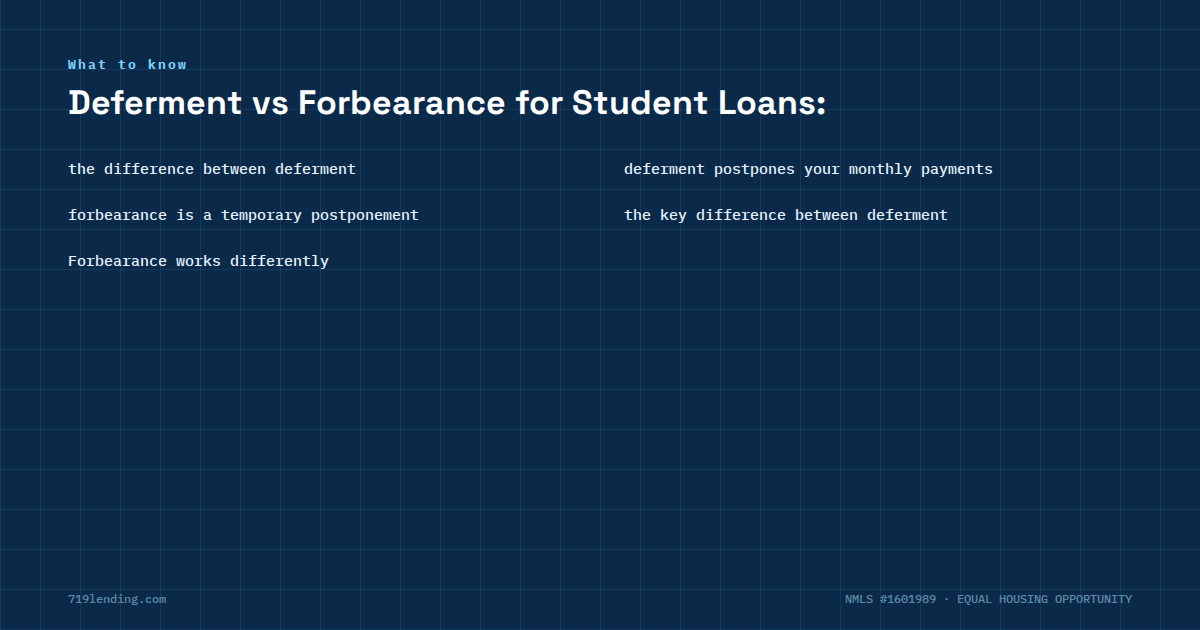
If you have a federal subsidized student loan, you do not have to pay interest on it during an approved deferment — the U.S. Department of Education covers it. Unsubsidized and private student loans work differently, and the gap matters, especially for service members around Colorado Springs weighing deferment during active duty.
Does PMI Protect the Buyer or the Lender? The Real Answer
Does PMI protect the buyer or the lender? The answer is direct: private mortgage insurance protects the lender, even though the buyer pays for it. This article explains what PMI actually covers, why lenders require PMI on conventional loans with a smaller down payment, how you pay it, and the federal rules that let you cancel it.
It’s written for Colorado borrowers, including the many military families around Colorado Springs who buy homes with a lower down payment after a PCS move.
- PMI insures the lender against loss if the borrower defaults on the mortgage loan.
- The buyer pays the premium but receives no direct payout from the coverage.
- PMI does not stop foreclosure if you fall behind on payments.
- PMI is not homeowners insurance and it is not mortgage protection insurance.
- Federal law gives you the right to cancel PMI once the loan balance reaches thresholds tied to the home’s original value.
Does PMI protect the buyer or the lender?
Private mortgage insurance (PMI) protects the lender. The Consumer Financial Protection Bureau puts it plainly: PMI protects the lender — not you — if you stop making payments on the loan.
PMI is arranged by the lender and provided by a private insurance company. If the borrower defaults, the insurance company reimburses the lender for its loss.
What happens to the buyer if the loan defaults
Nothing good. If you fall behind on your mortgage payments, PMI does not protect you, and you can still lose your home through foreclosure.
The policy pays the lender, not the homeowner. That is the single most misunderstood fact about mortgage insurance, and it’s the reason this question gets typed into Google so often.
So if the buyer gets no payout, why does PMI exist at all? Because it changes what the lender is willing to approve.
Why do lenders require PMI on conventional loans?
Lenders require PMI on conventional loans when the down payment is smaller than the customary threshold conventional mortgages use. A lower down payment means the lender is taking on more risk relative to the home’s purchase price.
Mortgage insurance offsets that risk. Because the lender is insured against loss from borrower defaults, it can approve a mortgage loan it might otherwise decline.
Down payment and loan-to-value
The trigger is the relationship between the loan amount and the home’s value — the loan-to-value ratio. A larger down payment lowers that ratio; a lower down payment raises it and typically brings a PMI requirement on a conventional mortgage.
The same logic applies when refinancing a conventional loan: if your equity is below the threshold, the requirement to buy PMI usually applies there too.
What the buyer actually gets out of it
The indirect benefit is real: PMI can help you qualify for a loan you might not otherwise be able to get. For a Colorado Springs family that wants to buy near Fort Carson or Peterson Space Force Base without waiting years to save a large down payment, that access matters.
The tradeoff is that PMI increases the cost of the loan. Which raises the next question — how do you actually pay it?
How do you pay PMI?
PMI can be structured several ways, and the CFPB recommends asking lenders what PMI choices they offer before agreeing to a mortgage. Each structure shows up in a specific place on the Loan Estimate and Closing Disclosure.
| Structure | How you pay | Where it appears |
|---|---|---|
| Borrower-paid monthly | A monthly premium added to the mortgage payment | First page, Projected Payments section |
| Single premium | One up-front payment at closing | Second page, section B |
| Split premium | An upfront premium plus a smaller monthly premium | Both locations above |
| Lender-paid mortgage insurance | Lender covers the coverage; different rules apply | Ask the lender for detailed pricing |
Borrower-paid mortgage insurance
Borrower-paid mortgage insurance with a monthly premium is the most common way to pay PMI. The premium is added to your monthly mortgage payment and disclosed in the Projected Payments section.
Single premium mortgage insurance
Single premium mortgage insurance means one up-front payment at closing instead of monthly PMI payments. One caution from the CFPB: if you make an up-front payment and then move or refinance, you might not be entitled to a refund of the premium.
That caution matters in a military market. If a PCS move could send you elsewhere before long, an upfront premium you can’t recover deserves a hard look.
Split premium mortgage insurance
Split premium mortgage insurance combines both: an up-front payment at closing plus a monthly premium added to the mortgage payment. Lenders might offer you more than one option, so ask the loan officer to calculate total costs over timeframes that are realistic for you.
Lender-paid mortgage insurance
With lender paid mortgage insurance, the lender covers the mortgage insurance and different cancellation rules apply. Lenders also sometimes offer conventional loans with smaller down payments that do not require PMI at all — usually in exchange for a higher interest rate on the loan.
Whether a higher interest rate costs more or less than paying PMI depends on factors like how long you plan to stay in the home. Structure is one variable; the price of the coverage itself is another.
How much does PMI cost?
PMI cost varies by borrower and by loan. Factors like the down payment amount, credit score, loan amount, and the insurance company writing the policy all shape the premium, so no single figure applies to everyone.
The reliable way to see the PMI cost on a specific loan is the paperwork: the monthly premium appears in the Projected Payments section of the Loan Estimate, and any upfront premium appears in section B. Compare those documents across conventional loan options side by side.
The CFPB also suggests asking a tax advisor how paying more interest versus paying PMI might affect your taxes — tax treatment varies, and that question belongs with a tax professional. Knowing the cost leads naturally to the next confusion: what PMI is not.
What PMI is not

Private mortgage insurance gets confused with two other products because the names sound similar. Neither confusion is harmless.
PMI is not homeowners insurance
Homeowners insurance protects the property and, by extension, you — it responds to damage to the home. Private mortgage insurance responds only to borrower default, and only the lender collects.
You will typically carry both on a conventional mortgage with a low down payment, and they do entirely different jobs.
PMI is not mortgage protection insurance
Mortgage protection insurance is marketed as coverage that benefits the borrower’s household. PMI does nothing of the kind: it does not pay off the mortgage balance for your family, and it does not make your loan payments if you can’t.
If you want protection that pays your side of the ledger, PMI is not that product. What PMI does offer the buyer is an exit — federal law says you don’t pay it forever.
How do you cancel PMI?
You have the right to remove PMI on many conventional mortgages once you have paid the loan down to a specified point. Ending PMI reduces your monthly costs, and the rules below apply to most single-family principal residences.
Request cancellation in writing
You can ask the servicer to cancel PMI on the date the principal balance is scheduled to fall to the threshold tied to the home’s original value. That first eligible date appears on the PMI disclosure form you received with the mortgage; if you can’t find it, contact the servicer.
You can also request cancellation early if extra payments have reduced the loan balance to that threshold ahead of schedule. The servicer must grant the request if you apply in writing, have a good payment history and are current, certify there are no junior liens such as a second mortgage, and can show — for example, with an appraisal — that the home’s value hasn’t declined below its original value.
“Original value” generally means the contract sales price or the appraised value at purchase, whichever is lower. If you refinanced, it means the appraised value at the time of the refinance.
Automatic termination
Even if you never ask, the servicer must automatically terminate PMI on the date the principal balance is scheduled to reach a slightly lower threshold set by federal law. You must be current on payments; otherwise termination waits until you catch up.
The midpoint rule
The servicer must also end PMI the month after you reach the midpoint of the loan’s amortization schedule — halfway through the original term — even if the balance hasn’t hit the automatic threshold. This midpoint rule matters most for loans with an interest-only period, principal forbearance, or a balloon payment.
Fannie Mae and Freddie Mac guidelines
Loan investors, including Fannie Mae and Freddie Mac, often create their own PMI cancellation guidelines, and some servicers allow removal under their own standards. Those guidelines cannot be less favorable to the borrower than the federal rules above.
Note that mortgages through the Federal Housing Administration or the Department of Veterans Affairs follow different mortgage insurance rules — FHA loans and VA loans are not governed by these PMI cancellation rights, so contact the servicer with questions on those. Cancellation is one path; some buyers want to avoid PMI from day one.
Can you avoid paying PMI?
The most direct way to avoid paying PMI on a conventional loan is a down payment at or above the customary threshold — PMI is not required in that case, and a larger down payment may also come with a lower interest rate on the loan.
Alternatively, some lenders offer conventional mortgages with smaller down payments and no borrower-paid PMI, typically priced with a higher interest rate. Whether that beats monthly PMI depends on your timeline in the home, so run both scenarios on paper.
Borrowers making a low down payment can also compare other loan programs, such as an FHA loan. Which route costs less depends on your credit score, down payment amount, the lender, and market conditions — there is no universal answer.
Next step for Colorado buyers
If PMI is on your Loan Estimate, don’t just accept the first structure offered. Ask for detailed pricing on monthly, single premium, and split premium options — and if you already own, check whether your loan balance qualifies you to request cancellation now.
Talk with a 719 Lending loan officer in Colorado Springs to compare the numbers on your specific loan and map the shortest path to dropping mortgage insurance.
Frequently asked questions
Does PMI protect the buyer or the lender?
PMI protects the lender. The Consumer Financial Protection Bureau states that private mortgage insurance protects the lender — not you — if you stop making payments. The borrower pays the premium, but the insurance company reimburses the lender, not the homeowner, when a borrower defaults.
Does PMI pay off my mortgage if I die?
No. PMI is not life insurance and does not pay off the mortgage balance for your family. It only covers the lender’s loss if the loan goes into default. Products marketed as mortgage protection insurance are a separate purchase entirely.
Can I still be foreclosed on if I have PMI?
Yes. The CFPB is explicit that if you fall behind on your mortgage payments, PMI does not protect you and you can still lose your home through foreclosure. The coverage pays the lender’s losses, not your missed payments.
When can I cancel PMI?
You can request cancellation in writing on the date the principal balance is scheduled to fall to the threshold tied to the home’s original value — or earlier if extra payments got you there. You must be current, have a good payment history, have no junior liens, and show the home’s value hasn’t declined. Servicers must also terminate PMI automatically at a slightly lower balance threshold or at the midpoint of the loan term.
Is PMI the same as homeowners insurance?
No. Homeowners insurance covers damage to the property and protects you. Private mortgage insurance covers the lender against loss from borrower default. On a conventional loan with a low down payment, you typically carry both, and they serve completely different purposes.
How do I avoid paying PMI on a conventional loan?
Put down at least the customary conventional down payment threshold and PMI is not required. Some lenders also offer low-down-payment conventional loans without borrower-paid PMI in exchange for a higher interest rate, and other loan programs handle mortgage insurance differently — compare total costs with a loan officer.
719 Lending Inc., NMLS #1601989 · Equal Housing Opportunity
719 Lending Inc. is not affiliated with or endorsed by HUD, FHA, VA, USDA, CHFA, the CFPB, or any government agency.
Last updated: August 2026

Related Posts