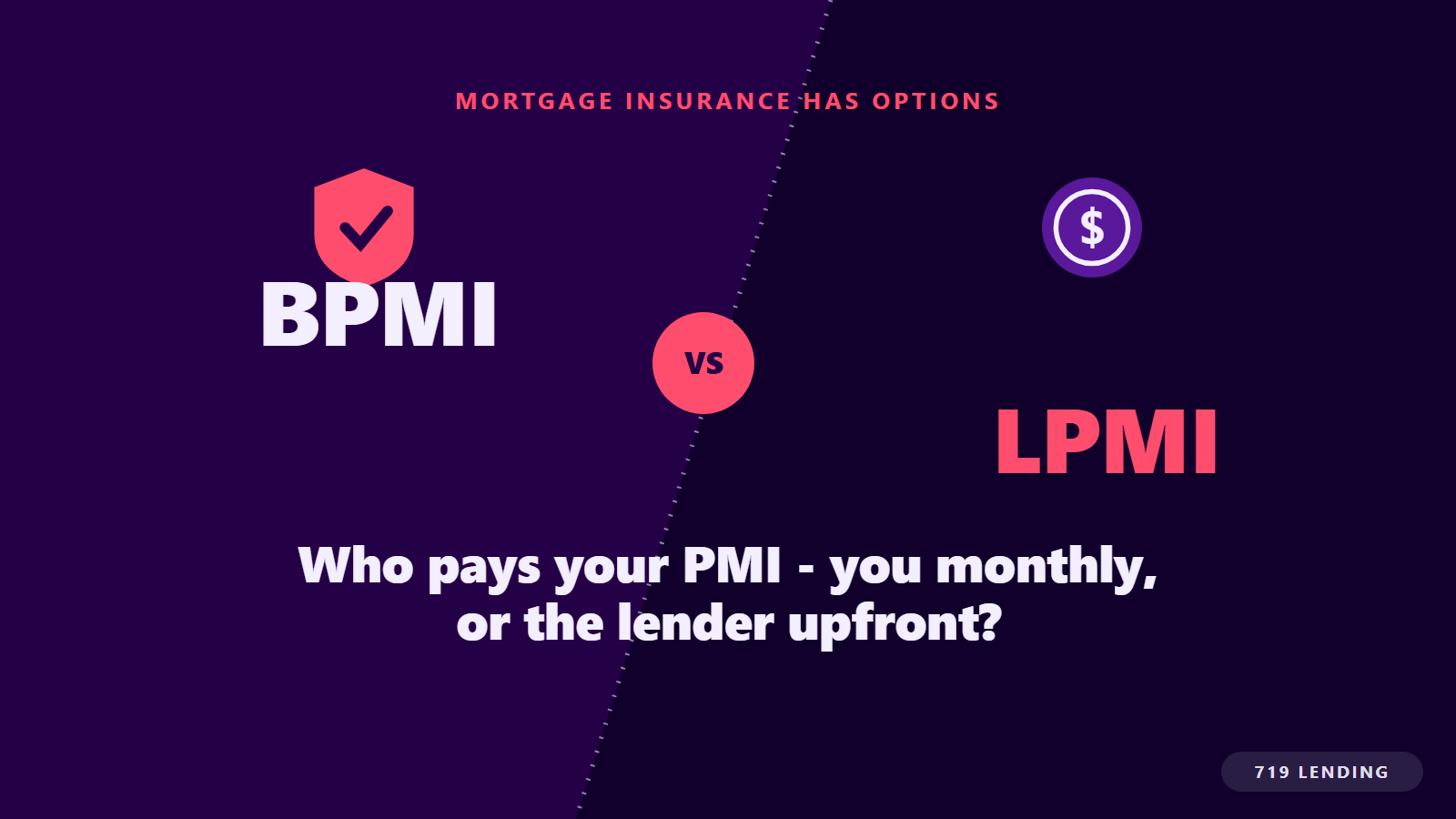
BPMI, LPMI, single-premium, or split? An honest broker's guide to the four PMI structures — what cancels, what never does, and which one fits your timeline.
VantageScore vs. FICO: What’s Changing in Mortgage Credit (2026)
As of June 2026, VantageScore 4.0 is officially approved for Fannie Mae, Freddie Mac and FHA loans, but Classic FICO on a tri-merge credit report is still the standard at most closings. The mortgage industry is in the early, optional phase of the biggest credit-scoring change in a generation. A limited group of approved lenders can now choose VantageScore 4.0; every other lender keeps using Classic FICO. No single loan mixes the two. If you are house-hunting in Colorado Springs this year, the score your lender pulls has almost certainly not changed yet, but the ground is shifting under the whole system, and it is worth understanding why.
This is, on balance, good news for borrowers. For the first time in decades, the dominant score has real competition, a competing model can score tens of millions of people the old system left invisible, and medical debt and paid collections are treated more fairly. There are legitimate reasons for caution too, and we cover both sides below. Current as of June 2026.
What actually changed in 2026, and what did not
The regulatory story starts with a July 8, 2025 announcement from Federal Housing Finance Agency (FHFA) Director Bill Pulte, which cleared Fannie Mae and Freddie Mac to accept VantageScore 4.0 alongside Classic FICO. The operational rollout was formalized in a joint FHFA and HUD announcement on April 22, 2026, which extended acceptance to FHA loans. Here is what those changes do and do not mean at the closing table:
- VantageScore 4.0 is approved and usable, but optional. Per FHFA, this is an interim phase in which approved lenders may choose between Classic FICO or VantageScore 4.0 for loans sold to Fannie and Freddie. Lenders that have not yet been approved to deliver VantageScore-evaluated loans are directed to keep using Classic FICO.
- A single loan uses one model, never a blend. A given loan is evaluated on Classic FICO or VantageScore 4.0. The two are not averaged together.
- Tri-merge is still required. An earlier bi-merge proposal (using two bureaus instead of three) was shelved. FHFA confirms the change does not alter current tri-merge or bi-merge reporting requirements, so the all-three-bureaus tri-merge remains the norm.
- FICO 10T is named but not yet live for delivery. FHFA states the Enterprises expect to publish historical FICO 10T scores in Summer 2026 and adopt scores from the model later. It is not something your lender delivers a loan on today.
- FHA now permits both new models. The April 22, 2026 announcement allows VantageScore 4.0 and FICO 10T for FHA loans, again as a rollout rather than a hard switch.
Our take: the headlines calling this “the end of FICO in mortgages” are premature. At most closings in mid-2026, Classic FICO on a tri-merge is still exactly what you will see. What genuinely changed is that the door is open, and competition has arrived.
Who owns FICO, the bureaus, and VantageScore
To understand the transition, it helps to separate three different players that people routinely confuse:
- FICO (Fair Isaac Corporation) owns the scoring algorithm but holds none of the underlying credit data. It licenses its algorithm to the three bureaus for a per-score royalty. FICO scores are relied on by roughly 90% of lenders, a dominance the company built over decades.
- The three credit bureaus, Equifax, Experian and TransUnion, hold the actual data in your credit file. They are independent, publicly traded companies. They are not government agencies.
- VantageScore Solutions, LLC is a separate company, launched in 2006, that builds the competing VantageScore model. It is an independently managed joint venture jointly owned by those same three bureaus, and its 4.0 model is what FHFA has now approved.
Our take, framed as a question rather than an accusation: it is fair to ask why three competing bureaus jointly own a competing score. The balancing facts matter, though. VantageScore is independently managed, and it went through FHFA’s validation and approval process, the same regulatory gate any mortgage score must clear. We are not asserting a conflict of interest, only noting the structure is worth understanding.
Why FICO’s pricing is under a Senate investigation
The one clearly documented tension in this story is price. FICO’s wholesale royalty per score has climbed steeply. According to Senator Josh Hawley’s own office, FICO “doubled its per-score price from $4.95 to $10.00” for 2026, a more than 100% increase for “the identical product offered in 2025,” and his office describes a compound annual growth rate of roughly 100% in per-score pricing over the prior five years. His office estimates the 2026 increase alone could add about $500 million in cost to the mortgage industry (figures general, confirm current).
Those costs flow through to the tri-merge report a borrower pays for. A tri-merge that ran roughly $30 to $33 per applicant in 2019 to 2020 has climbed to well over $100 per applicant in 2026, roughly tripling or more (general, confirm current). In March 2026, Senator Hawley opened an investigation into FICO’s mortgage-score pricing, urged the Federal Trade Commission to examine whether the increases are anticompetitive, and separately said he had twice called on the Department of Justice Antitrust Division to investigate, in a market where FICO is used by about 90% of lenders.
In fairness to FICO, the company’s own position is that its royalty is a minority slice of a roughly $80 to $100-plus tri-merge bundle, and that bureau and reseller markups drive most of what a borrower ultimately pays. The bureaus dispute that framing. Some, like Equifax, publicly countered FICO’s 2026 pricing and its new direct-license approach with their own plans. In other words, this is a two-sided fight among the companies over who is responsible for rising costs, and reasonable observers can read the finger-pointing either way.
To give a sense of the trajectory, here is the reported per-score royalty progression:
| Period | FICO per-score royalty (reported, general) |
|---|---|
| 2018 to 2022 | About $0.50 to $0.60 |
| 2024 | About $3.50 |
| 2025 | About $4.95 |
| 2026 (list) | About $10.00 |
FICO also launched a Mortgage Direct License Program on October 1, 2025, offering a performance-based option of about $4.95 per score plus roughly $33 per borrower on funded loans, as an alternative to the $10 per-score price charged through tri-merge resellers (general, confirm current). Our take: more scoring competition is exactly the kind of pressure that can eventually restrain prices. The savings simply have not reached borrowers yet.

How VantageScore 4.0 differs from Classic mortgage FICO
Where VantageScore 4.0 gets genuinely interesting is in how it evaluates a file. Compared with the Classic FICO models used for mortgages, VantageScore 4.0 makes several borrower-friendly changes:
- Medical collections are removed entirely. VantageScore stopped using medical collection information in its 4.0 model, so an old medical bill in collections does not drag the score down.
- Paid collections are ignored. Once a non-medical collection is paid, it no longer counts against the score, which is not true of the older FICO versions used in mortgage lending.
- It reads about 24 months of trended data. Rather than a single snapshot, the model looks at a roughly two-year arc of behavior, rewarding borrowers who are actively paying balances down.
- It can score thin files. VantageScore 4.0 can score a consumer with as little as one month of history and can incorporate alternative data such as rent, utility and telecom payments. VantageScore reports this scores roughly 33 million adults that conventional FICO models leave unscoreable.
- It is more forgiving on utilization and uses a 14-day rate-shopping window for deduplicating inquiries, versus roughly 45 days on the mortgage FICO side.
Those 33 million newly scoreable adults, and the fairer treatment of medical debt and paid collections, are the core reason we view this shift as a net positive for access to homeownership. If you have been told you are “unscoreable,” or you are rebuilding a thin file, a model that can read rent and utility history is a meaningful step forward. Our guide to building credit with a thin file walks through how to get there.
Why your app score and your lender’s score do not match
One practical source of confusion deserves its own section, because it causes real heartburn during pre-approval. The free score in your banking app or credit-monitoring tool is usually a VantageScore. The score a mortgage lender pulls has, until this rollout, almost always been a Classic FICO. Those are different models built by different companies, so they will not match.
VantageScore is often higher than the comparable FICO, though not always, and the two are not directly comparable. It is entirely possible for your VantageScore to sit 50 or more points above the FICO your lender sees, which is why a “740” in your app can become a very different number on the loan file. This is the single most common surprise in pre-approval, and it is worth reading our deeper explainer on why your lender’s credit score is different and on how many credit scores you actually have.
Our take: do not shop for a home based on the number in your phone. Get a real tri-merge pre-approval from a broker who can pull the score the underwriter will actually use. During this rollout, which model applies varies by lender, so ask directly.
A note on trigger leads and your data
Any conversation about the bureaus and their revenue eventually reaches “trigger leads,” the practice where a bureau sells notice of your mortgage inquiry to other lenders, who then flood you with offers. The bureaus’ data businesses are large. Experian, for example, reported roughly $3.3 billion in data-segment revenue in its fiscal year ending March 31, 2022. That scale is part of why data sales are a sensitive subject in this transition.
You can reduce unsolicited offers by opting out of prescreened credit offers at OptOutPrescreen.com and registering your number with the National Do Not Call Registry. Neither affects your ability to get a mortgage, and both are free.

What this means for your mortgage in 2026
Pulling it together, here is the practical picture for a Colorado buyer this year:
- Your score probably has not changed. Classic FICO on a tri-merge is still standard at most closings.
- Rate shopping still works the way it always did. Multiple mortgage pulls in a short window count as one, so comparing lenders does not wreck your score. See whether shopping for a mortgage hurts your credit.
- If you have medical debt or paid collections, the newer models treat you more fairly, though the old rules may still apply on your specific loan. Here is how collections and medical debt affect a mortgage.
- Ask your lender which model applies. It varies by lender during this rollout.
The competitive landscape is finally moving, and that is a win for borrowers who have been squeezed by a single dominant score for decades. Just do not expect the savings, or the new model, to show up automatically on your loan this month. Want to know the threshold you actually need to hit? Start with our pillar guide on what credit score you need to buy a house, then talk to a real person. As a mortgage broker in Colorado Springs, we can pull your true qualifying score and tell you exactly where you stand.
Frequently asked questions
Is VantageScore 4.0 replacing FICO for mortgages? Not yet. As of June 2026 it is an approved, optional alternative in a limited rollout. A loan is scored on Classic FICO or VantageScore 4.0, never both, and most closings still use Classic FICO on a tri-merge.
Why is my credit-app score higher than what my lender pulled? Free apps typically show a VantageScore, while mortgage lenders have historically pulled Classic FICO. The models differ, so scores differ. VantageScore is often higher, sometimes by 50-plus points, but not always, and the two are not directly comparable.
Is tri-merge still required in 2026? Yes. The earlier bi-merge proposal was shelved. FHFA confirms this change does not alter current tri-merge reporting requirements, so all three bureaus are still pulled.
Does VantageScore 4.0 really ignore medical debt? Yes. VantageScore removed medical collection information from its 4.0 model, and it also disregards paid collections. Classic mortgage FICO models generally still consider them.
Why is FICO’s pricing being investigated? Senator Josh Hawley opened an investigation in March 2026 and urged the FTC, and separately the DOJ, to examine whether FICO’s price increases, reportedly reaching a $10 list price per score for 2026, are anticompetitive given FICO’s roughly 90% market share. FICO argues bureau and reseller markups drive most of the cost.
Should I use my free VantageScore to decide if I can buy? No. Get a tri-merge pre-approval so a lender pulls the score the underwriter will actually use. Ask which model applies to your loan, since it varies by lender during this rollout.
719 Lending, NMLS #1601989. Equal Housing Opportunity. 719 Lending is not affiliated with or endorsed by FHFA, HUD/FHA, Fannie Mae, Freddie Mac, the VA, USDA, CHFA, or any government agency. Rate, fee, and figure ranges are general and provided for education only, confirm current terms with a licensed loan originator. Last updated: June 2026.

Related Posts