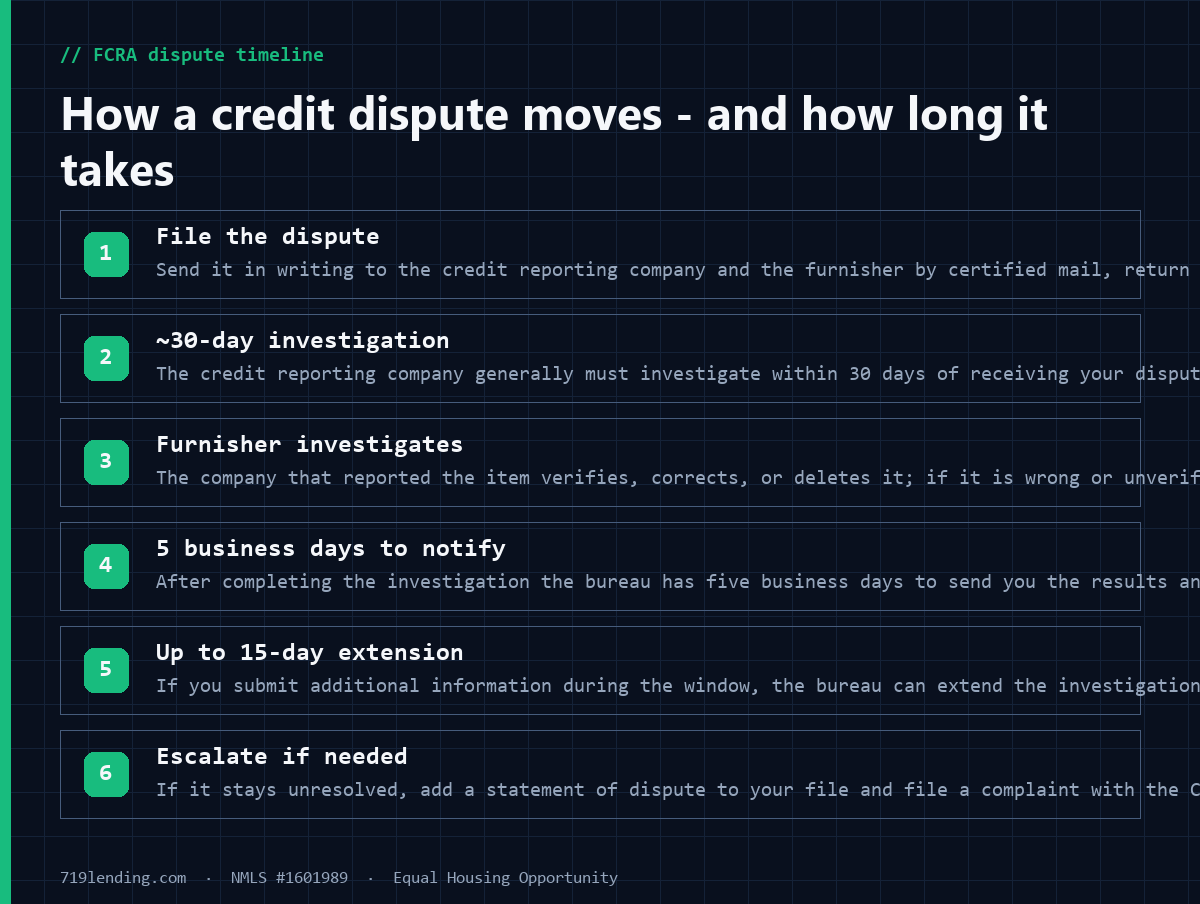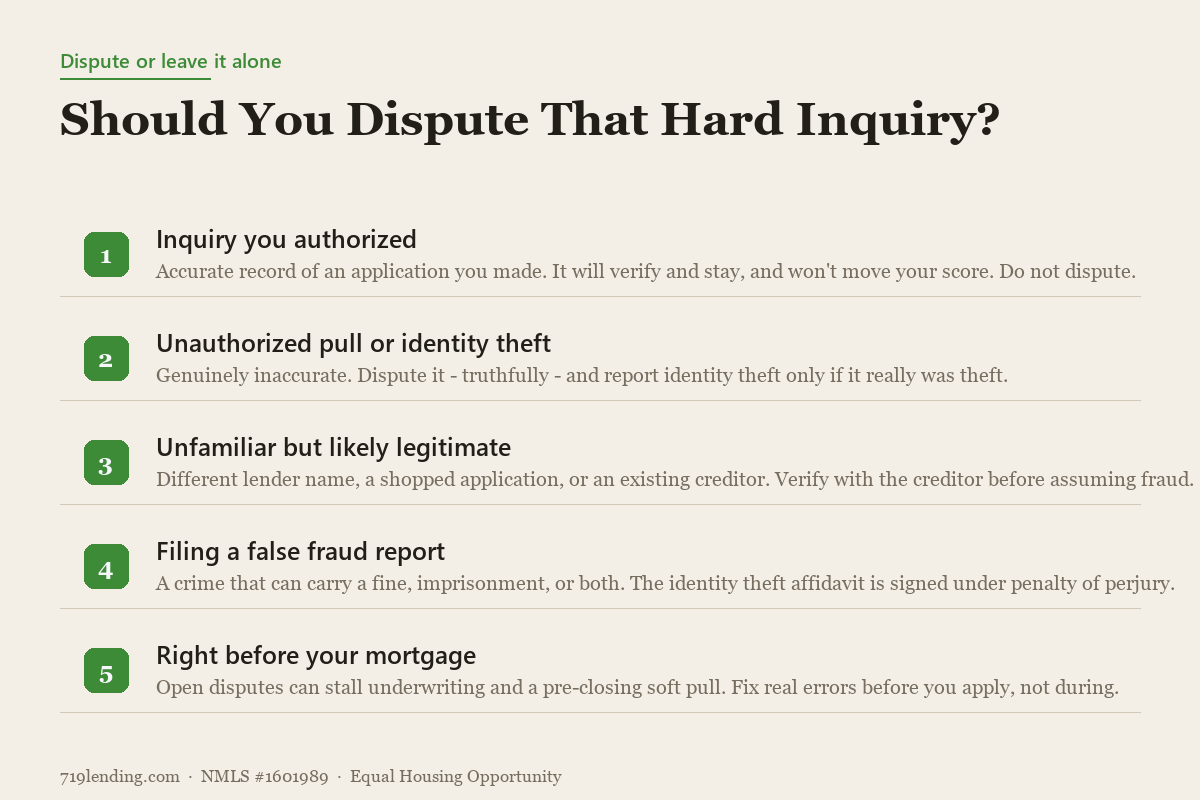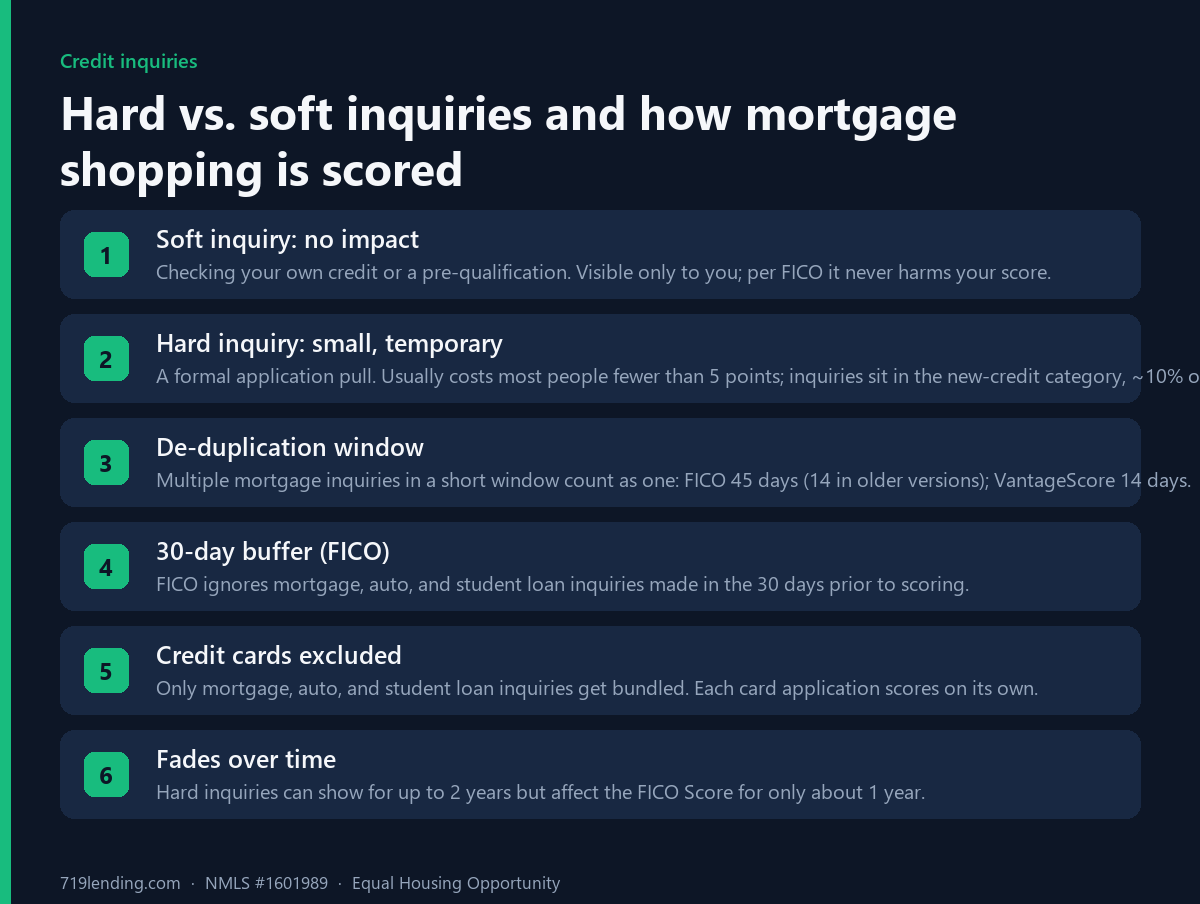
How to dispute credit report errors under the FCRA before a mortgage: the ~30-day timeline, how to document it, and why an active dispute remark can stall automated underwriting. 719 Lending, NMLS #1601989.
How to Read Your Tri-Merge Mortgage Credit Report
The credit report your mortgage lender pulls is not the one you see in a free credit app. It is a merged, three-bureau document written in a coding system built for underwriters, not consumers, and a single mis-coded line — a paid collection still flagged as active, or a discharged bankruptcy rated as a live charge-off — can push your file into a higher waiting period or a manual-review pile without ever showing up as a lower score. Learning how to read your credit report the way a lender reads it lets you catch those errors before you apply, and correcting a bad code can re-qualify a borrower even when the score itself never moves.
At 719 Lending, we look at these merged reports every day. Below is a section-by-section walkthrough of what is actually on a mortgage credit report, how to decode the payment-status system underwriters react to, and the specific error patterns worth hunting for before your loan officer ever hits the button. Ranges and program rules here are general and subject to change, so confirm current figures with your loan officer.
What a tri-merge mortgage credit report actually is
When you check your score in a free app, you are usually seeing one bureau’s data run through a consumer scoring model. When a mortgage lender pulls credit, they order a tri-merge, also called a residential mortgage credit report: a single document that combines your files from all three national credit bureaus, Equifax, Experian, and TransUnion, side by side, along with a mortgage-specific score from each.
Three things make the tri-merge different from the report you are used to:
- It merges three bureaus into one view. Each bureau is a separate company with its own data, so an account, a collection, or a late payment can appear on one report and not the others. The tri-merge stacks all three so the underwriter sees every version.
- It uses older, mortgage-specific FICO versions. These are not the FICO 8 or VantageScore numbers your free app shows. More on that below.
- Borrowers usually never see it. The tri-merge is a lender-ordered artifact. You can review the same underlying data by pulling your own reports, but most people first encounter this merged format during a mortgage application, which is exactly why the coding surprises them.
Because the tri-merge drives your rate and your approval, knowing how to read it is a mortgage skill, not just a general-credit skill. That is the angle we care about here.
The scores on the report: why they differ from your app
Government-sponsored enterprises Fannie Mae and Freddie Mac have long required lenders to use three specific, intentionally older FICO models on the tri-merge. Per the Fannie Mae Selling Guide, those are Equifax Beacon 5.0, the Experian/Fair Isaac Risk Model V2, and the TransUnion FICO Risk Score Classic 04 — sometimes labeled FICO Score 5, FICO Score 2, and FICO Score 4 respectively.
Your free credit app almost always shows something else, most often a VantageScore or a FICO 8. That is the single biggest source of borrower confusion: a large gap between your app’s number and your lender’s number is normal, not a mistake and not a lender trick. Different model, different math.
On a single-borrower loan, the lender takes the middle of your three mortgage scores, discarding the high and the low. On a loan with more than one borrower, Fannie Mae now determines eligibility using the average of each borrower’s median score, a change from the older lowest-middle approach, so confirm the current method with your loan officer for your specific loan and program.
A note on where scoring is heading: in 2025 the Federal Housing Finance Agency directed Fannie Mae and Freddie Mac to allow VantageScore 4.0 as an optional alternative to Classic FICO, with a limited lender rollout beginning in 2026 and FICO 10T slated to follow. Critically, the long-standing three-bureau tri-merge requirement is staying in place, and Classic FICO remains the standard at most closings today. Treat this as in-flux and confirm current.

Section by section: what is on the report
The Consumer Financial Protection Bureau groups the contents of any credit report into a handful of categories. On a tri-merge they look like this:
- Personal / identifying information: your name and past names, current and prior addresses, date of birth, Social Security number, and employers. Errors here do not change your score, but a mismatched address or name can block or delay the credit pull, or trip a fraud flag, at the worst possible moment.
- Credit accounts (tradelines): the heart of the report. Each account — whether a mortgage, an installment loan, or a revolving credit card — shows the creditor, the open date, the credit limit or original amount, the balance, the account status, and a month-by-month payment history. This is where the payment codes live.
- Collections: accounts sold or assigned to a collection agency, plus items like verified past-due child support.
- Public records: bankruptcies, foreclosures, tax liens, and judgments. Since a 2017 industry change, civil judgments and tax liens no longer appear on the three national bureaus’ reports, but bankruptcies still do.
- Inquiries: the companies that have pulled your credit. A lender’s hard pull for your mortgage lands here.

Decoding the MOP payment codes (the 0 to 9 scale)
The payment status on each tradeline is written in a legacy system called the MOP, or Manner of Payment, code. It is one of the most important things to understand on the whole report because underwriters and automated systems read it directly, and it is where costly errors hide.
A MOP code has two parts: a letter that names the account type, and a number from 0 to 9 that describes how the account is being paid. The letters are:
- R = Revolving (credit cards, lines of credit)
- I = Installment (auto loans, student loans, personal loans)
- M = Mortgage
- O = Open (balance due in full each period)
The number is the manner-of-payment rating. Here is the standard scale:
| Code | Meaning |
|---|---|
| 0 | Too new to rate, or approved but not used / not rated |
| 1 | Pays as agreed, current, on time |
| 2 | 30 or more days past due |
| 3 | 60 or more days past due |
| 4 | 90 or more days past due |
| 5 | 120 or more days past due |
| 6 | 150 or more days past due |
| 7 | Making payments under a wage-earner plan or bankruptcy |
| 8 | Repossession or foreclosure |
| 9 | Collection, charge-off, or bad debt (profit-and-loss write-off) |
So an “R1” is a revolving account paid as agreed, a healthy line. An “I9” is an installment account that went to collections or was charged off. An “M1” is a mortgage paid on time, which is exactly what a purchase or refinance underwriter wants to see across the last 12 months. Anything rated above a 1 is a negative mark, and the higher the number, the more severe. Modern reports may present this as plain-language status text or a grid of monthly notations rather than a literal “R9,” but the underlying rating logic is the same, so match the language on your report to the scale above.
How to spot errors before you apply
This is where reading your report pays off in real dollars. A congressionally mandated Federal Trade Commission study found that one in five consumers had an error corrected on at least one of their three reports after they disputed it, and about 5 percent had errors serious enough to affect the loan terms they would qualify for. On a mortgage, a coding error does not just cost points — it can trigger the wrong program waiting period or an automated “refer.” Here are the high-value patterns to hunt for.
The “stuck 9” on a paid or settled collection
A collection that you paid or settled should no longer report as an active 9. Yet paid collections frequently stay rated as a live collection, dragging the file as if the debt were still open and unresolved. Because a collection scores as a collection whether the balance is $1,000 or $0, the fix that matters is getting the status and code corrected, not just paying it. Correcting a stuck 9 can clear an underwriting condition without touching your score.
A bankruptcy mis-rated as a charge-off
When a bankruptcy is discharged, the accounts included in it should be reported as included in bankruptcy — which corresponds to the 7 rating — with a zero balance. In practice, discharged accounts are often left rated as a 9 collection or charge-off, so the same debt is effectively counted twice: once inside the bankruptcy and once as a live derogatory. Fixing that coding can be the difference between a file that clears its bankruptcy waiting period cleanly and one that keeps getting flagged.
An account wrongly flagged as a foreclosure
An 8 (repossession or foreclosure) is one of the most damaging codes on a mortgage file because foreclosure carries its own long waiting period. We have seen accounts that were only ever 30, 60, or 90 days late, never foreclosed, carrying an 8. If your report shows a foreclosure you did not have, that is a code to challenge before you apply, because it can impose a waiting period you do not actually owe.
Medical collections that should already be gone
Under voluntary actions the national credit bureaus adopted in 2022 and 2023, paid medical collections and unpaid medical collections under $500 are removed from consumer reports, and there is generally a grace period before medical debt appears at all. A broader federal medical-debt rule finalized in early 2025 was later vacated by a federal court that year, so the regulatory landscape is genuinely in flux — but the voluntary bureau removals have remained in effect. If a paid or small medical collection is still showing, that is often a correctable item, so confirm current bureau policy with your loan officer.
Personal-information mismatches
A wrong address, a misspelled name, or a Social Security number transposition will not move your score, but it can stop the credit pull or merge someone else’s data into your file. Clean these up early.
Why correcting a code beats chasing points
Here is the core mortgage insight most consumer credit advice misses. Two files can have the same middle score, but the one with a discharged bankruptcy correctly coded as included-in-bankruptcy sails through, while the one where that same debt is mis-rated as a live 9 gets an automated refer or a manual-underwrite condition. The score did not decide it — the code did.
That is why an experienced mortgage broker audits the tri-merge line by line rather than just reading the number at the top. When a genuine coding error is found, the correction can often be captured mid-transaction through a rapid rescore, which updates the lender’s credit in a matter of days rather than the weeks a consumer dispute takes, provided the creditor furnishes proof of the change. A rapid rescore is lender-ordered — you cannot request one yourself — so a working mortgage broker in Colorado Springs coordinates that cleanup with the timing of your loan, so a fix actually lands before your rate is locked.
A pre-application checklist
Before you apply, pull your own reports from all three bureaus (checking your own credit is a soft inquiry and does not hurt your score) and run this list:
- Confirm your name, addresses, and Social Security number are correct on all three.
- Scan every tradeline’s payment code and question anything rated above a 1 that you believe was paid on time.
- Verify that any paid or settled collection reads as paid with a zero balance, not as a live 9.
- Confirm accounts included in a past bankruptcy are coded as included in bankruptcy, not as separate charge-offs.
- Challenge any foreclosure (code 8) on an account that was only ever late.
- Check that paid or sub-$500 medical collections have dropped off, and flag them if they have not.
- Lift any credit freeze on all three bureaus before your lender pulls, so the tri-merge is not blocked.
Catch these before you apply and you protect both your score and your program eligibility. Miss them and you may find out the hard way, mid-escrow, when a wrongful code trips a condition. That is the whole reason to learn how to read your credit report the way an underwriter does.
Frequently asked questions
Why is my mortgage credit score lower than the score in my credit app? Because they are different models. Your free app usually shows a VantageScore or a FICO 8, while your mortgage lender is required to use older, mortgage-specific FICO versions (Equifax Beacon 5.0, Experian FICO V2, and TransUnion FICO Classic 04) on a three-bureau tri-merge. A gap of many points between the two is normal and not a red flag.
What does an “R9” or “I9” mean on my credit report? The letter is the account type (R for revolving, I for installment, M for mortgage, O for open) and the 9 is the payment rating, meaning the account went to collections or was charged off. Any rating above 1 is negative, and 9 is the most severe. If an account rated 9 was actually paid, settled, or included in a bankruptcy, that may be a coding error worth correcting.
Can fixing a credit report error raise my chances even if my score stays the same? Yes, and this is the key point for mortgages. Underwriters and automated systems react to the payment codes and account statuses, not only the score. Correcting a bankruptcy that was mis-rated as a live charge-off, or a foreclosure flag on an account that was only late, can clear a waiting period or an underwriting condition without your score changing at all.
Do I have to pay a collection to get it off my mortgage report? Not necessarily, and it depends on the loan program and the specifics. A collection scores as a collection whether the balance is $1,000 or $0, so what helps is correcting the status or removing an inaccurate item, not simply paying. Paid and small medical collections are also supposed to come off under current bureau practices. Talk to your loan officer before paying any old collection, because paying an aged debt can sometimes re-age it, and program rules on collections differ.
Should I freeze my credit while I shop for a mortgage? Not right before you apply. An active freeze blocks the lender from pulling one or more bureaus, which stops the tri-merge. Thaws can take time per bureau, so lift any freeze on all three before your credit is pulled, then re-freeze after closing if you like.
How do I get a copy of my tri-merge report? The tri-merge itself is ordered by lenders, but you can review the same underlying data by pulling your reports from all three bureaus directly. Do that first, audit the payment codes, and bring any suspected errors to your loan officer so they can be addressed before the lender pull.
719 Lending Inc., NMLS #1601989. Equal Housing Opportunity. 719 Lending is not affiliated with, endorsed by, or acting on behalf of any government agency, including FHA, VA, USDA, or CHFA. This article is for general educational purposes only and is not credit, legal, or financial advice. Credit rules, scoring models, waiting periods, and figures are general, subject to change, and vary by loan program and lender, so confirm current details with a licensed loan officer. Last updated June 30, 2026.

Related Posts