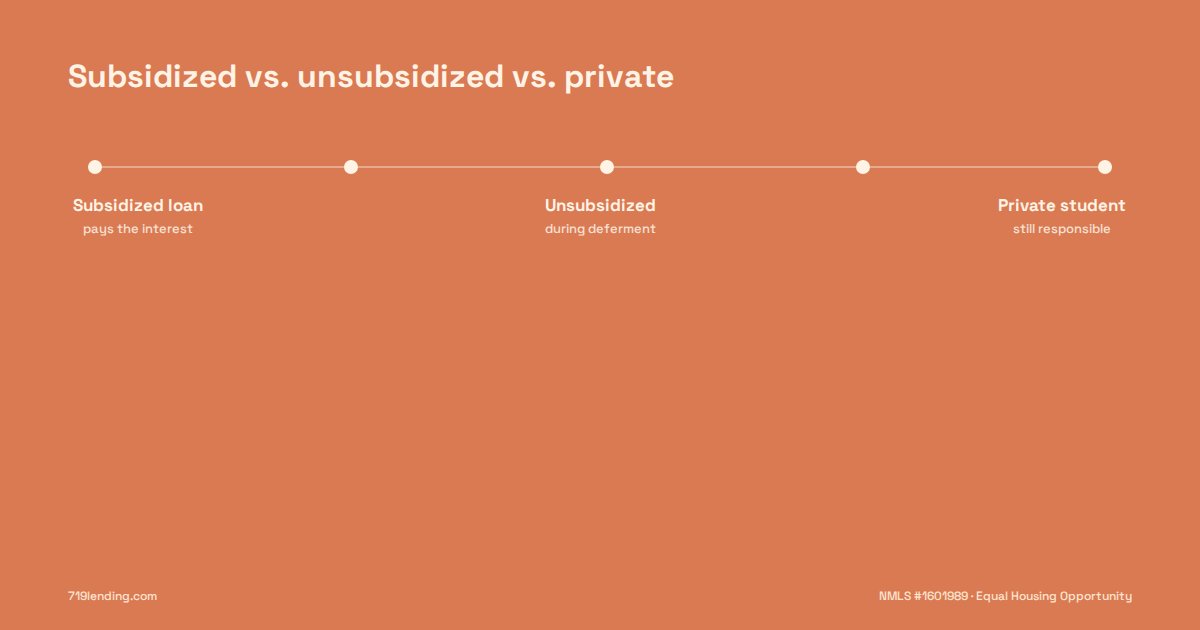
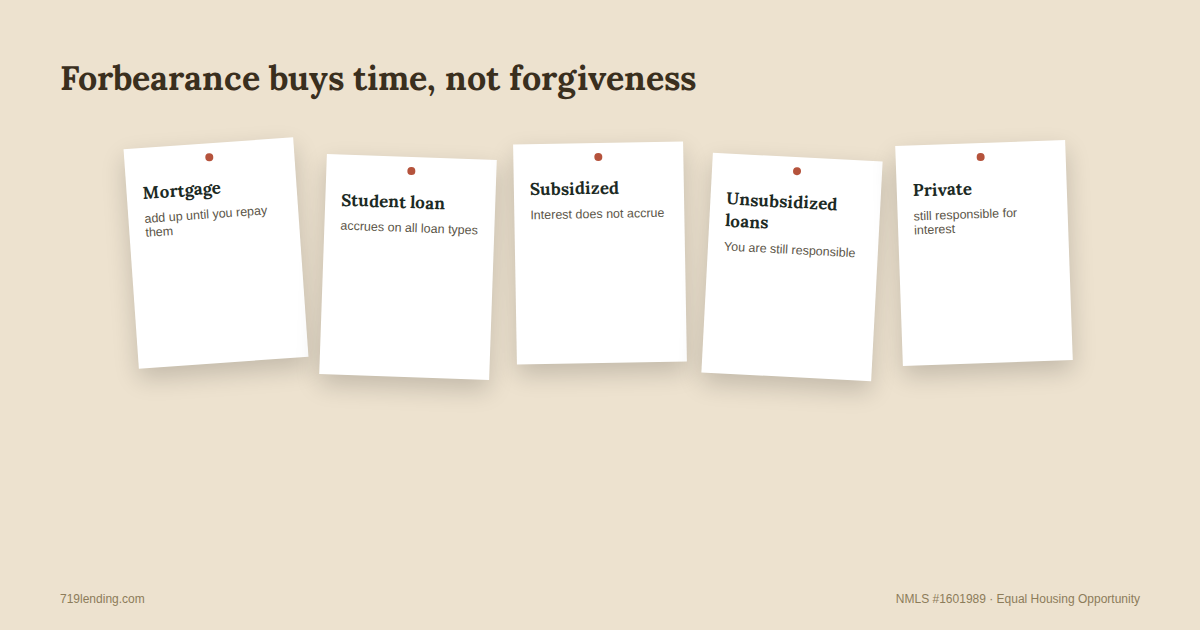
If you have a federal subsidized student loan, you do not have to pay interest on it during an approved deferment — the U.S. Department of Education covers it. Unsubsidized and private student loans work differently, and the gap matters, especially for service members around Colorado Springs weighing deferment during active duty.
Can I Negotiate the Terms of My Mortgage Loan at Closing?
Can I negotiate the terms of my mortgage loan at closing? Yes — the Consumer Financial Protection Bureau (CFPB) says you can negotiate the terms and costs of a mortgage right up until you sign on the dotted line. This guide explains what that means in practice for Colorado borrowers: which closing costs have wiggle room, which don’t, and how to handle the conversation.
The short version, straight from the CFPB’s guidance:
- You can always negotiate loan terms before you sign — but the lender or the seller can refuse to agree to any changes.
- Fees charged by the lender are usually easier to negotiate than third-party fees.
- Government-imposed items — taxes, city and county stamps, recording fees — can’t be negotiated.
- The most effective negotiating happens well before closing day, when you’re comparing loan offers from multiple lenders.
Can you really negotiate a mortgage at the closing table?
Yes. Nothing is final until you sign. The closing, also called settlement, is the last step in buying and financing a home — the point where you sign the documents and become legally responsible for the mortgage loan.
Until that moment, you’re free to ask questions, push back on fees, and request changes to the loan terms. What you can’t do is force anyone’s hand: the lender or the seller can refuse to agree to any change you propose.
That’s why the realistic goal at closing is usually clarity and correction, not renegotiating the whole deal. The next sections break down where you actually have leverage.
Which closing costs are negotiable?

Not all closing costs are created equal. The CFPB sorts them into three buckets, and knowing which bucket a fee sits in tells you whether it’s worth pushing on.
Lender fees — the most room to negotiate
Fees the lender charges for its own work are the easiest place to negotiate closing costs. The CFPB’s specific advice: ask for a justification for each lender-charged fee.
If the lender charges an underwriting fee as well as a processing fee, ask for details of those services. You may find a fee that can be waived or reduced.
Third-party fees — harder, but ask anyway
Some items are paid to third parties, and these may be more difficult to negotiate. The lender has usually already paid for them at a set price. Per the CFPB, examples include:
- Appraisal fees
- Credit report fees
- Tax service fees
- Flood certification fees
You can still ask what each third-party charge covers, but expect less flexibility than with lender fees.
Government charges — not negotiable
Some items are imposed by governmental authorities and simply can’t be negotiated. The CFPB lists taxes, city and county stamps, and recording fees. In El Paso County or anywhere else in Colorado, the recording fees are what they are.
Here’s the breakdown at a glance:
| Type of cost | Examples | Negotiable? |
|---|---|---|
| Lender fees | Underwriting, processing, origination fees | Usually the most negotiable — ask for a justification of each |
| Third-party fees | Appraisal, credit report fees, tax service, flood certification | More difficult — often set prices the lender already paid |
| Government charges | Taxes, city and county stamps, recording fees | Not negotiable |
| Escrow deposits | Reserves for property taxes and homeowner’s insurance | May be required by the lender to cover future payments |
Knowing the categories is half the battle; the other half is knowing what escrow deposits are, since they often surprise buyers on the closing cost estimate.
What about escrow deposits for taxes and insurance?
The lender may require that you make payments into an escrow account at closing to build up a reserve and cover future payments of property taxes and homeowner’s insurance.
These upfront payments aren’t fees the lender keeps — they’re money set aside on your behalf. They’re not really a negotiation target, but you should understand exactly what’s being collected and why.
Escrow line items appear alongside everything else on your closing paperwork, which is where your review skills matter most.
How do I review my closing documents for problems?
The CFPB’s advice is blunt: before you sign, carefully read and understand all the loan documents. Don’t sign if the loan is different from what you expected.
Compare against the Loan Estimate
The loan estimate you received earlier in the mortgage process is your benchmark. If the rate or fees on the Closing Disclosure differ from the loan estimate, ask why before you sign anything — the CFPB treats this as a legitimate question to raise with the lender.
Ask about anything you don’t understand
You should ask questions about fees and rates throughout the whole closing process — of the settlement officer, the lender, or the closing attorney. This is particularly important with fees and the interest rate. You should know why you are paying everything you are paying.
Don’t sign under pressure
The CFPB says not to sign the documents if you can’t make the payments, if you find any errors, or if you don’t understand the loan terms. With an adjustable-rate mortgage, understand when the payment can change and by how much. Even with a fixed-rate mortgage, the total monthly payment may change over time due to changes in taxes or insurance.
Reviewing documents is easier when you know who’s in the room — so let’s cover who actually shows up at a Colorado closing.
Who is at the closing, and who do I ask?
Depending on the transaction, the closing may include your real estate agent, the title insurance company, an escrow company, your attorney if you hire one, the seller’s attorney, and sometimes the lender.
The CFPB recommends bringing a list with phone numbers of everyone involved — settlement officer, loan officer, closing attorney, real estate agent — so you can reach the right person with any question at any point during the closing process.
In some states everyone signs around one table; in others, signatures are collected separately, electronically, or even by mail. Either way, the same rule holds: nothing is binding until you sign.
Of course, the best negotiating position isn’t built on closing day at all — it’s built weeks earlier.
Why the real negotiation happens before closing day
The CFPB’s top tip: the best way to get a good deal on a mortgage that’s right for you is to shop around well before you get to the closing table.
Comparing offers from multiple lenders early in the home purchase gives you leverage a single closing-day conversation never will. Each loan estimate you collect is a data point you can use to question fees and save money on the overall cost of the loan.
This matters in Colorado Springs, where PCS moves often compress the timeline between sales contract and closing date. Military buyers working against orders should start comparing loan offers as early as possible so the negotiating happens with room to spare — not in the final week before keys change hands.
If you’ve already signed and circumstances change later, that’s a different tool entirely.
What if I’ve already closed — is it too late to change terms?
Once the closing is complete, you are legally required to repay the mortgage as signed. Negotiation in the pre-signing sense is over.
But the CFPB describes a separate path for borrowers who later struggle with payments: a mortgage loan modification, which is a change in loan terms used as a type of loss mitigation. Modifications may involve extending the number of years to repay, reducing the interest rate on the loan, or forbearing or reducing the principal balance.
If you’re considering a modification, the CFPB advises understanding how it changes the monthly payments and the total amount owed in both the short term and the long term, and talking with a HUD-approved housing counseling agency.
Whether you’re pre-closing or post-closing, there’s a formal channel if something goes wrong.
What if the lender won’t budge or something goes wrong?
If you have a problem with the mortgage closing process, discuss it with the lender first. If that doesn’t resolve it, you can submit a complaint to the Consumer Financial Protection Bureau online or by calling (855) 411-CFPB (2372). The CFPB forwards the complaint to the lender and works to get you a response, generally in 15 days.
You can read the CFPB’s full guidance on negotiating at closing at consumerfinance.gov.
Your next step
If closing is still weeks away, request a detailed breakdown of every lender fee now and compare it against the loan estimate line by line. If closing is days away, make your list of contacts, flag anything that changed, and don’t sign until every question is answered.
A loan officer at 719 Lending can walk through a closing cost estimate with you before you’re at the table — which is exactly when the questions are easiest to ask.
Frequently asked questions
Can you negotiate mortgage terms on closing day?
Yes. The CFPB confirms you can negotiate the terms of a mortgage loan up until you sign the closing documents. However, the lender or seller can refuse to agree to any changes, so most productive negotiating happens earlier in the process.
Which closing costs are negotiable?
Lender-charged fees, such as underwriting, processing, and origination fees, are usually the easiest to negotiate — ask for a justification of each one. Third-party fees like appraisal and credit report fees are more difficult because the lender typically paid a set price for them.
Which closing costs can never be negotiated?
Items imposed by governmental authorities cannot be negotiated. Per the CFPB, these include taxes, city and county stamps, and recording fees.
What should I do if fees on my Closing Disclosure differ from my Loan Estimate?
Ask the lender to explain the difference before you sign. The CFPB says not to sign loan documents if the loan is different from what you expected, if you find errors, or if you don’t understand the loan terms.
Can I change my loan terms after closing?
Once you sign, you’re legally required to repay the mortgage as agreed. If you later struggle with payments, a loan modification — a change in loan terms used as loss mitigation — may extend the repayment period, reduce the interest rate, or reduce the principal balance.
Who do I contact if I have a problem with my closing?
Discuss the problem with the lender first. You can also submit a complaint to the Consumer Financial Protection Bureau online or by calling (855) 411-CFPB (2372), and the CFPB will forward it to the lender and work to get you a response, generally in 15 days.
719 Lending Inc., NMLS #1601989 · Equal Housing Opportunity
719 Lending Inc. is not affiliated with or endorsed by HUD, FHA, VA, USDA, CHFA, the CFPB, or any government agency.
Last updated: September 2026

Related Posts