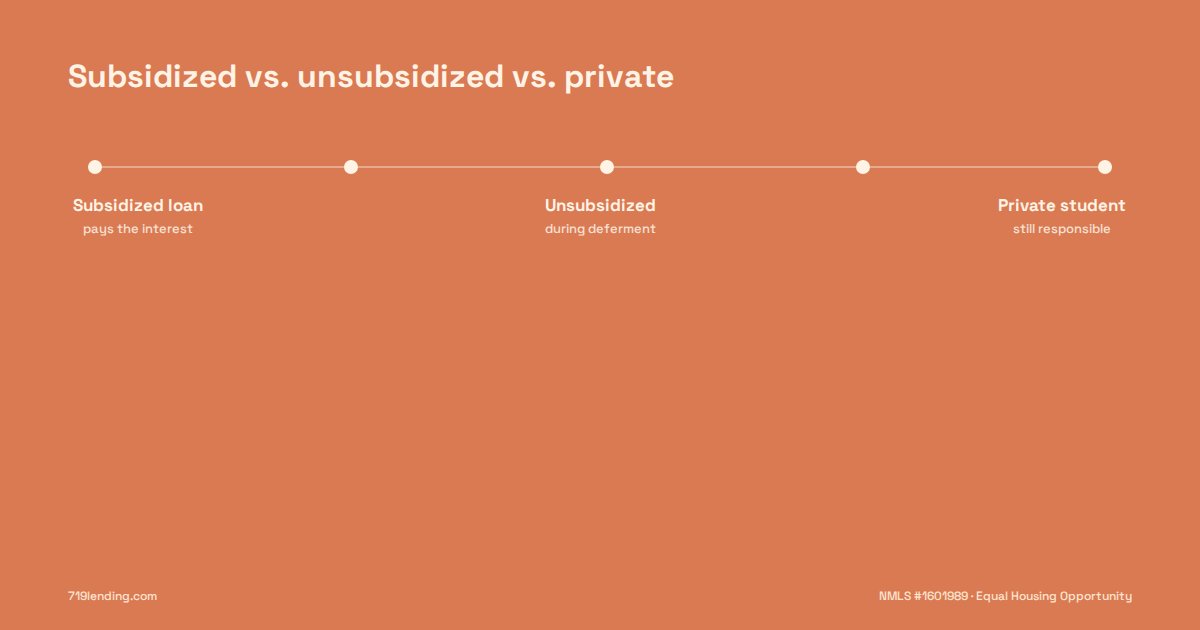
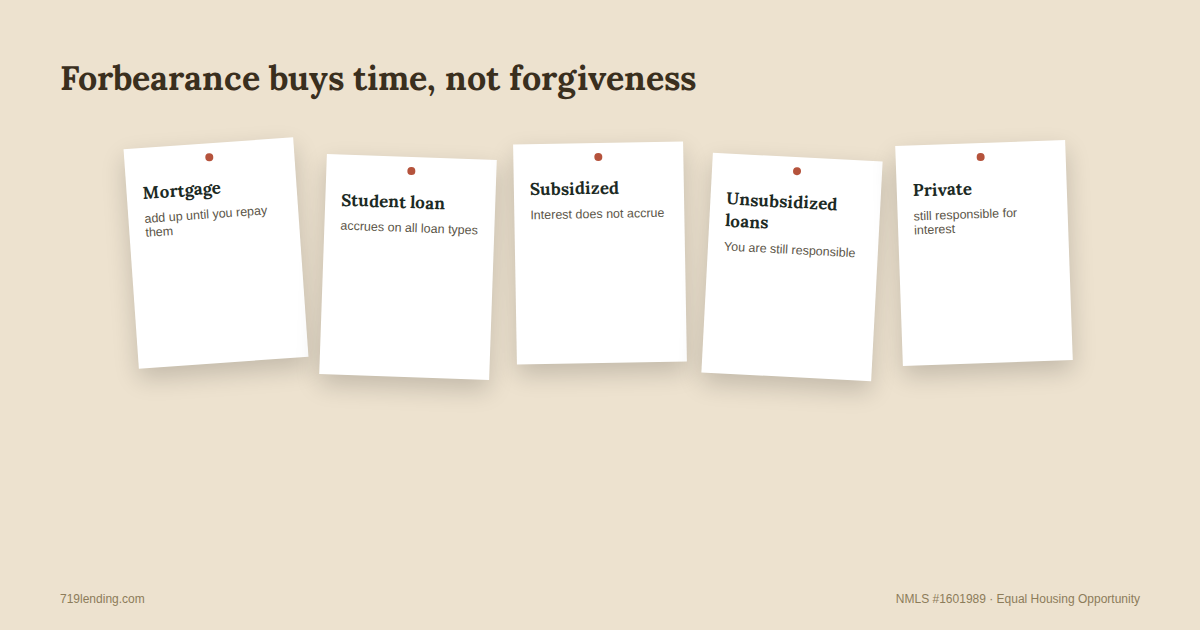
If you have a federal subsidized student loan, you do not have to pay interest on it during an approved deferment — the U.S. Department of Education covers it. Unsubsidized and private student loans work differently, and the gap matters, especially for service members around Colorado Springs weighing deferment during active duty.
What Is Home Equity and How Is It Calculated?
What is home equity and how is it calculated? In plain terms, home equity is the amount your property is currently worth, minus the amount of any existing mortgage on your property. That definition comes straight from the Consumer Financial Protection Bureau, and it is the foundation for almost every conversation about borrowing against a home.
This guide is for Colorado homeowners and buyers who want a clear answer: how the calculation works, how equity builds over time, and what home equity loans, home equity lines of credit, and a cash out refinance actually are. It also covers the risks the CFPB wants borrowers to understand before pledging a home as collateral.
What is home equity and how is it calculated?
Home equity is your ownership stake in the property. It is the difference between what the home would sell for today and what you still owe against it.
The formula in plain English
To calculate home equity, start with the home’s current market value. Then subtract the remaining balance on the existing mortgage, along with the balance of any other loan secured by the house, such as a home equity line of credit.
Whatever is left is your equity stake. If the home’s market value is higher than the total mortgage debt against it, you have positive equity.
Why the number changes over time
Both sides of the calculation move. The mortgage balance shrinks as you make mortgage payments that reduce the principal balance, and the home’s current market value moves with the local housing market.
That means equity is not fixed. It can grow in years when values climb and shrink if values fall, even if you never touch the loan. Next, let’s look at how the value side of the equation gets established.
How is your home’s market value determined?
Home equity depends on the home’s current market value, so the value estimate you use matters. Online estimates and recent comparable sales in your neighborhood can give you a rough sense of the current value.
Estimates versus a lender’s valuation
Ask your loan officer what that process involves for the specific loan, since it can include a professional appraisal of the property.
The CFPB also notes that if the value of your home decreases significantly, a HELOC lender might decide not to allow you to take out additional credit under your plan. Value is not just an academic number; it directly controls access to equity. With value covered, the next question is how equity is built in the first place.
How do you build equity in your home?
Building equity happens on both sides of the subtraction: lowering the mortgage balance and benefiting from a rising market value.
Paying down the mortgage balance
Every payment that reduces the principal balance of the mortgage loan increases your equity, because the amount you owe shrinks while the value stays the same or grows. Making mortgage payments consistently over years is the steady, controllable path to building equity.
Your down payment is your starting equity stake
The down payment you make at closing is your day-one equity. A larger down payment means you start with a larger ownership stake and less mortgage debt against the house value.
Changes in market value
Appreciation in the home’s market value adds equity without you doing anything. The reverse is also true: a falling market reduces equity, which is why the CFPB cautions that borrowing against equity always carries risk.
Some homeowners also add value through home improvements, though the effect on the home’s current market value depends on the project and the market. Now let’s connect this to why equity matters day to day.
Why does home equity matter for Colorado homeowners?
Home equity is a meaningful part of household net worth for many families, and it plays into several personal finance decisions.
Selling, moving, and PCS timing
When you sell, the sale proceeds first pay off the outstanding mortgage balance; your equity is what remains before selling costs. For military families around Colorado Springs, that math matters at PCS time, because how much equity you have built often determines whether a move is financially comfortable.
Borrowing power and lender review
Equity also determines whether and how much a lender may let you borrow against the home.
How much equity you can actually access depends on the lender’s guidelines, so confirm the specifics with a loan officer rather than assuming. That brings us to the ways homeowners actually tap equity.
How can you borrow against home equity?
There are several ways to borrow money against the equity in your home. Each uses the house as collateral, which is the central fact the CFPB wants borrowers to weigh.
Home equity loan
A home equity loan, sometimes called a HEL, allows you to borrow using the equity in your home as collateral. You receive the money as a lump sum, and a home equity loan usually has a fixed interest rate — one that will not change.
Because the loan comes in one lump sum with predictable monthly payments, home equity loans are often used for defined projects or major purchases. The CFPB notes that home equity loans may have upfront fees and costs, so compare more than just the monthly payment when shopping around.
Home equity line of credit (HELOC)
A home equity line of credit is an open-end line of credit that lets you borrow repeatedly against the available equity in your home — the value of your home minus the amount you owe on the mortgage.
During the draw period, you can generally spend up to the credit limit anytime, often using special checks or a card tied to the credit line. Some plans require a minimum draw each time, a minimum amount outstanding, or an initial draw when the line of credit is set up.
After the draw period ends, the repayment period begins: you stop borrowing and repay the balance on the lender’s schedule. Monthly payments are often significantly higher once repayment starts, and in some cases the whole borrowed amount can come due when the repayment period begins.
HELOCs usually carry a variable interest rate, so payments may change from month to month. Some HELOCs let you convert some or all of the balance to a fixed interest rate, which is usually higher than the variable rate but more predictable.
Cash out refinance
How a cash out refinance compares with a second mortgage depends on the existing mortgage, current refinance terms, and closing costs, so it is worth walking through both side by side with a loan officer.
What a second mortgage means
Home equity loans and HELOCs are common examples of second mortgages, also called junior liens. The term second means that if you can no longer pay and the home is sold to pay off the debts, this loan is paid off second, after the first mortgage.
Because the second lender may not be repaid in full if there is not enough equity to cover both loans, second mortgage loans often carry higher interest rates than first mortgage loans.

Here is how the two main equity products line up.
Home equity loan vs. HELOC at a glance
| Feature | Home equity loan | HELOC |
|---|---|---|
| How funds arrive | One lump sum upfront | Draw repeatedly up to the credit limit during the draw period |
| Structure | Closed-end: no redraw after funding | Open-end: pay down and draw again up to the limit |
| Interest rate | Usually fixed | Usually variable; some plans allow converting a balance to fixed |
| Payments | Predictable monthly payments | Can change month to month; often rise in the repayment period |
| Collateral | Your home | Your home |
Both products put the home on the line, which leads directly to the risks.
What are the risks of borrowing against home equity?
The major risk with home equity loans and home equity lines of credit is losing the home. If you cannot repay, the lender could foreclose, because you are using the equity in your home as collateral.
Debt consolidation caution
The CFPB is direct about using equity for debt consolidation: when you use home equity to pay off other debts, you are not really paying them off. You are taking out one loan to repay another, and converting unsecured loans like credit card debt or personal loans into home equity debt puts the house behind obligations that did not threaten it before.
Borrowing costs may look lower in the short term, but only because the home is the collateral. The CFPB also warns against trading short-term debt for long-term debt — for example, taking out a mortgage to pay off a shorter car loan can mean making payments and paying additional interest for many more years.
Overall debt burden and DTI
Taking out a second mortgage adds to your overall debt burden, which makes you more vulnerable if financial difficulties affect your ability to repay. Lenders weigh this through the debt to income ratio, and you should weigh it against ongoing expenses like property taxes and homeowners insurance too.
Investing borrowed equity
Be careful about borrowing against your home as part of an investment strategy. The CFPB’s warning is blunt: there is no such thing as a risk-free investment, all investments can lose value, and that could put your home at risk if you cannot repay the loan later.
Where to get unbiased help
Before taking out a home equity loan to consolidate debts, the CFPB recommends talking with a qualified, non-profit credit counselor who can advise you on managing money and debts, help you build a budget, and provide free educational materials. Start at the National Foundation for Credit Counseling’s website, and avoid firms that charge big fees up-front or make unrealistic promises. With the risks in view, here is where the official guidance lives.
What the official sources say and where to read them
Everything in this article about how these products work comes from the Consumer Financial Protection Bureau, the federal agency that implements and enforces consumer financial law.
Read the CFPB’s pages on what a home equity loan is, how a HELOC works, and second mortgages and junior liens. The CFPB also publishes a booklet, What You Should Know About Home Equity Lines of Credit, to help you shop and watch for pitfalls.
Those pages provide general consumer information, not legal advice, and tax treatment of any borrowing varies — talk to a tax professional about your situation. Now for the practical next step.
What to do next
Start by running the calculation yourself: estimate the home’s current market value, subtract the remaining balance on the current mortgage and any other liens, and you have a working equity figure.
Then decide what you actually need the money for and whether the goal justifies securing new debt with your home. Home improvements, debt consolidation, and major purchases each carry different trade-offs.
Finally, talk it through with a licensed professional. A 719 Lending loan officer in Colorado Springs can walk you through how much equity a lender’s guidelines would let you access, how a home equity loan, a HELOC, and a cash out refinance compare for your situation, and what the interest rate and closing cost picture looks like for each — so you can make the call with the full math in front of you.
Frequently asked questions
How do I calculate home equity on my house?
Take your home’s current market value and subtract the outstanding mortgage balance plus any other loans secured by the property, such as a HELOC balance. The remainder is your equity. A lender will use its own valuation of the home when you apply to borrow against it.
Does paying down my mortgage increase my home equity?
Yes. Equity is the home’s value minus what you owe, so every payment that reduces the principal balance increases your equity stake, assuming the home’s market value holds steady or rises.
Can home equity go down?
Yes. If the home’s market value falls, equity falls with it even if you keep making mortgage payments. The CFPB notes that a significant drop in value can also lead a HELOC lender to freeze additional draws on the credit line.
Is a home equity loan or HELOC a second mortgage?
Usually, yes. Home equity loans and home equity lines of credit are common examples of second mortgages, or junior liens. If the home is sold to pay off the debts, the second mortgage is paid after the first, which is why second mortgages often carry higher interest rates than first mortgages.
What happens if I can’t repay a home equity loan?
Because the home is the collateral, the lender could foreclose if you cannot repay a home equity loan or HELOC. That is why the CFPB recommends exploring alternatives with a non-profit credit counselor before borrowing against your home to consolidate debts.
What is the difference between a home equity loan and a HELOC?
A home equity loan delivers the money as one lump sum, usually at a fixed interest rate. A HELOC is an open-end line of credit you can draw on repeatedly during the draw period, usually at a variable rate, with a repayment period afterward when payments are often significantly higher.
719 Lending Inc., NMLS #1601989 · Equal Housing Opportunity
719 Lending Inc. is not affiliated with or endorsed by HUD, FHA, VA, USDA, CHFA, the CFPB, or any government agency.
Last updated: September 2026

Related Posts