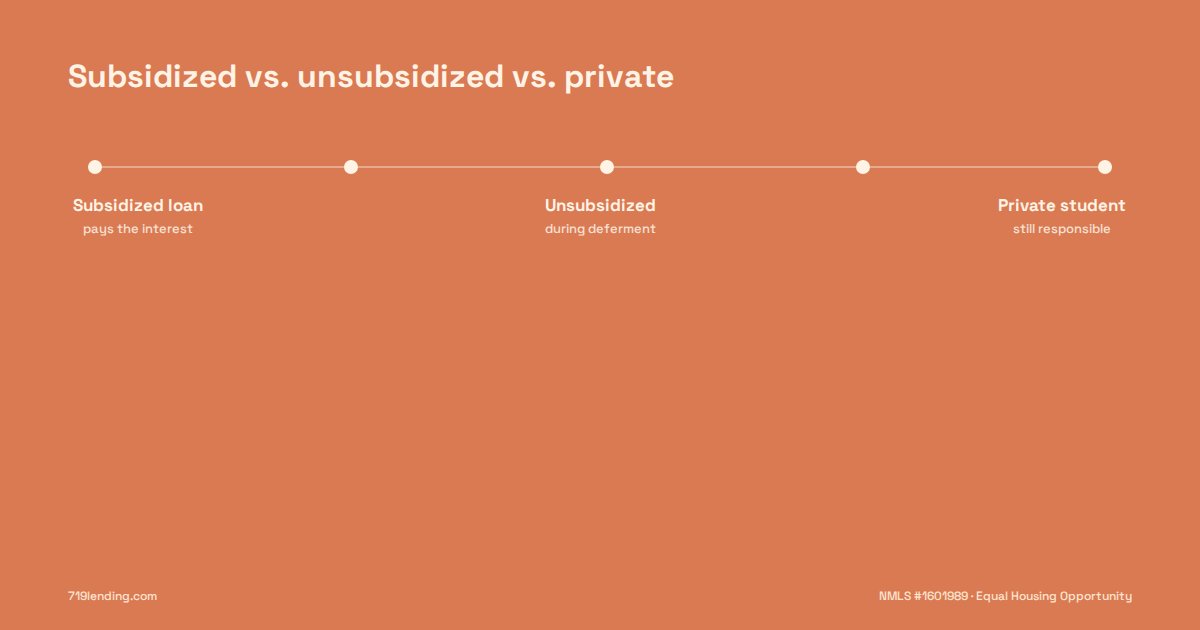
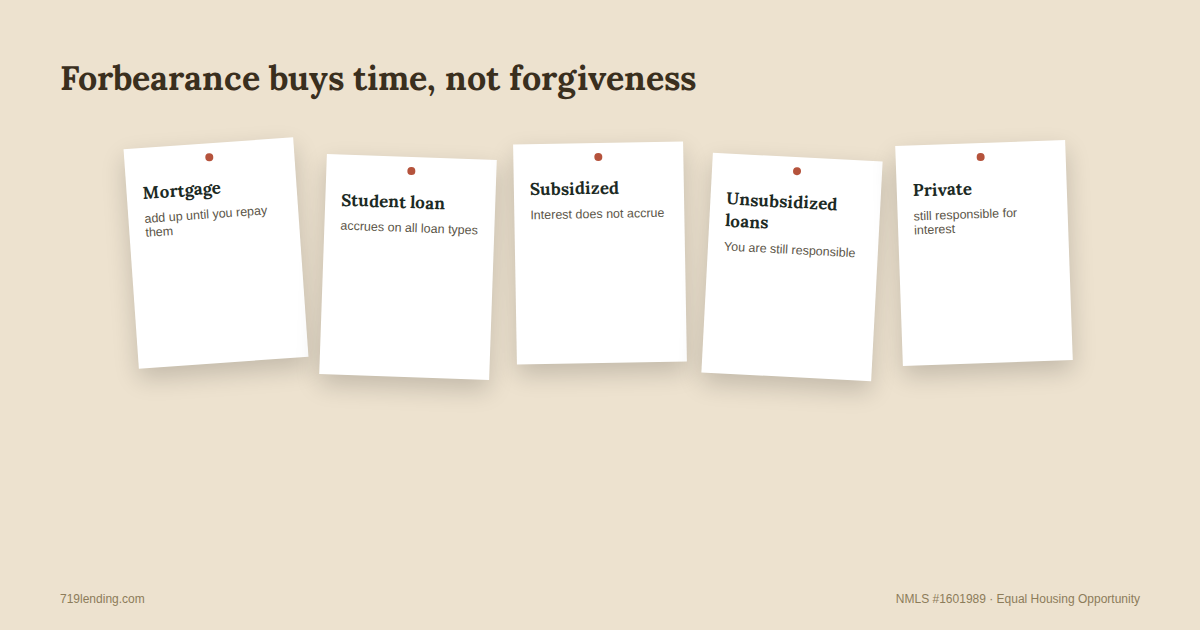
If you have a federal subsidized student loan, you do not have to pay interest on it during an approved deferment — the U.S. Department of Education covers it. Unsubsidized and private student loans work differently, and the gap matters, especially for service members around Colorado Springs weighing deferment during active duty.
What Is an Index and How Does It Affect My ARM Payment?
If you are asking what an index is and how it affects an ARM payment, here is the plain answer: an index is a broader measure of interest rates, and part of the interest rate you pay on an adjustable-rate mortgage is tied to it. This article explains how the index, the margin, and rate caps combine to set the payment on an ARM loan, and it is written for Colorado borrowers weighing an adjustable-rate mortgage against a fixed rate mortgage.
Everything below is grounded in guidance published by the Consumer Financial Protection Bureau, the federal agency that oversees consumer mortgage disclosures.
The short answer, up front
Before the deep dive, here is the whole mechanism in one list:
- An adjustable-rate mortgage (ARM) starts with an initial interest rate that may stay the same for months, a year, or a few years.
- When that introductory period ends, the interest rate changes on a regular interval.
- Each new rate is based on the current index — a broader measure of interest rates — plus a set margin the lender adds.
- Rate caps can limit how far the rate moves at each adjustment and over the life of the loan.
- When the index rises, the payment goes up. When the index declines, the payment may go down, but that is not true for all ARMs.

Now let’s take each piece apart, starting with the index itself.
What is an index on an adjustable-rate mortgage?
An index is a reference interest rate — a published benchmark rate that reflects broader market conditions rather than anything specific to you or your home loan. The lender does not control the index; it moves with the market.
A broader measure of interest rates
The Consumer Financial Protection Bureau describes it simply: part of the interest rate you pay on an adjustable-rate mortgage will be tied to a broader measure of interest rates, called an index. The loan documents name the specific index the loan follows, so ask the loan officer to point it out before you sign.
The index is only half the equation
The index alone does not set the interest rate on an ARM loan. The actual rate at each change is the new index value plus a set margin, subject to any caps. That margin is the second half of the equation, and we will cover it in its own section below.
First, let’s connect the index directly to the number you actually feel each month: the payment.
How does an index affect my ARM payment?
Once the introductory period on an adjustable-rate mortgage ends, the interest rate resets on a regular schedule based on where the index sits at that moment. The monthly payment is recalculated to reflect the new rate.
When the index rises
Your payment goes up when the index of interest rates increases. This is the core risk of an ARM: the borrower, not the lender, absorbs upward moves in the market index once the fixed period ends.
When the index falls
When interest rates decline, sometimes the payment may go down — but the CFPB is explicit that this is not true for all ARMs. Some ARM loans limit how much the rate may decrease at any time or over the life of the loan.
Why two neighbors with the same ARM can pay differently
Two loans tied to the same index can still carry different rates because each lender adds its own margin, and each loan agreement can carry different rate caps. The index is shared; the margin and caps are specific to the loan.
To see why the index only matters after a delay, it helps to walk through the life of an ARM loan from day one.
How an adjustable-rate mortgage works from start to finish
An adjustable-rate mortgage has two phases: a fixed period at the start, and an adjustable rate period after it. The index only drives the payment in the second phase.
The introductory period
Many ARMs start at a lower initial interest rate than fixed-rate mortgages. That initial rate may stay the same for months, a year, or a few years, depending on the loan structure.
During this initial fixed rate period, the index can rise and fall without touching your payment. The introductory rate is locked in by the loan contract.
The adjustment period
When the introductory period is over, the interest rate changes on a regular interval, and the amount of the payment is likely to go up. How frequently the rate adjusts is set in the loan documents — it is one of the specific questions the CFPB says to get answered before closing.
Hybrid ARMs in plain English
The mechanics are exactly what is described above: fixed rate period first, then the index-plus-margin formula takes over at each adjustment.
That formula is worth spelling out, because it is the single most important line in any ARM disclosure.
Index plus margin: the formula that sets the rate
At each adjustment, the actual rate is based on the new index plus a set margin, subject to any caps. The margin is a number of percentage points added to the index by the lender that sets the interest rate on the loan.
Think of it this way: the index is the moving part, and the margin is the fixed part. The index changes with market conditions; the margin stays constant for the life of the loan.
Because the margin never moves, comparing margins between two ARM offers tied to the same index is a meaningful comparison. A borrower cannot control where the index goes, but the margin is set in the loan agreement before closing.
Of course, the formula does not operate without limits — that is where rate caps come in.
Rate caps: the guardrails on how far the rate can move
Rate caps are contract limits on how much the interest rate can change. Some ARMs set a cap on how high the rate can increase at any single adjustment or over the life of the loan.
Initial versus subsequent adjustment caps
The caps may be different for the initial change versus the subsequent regular interval changes. The first reset after the introductory period can be governed by one limit, and each later reset by another, so read both in the loan documents.
Limits on decreases, too
Some ARMs also limit how much the interest rate may decrease at any time or over the life of the loan. This is why a falling index does not automatically mean a falling payment on every adjustable-rate mortgage.
The number that matters most: the maximum
The CFPB’s guidance is direct: before taking out an adjustable-rate mortgage, find out whether you will still be able to afford the loan if the rate and payment go up to the maximums allowed under the loan contract. Budget for the ceiling, not the introductory payment.
With the mechanics covered, the next question is how an ARM stacks up against the alternative most borrowers compare it to.
ARM versus fixed rate mortgage: what the index changes
With a fixed-rate mortgage, the interest rate is set when you take out the loan and will not change. With an adjustable-rate mortgage, the interest rate may go up or down after the fixed period ends.
| Feature | Fixed rate mortgage | Adjustable-rate mortgage (ARM) |
|---|---|---|
| Interest rate | Set at closing; does not change | May go up or down after the introductory period |
| Role of an index | None — the rate is not tied to an index | Rate resets to index plus margin at each adjustment |
| Monthly payment | Principal-and-interest portion stays constant | Recalculated when the rate adjusts |
| Rate caps | Not needed | May limit increases and decreases per adjustment and over the life of the loan |
| Starting rate | Fixed from day one | Many ARMs start at a lower initial interest rate than fixed-rate mortgages |
A traditional fixed rate mortgage trades away the possibility of a lower initial rate for certainty: the same interest rate, and fixed payments on principal and interest, for the entire loan term. An ARM trades certainty for a potentially lower start.
The CFPB adds a caution worth repeating: don’t assume you’ll be able to sell the home or refinance the loan before the rate changes. The value of the property could decline, or your financial circumstances could change. If you can’t afford the higher payments on today’s income, you may want to consider another loan.
One specific variety of ARM deserves its own warning, because the payment can stop tracking the math entirely.
Payment-option ARMs: when the payment doesn’t cover the interest
An option or payment-option ARM is an adjustable rate mortgage with several possible payment choices — and some of those choices do not cover the full amount needed to pay down the loan.
The three typical payment choices
The payment options usually include: an amount covering both principal and interest, an amount covering only the interest, and a minimum or limited amount that does not even cover the interest. Only the full principal-and-interest payment reduces what you owe with each payment.
Interest on interest
If you pay just the interest, the principal never shrinks. If you pay less than the interest, the unpaid interest gets added to the principal balance — and then you pay interest on the interest, which dramatically increases the amount of debt and the cost of the loan.
The CFPB’s tip: if you have a payment-option ARM, always try to pay all of the interest and some of the principal with each mortgage payment. Regularly skipping principal or full interest payments to make ends meet is a sign of trouble ahead.
Whatever ARM structure you are looking at, the CFPB publishes a checklist of questions to settle before closing.
Questions to answer before taking out an ARM
Before signing an adjustable-rate mortgage, the Consumer Financial Protection Bureau says to find out:
- How high or low the interest rate and monthly payments can go with each adjustment
- How frequently the interest rate will adjust
- How soon the payment could go up
- Whether there is a cap on how high the interest rate could go
- Whether there is a limit on how low the interest rate could go
- Whether you could still afford the loan if the rate and payment go up to the maximums allowed under the loan contract
Every one of those answers lives in the loan documents, and a loan officer should be able to walk you through each line. There is also a Colorado-specific reason to press on these questions.
Why this matters in Colorado Springs
Colorado Springs is a heavily military market, and adjustable-rate mortgages often get pitched to households that expect to move before the introductory period ends — a familiar assumption around PCS orders.
The CFPB’s warning applies directly: don’t assume you’ll be able to sell the home or refinance before the rate adjusts. Orders change, timelines slip, and home values and personal finances can move against you.
The practical test is the same for a service member as for any other borrower: could the household afford the payment if the rate rose to the contract maximum on today’s income? If the answer is no, another loan structure deserves a look.
If you want to verify anything in this article, go straight to the source.
What the official source says and where to read it
This article is drawn from the Consumer Financial Protection Bureau’s consumer guidance on adjustable-rate mortgages and payment-option ARMs, available at the CFPB’s explanation of fixed-rate versus adjustable-rate loans and the CFPB’s page on payment-option ARMs.
The CFPB also maintains a broader set of homebuying tools and resources for anyone shopping for a mortgage. Its pages are general consumer information, not legal advice — and the same is true of this article.
So what should you actually do with all of this?
What to do next
If you already have an ARM, pull out the loan documents and find the index name, the margin, the adjustment schedule, and every rate cap. Then check whether the introductory period has ended or when it will.
If you are shopping, ask each lender the CFPB’s checklist questions and get the answers in writing. Compare the margin and caps, not just the initial rate.
And if you are in Colorado Springs or anywhere along the Front Range, a licensed loan officer at 719 Lending can walk through an existing ARM disclosure or a new loan estimate with you, line by line, and explain exactly how the index on that loan drives the payment. Bring the paperwork; the answers are in there.
Frequently asked questions
What is the index on an adjustable-rate mortgage?
An index is a broader measure of interest rates that part of the interest rate on an ARM is tied to. It is a published benchmark that moves with market conditions, and the loan documents name the specific index the loan follows.
What is the difference between the index and the margin on an ARM?
The index is the moving market benchmark; the margin is a set number of percentage points the lender adds to the index to set the interest rate at each adjustment. The index changes over time, while the margin stays constant for the life of the loan.
Does my ARM payment go down when interest rates fall?
Sometimes, but not always. The CFPB notes that some ARMs limit how much the interest rate may decrease at any time or over the life of the loan, so a falling index does not guarantee a lower payment on every adjustable-rate mortgage.
How often does an ARM interest rate adjust?
After the introductory period ends, the rate changes on a regular interval set in the loan contract. How frequently the rate adjusts is one of the specific questions the CFPB says to get answered before taking out the loan, because it varies by loan.
What are rate caps on an adjustable-rate mortgage?
Rate caps are contract limits on how much the interest rate can change — at a single adjustment or over the life of the loan. The caps may differ for the initial change versus later changes, and some ARMs also limit how far the rate can decrease.
Is a payment-option ARM different from a regular ARM?
Yes. A payment-option ARM offers several payment choices, and some do not cover the full interest due. Unpaid interest gets added to the principal balance, so you end up paying interest on interest, which increases the debt and the cost of the loan.
719 Lending Inc., NMLS #1601989 · Equal Housing Opportunity
719 Lending Inc. is not affiliated with or endorsed by HUD, FHA, VA, USDA, CHFA, the CFPB, or any government agency.
Last updated: September 2026

Related Posts