Colorado buyers can decline the owner's title insurance policy, but most lenders require a lender's policy to close the loan. This guide explains what each policy protects, who decides, who typically pays, and what you give up if you skip the owner's coverage.
Who Chooses the Title Company When Buying in Colorado?
Who chooses the title company when buying a house in Colorado is one of the most common process questions buyers ask once a contract comes together. This article explains how the choice is made, what a title company actually does, what federal law says about the seller’s role, and how a home buyer can shop for title insurance on their own.
Here are the key points up front:
- The title company is negotiated in the purchase contract — there is no law handing the choice to one side.
- Under the Real Estate Settlement Procedures Act (RESPA), a seller may not require, directly or indirectly, that the buyer purchase title insurance from any particular company as a condition of the sale.
- The Consumer Financial Protection Bureau (CFPB) says you can usually shop for a title insurance provider separately from the mortgage, and shopping could save money.
- Most lenders require a lender’s title insurance policy; an owner’s policy is a separate decision the buyer can make.
Who chooses the title company when buying a house in Colorado?
The title company selection is a negotiated term of the purchase contract. In practice, the party who agrees to pay for a given title policy often proposes the title company, and the other side either accepts or counters.
Your real estate agent will walk you through how the offer addresses title. What matters is that the choice is a contract term between buyers and sellers, not a rule imposed by the state or the lender.
That said, the buyer holds a specific legal protection under federal law, which is the next thing to understand.
Can the seller require a specific title company?
No. Under the Real Estate Settlement Procedures Act, a seller may not require, directly or indirectly, a borrower to purchase title insurance from any particular company as a condition of the sale of a home.
The CFPB states this plainly: if a seller says you must buy title insurance from a specific title company or they will not sell you the house, they cannot do that.
A seller can propose a title company in negotiations, and a buyer can agree to it. The line federal law draws is at making a specific title company a condition of the sale.
Knowing that protection exists, it helps to understand what the title company you end up with will actually be doing.
What does a title company do during the closing process?
A title company’s job centers on the property’s title — the legal ownership of the home. When you purchase a home, you receive a document usually called a deed, which shows the seller transferred their legal ownership, or title, to you.
The title search and title commitment
Before closing, the title company typically examines public records and property records connected to the home. The goal is to surface problems with the property’s title — sometimes called title defects — before the property transfer happens rather than after.
Your real estate agent and loan officer can help you read it.
Closing services and the settlement table
Title companies also commonly provide closing services, acting as a neutral third party between buyer and seller. In many transactions they coordinate the escrow process, holding funds in escrow accounts until the closing conditions are met.
Depending on the state where you are buying, the settlement agent, lawyer, lender, real estate agent, or title insurance company may give you an itemized list of fees at closing, including the title insurance cost.
The title company’s work supports two different insurance policies, and it is worth being clear on who each one protects.
Lender’s policy versus owner’s policy: who is protected

Title insurance protects against legal claims against the home that arose before you purchased it. The CFPB gives two examples: a previous owner’s failure to pay taxes, or contractors who say they were not paid for work done on the home before you purchased it.
Lender’s title insurance
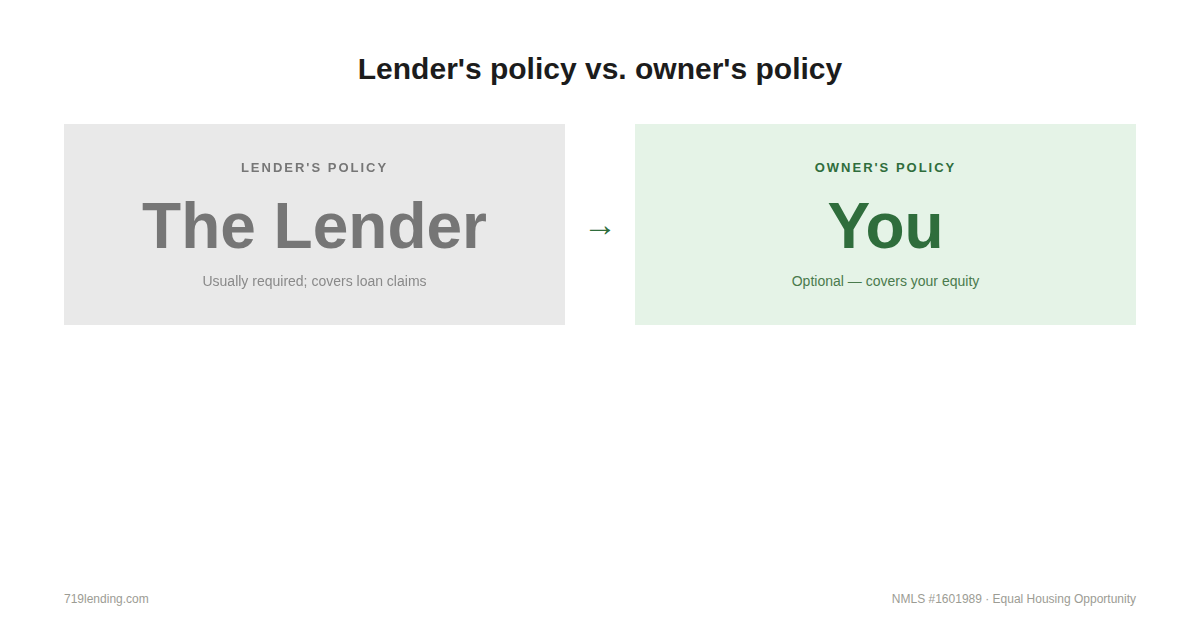
Most lenders require you to purchase a lender’s title insurance policy. The lender’s policy protects the amount the lender lends — not your equity. A buyer paying cash has no lender requiring one.
Owner’s title insurance
An owner’s policy is one you may choose to buy. Owner’s title insurance protects the homeowner if someone later sues and says they have a claim against the home from before the homeowner purchased it, helping shield your financial investment from those financial losses.
| Policy | Who it protects | Who decides |
|---|---|---|
| Lender’s policy | The lender, up to the amount it lends | Most mortgage lenders require it |
| Owner’s policy | The homeowner’s investment in the property | Optional — the buyer’s choice |
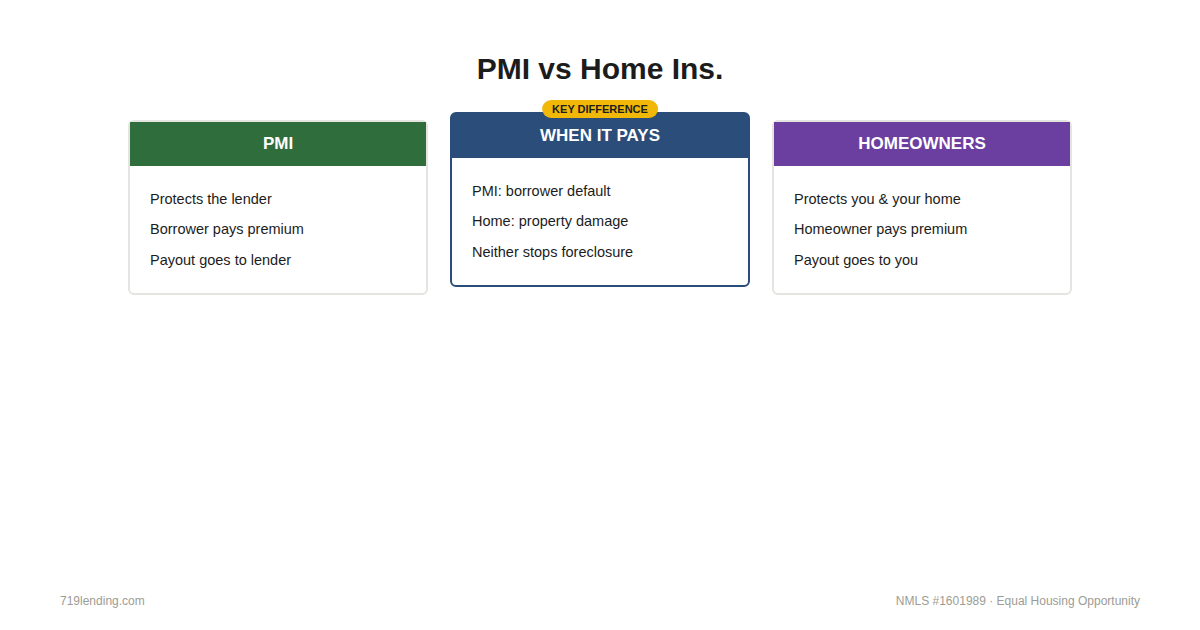
Note that title insurance is different from homeowners insurance. Homeowners insurance is a separate policy on the home itself, while title insurance addresses claims tied to the property’s title from before your purchase. Both will come up during your home buying journey, but they solve different problems.
Since the buyer often ends up purchasing at least one title policy, the natural next question is whether you can pick the title insurer yourself.
Can you shop for your own title company?
Usually, yes. The CFPB says you can usually shop for your title insurance provider separately from your mortgage, and that if you shop for title insurance, you could save money.
The CFPB also notes that if you choose to buy owner’s title insurance, the total cost is usually lower if you use the same provider for both the lender’s policy and the owner’s policy, compared to buying them separately.
How to compare title companies
Compare bottom-line totals for all title-related costs rather than any single line item. Online reviews and local expertise in your county’s records can also inform the choice, and your real estate agent can tell you which title companies they have closed with before.
Once you have chosen, the title charges flow onto your loan paperwork — and the way they display trips up a lot of buyers.
How title costs appear on the Loan Estimate and Closing Disclosure
The itemized list of fees your title insurance company gives you may be displayed differently than the same fees on the Loan Estimate or the Closing Disclosure. That does not necessarily mean you are being charged more.
The CFPB’s guidance: if you add up all the title-related costs the title insurance company gives you, the total should match the total of the title-related costs on the Loan Estimate or Closing Disclosure.
When comparing title companies as part of your closing costs, always compare the bottom-line total. That habit matters for every buyer, and doubly so for buyers closing on a tight timeline — which describes a lot of Colorado Springs transactions.
What Colorado Springs and military buyers should keep in mind
Colorado Springs is a heavily military market, and PCS moves often compress the closing timeline. Sorting out early in the contract who selects the title company — and confirming the title company can support your closing date — removes one variable from a fast-moving home purchase.
Remember the two levers you control as the buyer: the seller cannot make a specific title company a condition of the sale under federal law, and you can usually shop for the title insurance provider separately from the mortgage.
If you are buying with a VA loan or any other program, loop your loan officer in on the title company choice so the closing paperwork moves in one direction.
Your next step
Before you sign a purchase contract, read how it handles title: who selects the title company, and who pays for which title policy. Ask your real estate agent to explain the customary approach in your county, and remember the choice is negotiable.
Then talk to your loan officer about how the lender’s policy and an optional owner’s policy fit into the closing. The team at 719 Lending walks Colorado buyers through the closing process every day and can help you compare bottom-line title totals before you commit — reach out when you are ready to start.
Frequently asked questions
Can the seller make me use their title company in Colorado?
No. Under the Real Estate Settlement Procedures Act (RESPA), a seller may not require, directly or indirectly, that a buyer purchase title insurance from any particular company as a condition of the sale of a home. A seller can propose a title company in negotiations, but cannot make it a condition of selling you the house.
Who pays for title insurance when buying a house in Colorado?
It is negotiated in the purchase contract between buyer and seller. There is no fixed statewide rule, so confirm with your real estate agent how your contract allocates the lender’s policy and the owner’s policy. The CFPB notes the total cost is usually lower when the same provider issues both policies rather than buying them separately.
Do I need owner’s title insurance if the lender already requires a policy?
The lender’s policy protects only the amount the lender lends. Owner’s title insurance is optional and protects the homeowner if someone later sues claiming an interest in the home from before you purchased it — for example, a previous owner’s unpaid taxes or a contractor who says they were not paid.
Can I shop for a title insurance company separately from my mortgage?
Usually, yes. The Consumer Financial Protection Bureau says you can typically shop for your title insurance provider separately from the mortgage, and shopping could save money. Compare the bottom-line total of all title-related costs across companies.
Why doesn’t the title company’s fee sheet match my Closing Disclosure?
Depending on the state, the itemized fee list required under state law may be displayed differently than the same fees on the Loan Estimate or Closing Disclosure. That does not necessarily mean you are being charged more — add up all title-related costs from each document and the totals should match.
719 Lending Inc., NMLS #1601989 · Equal Housing Opportunity
719 Lending Inc. is not affiliated with or endorsed by HUD, FHA, VA, USDA, CHFA, the CFPB, or any government agency.
Last updated: August 2026

Related Posts