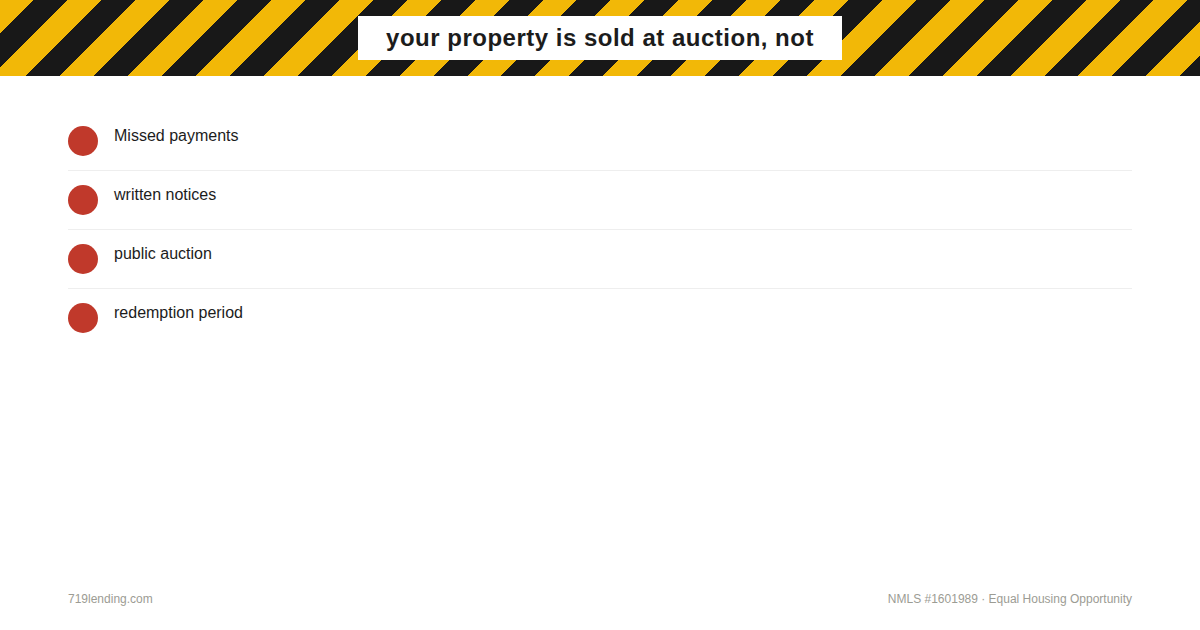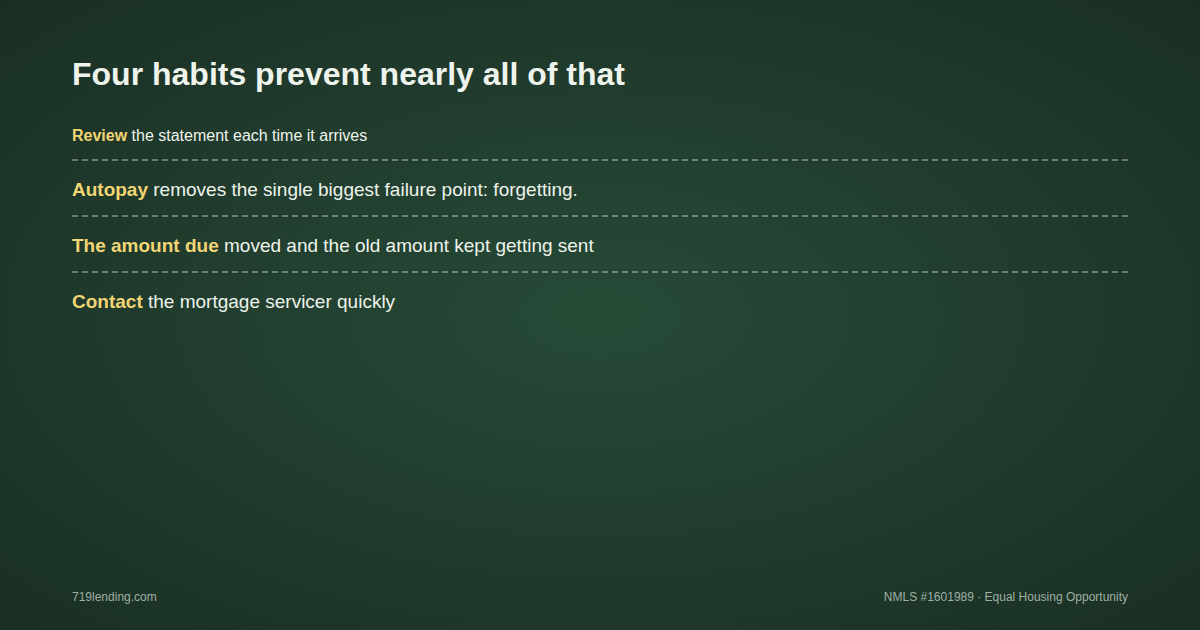
In a nonjudicial foreclosure, the lender follows a series of required written notices under the power of sale clause in your deed of trust, then sells the property at a public auction to the highest bidder — all without filing a lawsuit. Here is the step-by-step sequence, what you control, and where Colorado and military borrowers can get help.
Where to Get Cost Estimates for Homeownership Expenses
Where can I get cost estimates for various homeownership expenses? According to the Consumer Financial Protection Bureau (CFPB), the answer depends on the expense: your insurance agent, the local tax assessor, the homeowners association, and your lender each own a piece of the picture. This guide walks Colorado buyers through who to ask, what to ask for, and how the official Loan Estimate keeps lender-quoted costs honest.
Where can I get cost estimates for various homeownership expenses?
The CFPB names four estimate sources directly: your insurance agent, your local tax assessor, the homeowners association, and your lender. Each one covers a different slice of the total monthly costs of owning a home.
| Homeownership expense | Where to get the estimate |
|---|---|
| Homeowners insurance | An insurance agent |
| Property taxes | The local tax assessor |
| HOA fees | The homeowners association |
| Monthly mortgage payment, mortgage insurance, closing costs | The lender, via a Loan Estimate |
| Repairs and maintenance | Your own budget and emergency fund planning |

Gather all of these before you fall in love with a home price. Knowing the full stack of ongoing expenses tells you what you can comfortably afford, not just what a lender will approve.
Next, let’s confirm who this approach actually serves.
Who this guide is for
This guide is for anyone budgeting for a home purchase price in Colorado — first-time buyers, move-up buyers, and military families executing a PCS move to Colorado Springs.
Military buyers arriving at Fort Carson, Peterson, or Schriever often shop from a distance, which makes remote-friendly estimate sources — the assessor’s records, an insurance agent, a lender’s Loan Estimate — especially useful.
Whether you plan on a conventional loan, an FHA loan, or a VA loan, the estimate-gathering process below works the same way. Start with the biggest line item: the mortgage itself.
How do I get an estimate of the monthly mortgage payment?
The lender is your source for the loan side of the equation: the loan amount, the interest rate, the monthly mortgage payment, and closing costs. The formal tool for this is the Loan Estimate, a standardized federal disclosure you receive after applying.
What can a lender charge before giving me a Loan Estimate?
Per the CFPB, the only fee a lender can ask you to pay before providing a Loan Estimate is a reasonable fee for obtaining your credit report. A lender cannot collect any other fees, take your credit card number, or require a check for anything else until you say you want to proceed.
Once you receive the Loan Estimate and tell the lender you want to move forward, the lender can then charge additional fees — an application fee or an appraisal fee are common examples.
Compare Loan Estimates across loan types
Because the disclosure is standardized, you can request estimates for more than one scenario and compare them side by side. Ask what the numbers look like for conventional loans versus FHA loans or VA loans, and with different down payment amounts, so you can see how the loan type and down payment change the total monthly payment.
A team like 719 Lending can walk you through each version so you understand what drives the differences.
Which loans don’t come with a Loan Estimate?
The CFPB notes you will not receive a Loan Estimate or Closing Disclosure if you are shopping for a reverse mortgage, a home equity line of credit (HELOC), a manufactured housing or mobile home loan not secured by real estate, or a subordinate loan through certain homebuyer assistance programs.
For those loans you should receive Truth-in-Lending disclosures instead. Reverse mortgage shoppers also receive a Good Faith Estimate (GFE) and a HUD-1 or HUD-1A Settlement Statement.
The lender covers the loan; the next stops cover the ongoing expenses of the home itself.
How do I estimate homeowners insurance?
Homeowners insurance estimates come from an insurance agent. Call before you write an offer, because insurance rates vary by property and by risk, and the premium is typically added to the monthly mortgage payment through an escrow account.
Factor in disaster risk
The CFPB suggests using a tool to estimate the disaster risk of a home and thinking about how that risk may affect the future availability and cost of homeowners insurance. In Colorado, that conversation with an agent is worth having early, since some home-related costs are likely to rise over time.
Ask about flood insurance
If a home sits in or near a high-risk flood area, you may be required — or may choose — to buy flood insurance at additional cost. An insurance agent can quote it alongside the standard policy, and bundling questions about home and auto insurance in the same call can simplify shopping.
Building codes and energy efficiency can also affect a home’s utility and insurance costs, so ask the agent how the specific property scores.
Insurance is one recurring line; property taxes are the next.
How do I estimate property taxes?
Property taxes are estimated through the local tax assessor. In the Colorado Springs area, the county assessor’s records show what a specific property has been taxed, which gives you a concrete starting point rather than a guess.
Why property taxes belong in the monthly budget
Property taxes are typically added to the monthly mortgage payment, often collected through an escrow account along with homeowners insurance. That means the true monthly mortgage payment is bigger than principal and interest alone.
Property taxes can also change over time, so treat the assessor’s figure as a snapshot, not a ceiling. Your loan officer will show how taxes flow into the total monthly payment on the Loan Estimate.
If the home is in a managed community, there’s one more recurring cost to pin down.
How do I estimate HOA fees?
HOA fees are estimated by asking the homeowners association directly. The CFPB lists the homeowners association as one of the four estimate sources for a reason: HOA fees are a real monthly fee that sits alongside the mortgage payment, and they vary community by community.
Ask the homeowners association what the monthly fee covers and how often it has changed. A real estate agent can usually get you the HOA documents during the offer process.
HOA fees, property taxes, and homeowners insurance together shape whether a given home price fits a monthly budget — which brings us to affordability itself.
What you qualify for is not what you can afford
Lenders will tell you how much you are qualified to borrow — that is, how much they are willing to loan you. The CFPB is blunt that this is very different from how much you can afford to repay without stretching the rest of the budget too thin.
Look at your whole budget, not standard ratios
Online calculators compare income and debts using standard ratios, but lenders do not take into account all your family and financial circumstances. To know what you can comfortably afford, take a hard look at income, expenses, and savings priorities.
Our mortgage calculators are a useful starting point, but treat any calculator’s output as a conversation starter, not a verdict.
Don’t sacrifice savings for a bigger house
You will still need to save for emergencies, retirement, college, and other priorities after you become a homeowner. The CFPB specifically recommends adding to your emergency fund so a sudden repair doesn’t push you into debt — and that a bigger down payment or bigger house shouldn’t come at the expense of those savings.
Plan for payments that can change
Depending on the loan type, the monthly payment could change in the future — a fixed rate behaves differently from an adjustable-rate loan. Consider how a future, higher mortgage payment would fit the budget before you commit.
Once you apply, federal rules govern how much the lender’s estimates can move — and that protection is worth understanding.
How reliable is a Loan Estimate?
It is illegal for lenders to deliberately underestimate the costs on a Loan Estimate. Beyond that, federal rules sort closing costs into three categories with different limits on how much each can increase at closing.
Costs that cannot increase at all
Absent a change in circumstances, these cannot change: fees paid to the lender, mortgage broker, or an affiliate of either for a required service; fees for required services you weren’t allowed to shop for separately, when the provider isn’t affiliated with the lender or broker; and transfer taxes.
Costs with a capped tolerance
Recording fees and fees for required services where you chose a provider from the lender’s written list can increase, but only within a capped tolerance set by federal rules — unless there’s a change in circumstances. If the provider is an affiliate of the lender, that cost cannot change at all.
Costs that can change by any amount
Some costs are not controlled by the lender and can increase at any time: prepaid interest, property insurance premiums, initial escrow account deposits, fees for lender-required services you shopped for using a provider not on the lender’s list, and fees for third-party services the lender doesn’t require.
What counts as a change in circumstances?
Examples from the CFPB include switching to a different kind of loan, changing the down payment amount, an appraisal coming in higher or lower than expected, new debt or a missed payment affecting your credit, or the lender being unable to document overtime or bonus income. A change in circumstances usually triggers a revised Loan Estimate.
If costs rise beyond the allowed limits with no change in circumstances, you are entitled to a refund of the amount above those limits.
Check the rate lock
If the interest rate is not locked, it can change at any time. Even a locked rate can change if the application information changes or you don’t close within the rate-lock timeframe — check the top of page one of the Loan Estimate to see whether the rate is locked and until when.
With the protections clear, here’s how to put it all together.
Don’t forget repairs, maintenance, and moving costs
Repairs and home maintenance are real costs of ownership, even though no one mails you a bill for them. The CFPB recommends padding your emergency or household fund so sudden repairs or expensive replacements don’t force you into debt.
Moving costs and the additional costs of settling in — while not part of the mortgage — belong in the same planning conversation, especially for military families timing a PCS.
Ready to turn estimates into a plan? Here’s the sequence.
Next steps for Colorado buyers
Work the four sources in order. Call an insurance agent for a homeowners insurance quote, pull the assessor’s property tax record, request the HOA fee schedule from the homeowners association, and ask a lender for a Loan Estimate.
Then stack every number — mortgage payment, property taxes, insurance, HOA fees, and a maintenance cushion — against your monthly budget and savings goals to find the home purchase price you can comfortably afford.
If you’re buying in Colorado Springs or anywhere along the Front Range, start a conversation with 719 Lending. We’ll prepare a Loan Estimate for each scenario you’re weighing — different loan types, different down payment amounts — so you can compare real numbers instead of guesses.
Frequently asked questions
Who can give me estimates for property taxes, insurance, and HOA fees?
The Consumer Financial Protection Bureau points to your insurance agent for homeowners insurance, the local tax assessor for property taxes, the homeowners association for HOA fees, and your lender for mortgage-related costs via a Loan Estimate.
Does it cost anything to get a Loan Estimate?
Per the CFPB, the only fee a lender can charge before providing a Loan Estimate is a reasonable fee for obtaining your credit report. Other fees, like an application or appraisal fee, can only be charged after you tell the lender you want to proceed.
Can my closing costs go up after I get a Loan Estimate?
Some can and some can’t. Fees paid to the lender or broker for required services and transfer taxes generally cannot increase, some third-party fees can rise only within a capped tolerance, and costs like prepaid interest and escrow deposits can change by any amount. A change in circumstances can reset these limits.
Are property taxes and homeowners insurance part of my monthly mortgage payment?
Typically yes. Homeowners insurance, property taxes, and possibly private mortgage insurance or HOA fees are usually added to the monthly mortgage payment, often through an escrow account, so include them when calculating what you can afford.
Do all home loans come with a Loan Estimate?
No. Reverse mortgages, HELOCs, manufactured home loans not secured by real estate, and certain subordinate homebuyer-assistance loans don’t get one. Those loans receive Truth-in-Lending disclosures, and reverse mortgages also receive a Good Faith Estimate and a HUD-1 or HUD-1A Settlement Statement.
Should I borrow the full amount I qualify for?
The CFPB advises focusing on a payment that fits your budget, not the maximum a lender will approve. Lenders don’t account for all your family circumstances or savings goals, so build the budget around what you can comfortably repay.
719 Lending Inc., NMLS #1601989 · Equal Housing Opportunity
719 Lending Inc. is not affiliated with or endorsed by HUD, FHA, VA, USDA, CHFA, the CFPB, or any government agency.
Last updated: September 2026

Related Posts