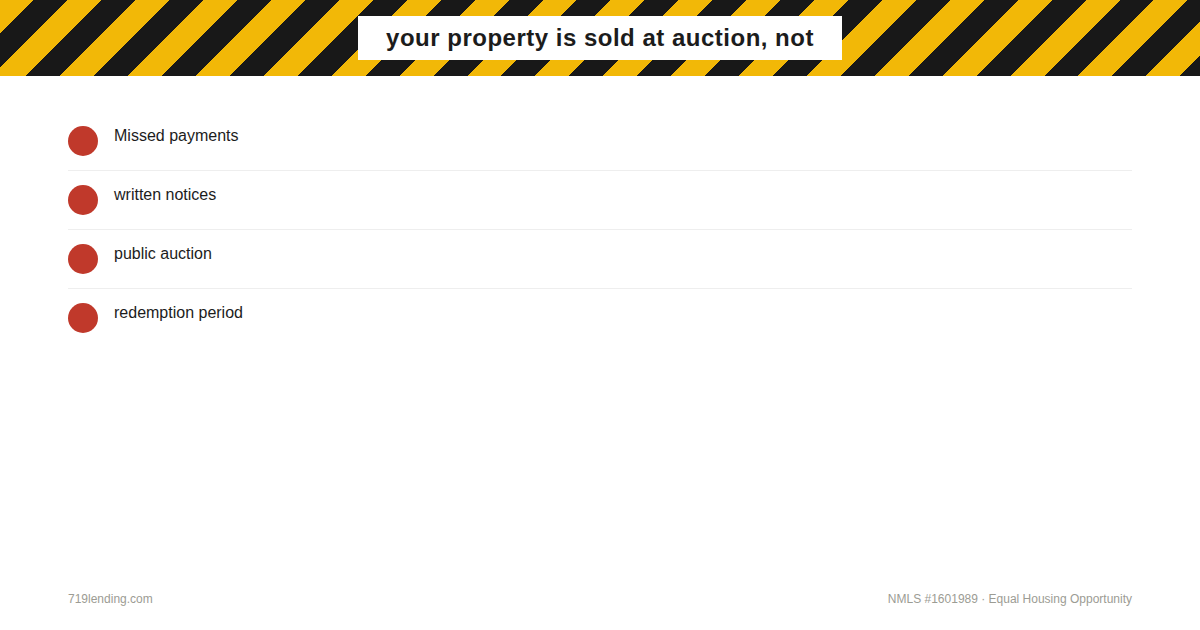
In a nonjudicial foreclosure, the lender follows a series of required written notices under the power of sale clause in your deed of trust, then sells the property at a public auction to the highest bidder — all without filing a lawsuit. Here is the step-by-step sequence, what you control, and where Colorado and military borrowers can get help.
How Can I Help Ensure I Don’t Miss My Mortgage Payments?
If you are asking how can I help ensure I don’t miss my mortgage payments, the answer is a simple system, not a trick: read the statement, automate the payment, understand why the amount can change, and talk to the servicer early. This guide walks Colorado homeowners through that system step by step, using guidance published by the Consumer Financial Protection Bureau (CFPB).
The short answer: build a system, not a reminder
Most missed payments are not caused by a lack of money. They are caused by a payment amount that changed, a statement that went unread, or a move that disrupted mail and banking.
Four habits prevent nearly all of that: review the monthly mortgage statement when it arrives, set up automatic payments, know the specific reasons a monthly payment can go up or down, and contact the mortgage servicer quickly when something does not add up.

Each habit is covered in detail below, starting with who should be paying closest attention.
Who this applies to
This guidance applies to anyone with a mortgage, whether the loan is conventional, FHA, VA, or something else. Once the loan closes, the day-to-day relationship is with the mortgage servicer — the company that collects payments and sends statements.
In Colorado Springs, this hits home for military families. A PCS move can disrupt mail forwarding, bank accounts, and autopay settings all at once, which is exactly when a payment slips through the cracks.
Homeowners whose loans have been sold or transferred to a new servicer should also pay extra attention, since the payment address and account setup can change.
The foundation of the whole system is the document the servicer already sends you every month.
Read the monthly mortgage statement every time it arrives
The CFPB’s core advice for managing a monthly mortgage payment is straightforward: review the statement each time it arrives, because that is how you spot problems quickly.
What the statement tells you
A mortgage statement usually comes monthly and contains, among other things:
- Customer service contact information for the mortgage servicer
- The amount due and the due date
- The interest rate on the loan
- Fees and charges
- Information about any past due payment and late fees, and how much you must pay to bring the account current if the loan is delinquent for more than 45 days
If anything on the statement does not make sense, contact the servicer using the contact information printed on it. You can also send a written request for information.
What if you get a coupon book instead
Not everyone receives a periodic statement. Some servicers mail a coupon book once a year, with payment slips you tear out and return with each payment.
A coupon book might only include the servicer’s contact information, your account information, and the amount due. For anything else — an explanation of the amount due, or past payment history — you may need to contact the servicer and ask.
Some servicers send an email or other notice instead of a statement or coupon book. If you are not sure what you should be receiving, call the servicer or send a written request for information as the CFPB describes.
Once you know what you owe and when, the next step is making the payment automatic.
Set up automatic payments
The CFPB specifically suggests setting up automatic payments with the mortgage servicer, or through your bank or credit union, to help stay on track. Autopay removes the single biggest failure point: forgetting.
Autopay is not a replacement for reading the statement
Automatic payments work alongside statement review, not instead of it. If the monthly payment amount changes and the autopay amount does not, the account can come up short without you noticing.
So pair the two: autopay handles the routine months, and the monthly statement review catches the months when something changed.
A note for military homeowners
Before a deployment or PCS move, confirm the autopay setup, the funding account, and the servicer’s contact information. Mail forwarding is not reliable enough to be the only way you learn that mortgage payments changed while you were at Fort Carson one month and overseas the next.
That raises the obvious question: why would the payment amount change at all on a loan you already signed?
Know why monthly payments can change
Many homeowners miss payments because the amount due moved and the old amount kept getting sent. The CFPB lists several common reasons a monthly mortgage payment changes, and every one of them shows up as itemized charges on the statement.
| Reason | What happened |
|---|---|
| Escrow change | Property taxes or homeowners insurance premiums went up or down, changing the escrow portion of the payment |
| Temporary buydown ended | A buydown lowers the payment for a limited time, usually one to three years, with payments increasing each year until it ends |
| Adjustable rate adjusted | On an adjustable-rate mortgage (ARM), the interest rate changed, changing the payment |
| Principal payments began | On an interest-only or pay-option loan, the period of postponing principal ended and payments went up |
| Mortgage insurance changed | Private mortgage insurance was adjusted or canceled, changing the monthly amount |
| New fees | The servicer charged fees that increased the monthly payment |
| Servicer error | The servicer simply made a mistake calculating the payment |
Escrow accounts: taxes and insurance
If the monthly payment includes an escrow account for property taxes or homeowners insurance premiums, the payment goes up or down when those costs change. In a Colorado housing market where values and insurance premiums move, escrow adjustments are a routine reason payments change.
Adjustable rates and temporary buydowns
Some homeowners believe they have a fixed-rate mortgage when the loan actually includes an adjustable-rate feature. Check the loan type — an ARM means the interest rate and the payment can change on a schedule.
A temporary buydown works differently: it lowers the payment for a limited time in exchange for an up-front fee or a higher interest rate later, and the payment steps up until the buydown ends.
Interest-only periods and mortgage insurance
With an interest-only or pay-option loan, you can postpone paying principal for a while. When that period ends and principal payments begin, the monthly payment rises.
Private mortgage insurance can also change the payment — either because the amount changed, or because you became eligible to cancel the insurance and did.
If none of those explanations fits, the remaining possibility is an error, and there is a defined process for that.
What to do if you think the servicer made a mistake
The CFPB’s guidance: call the servicer first and explain the situation. Ask for a corrected statement, a reference number, and the name of the person you spoke with, and take detailed notes including the date of the call.
If the problem is not fixed over the phone, send a notice of error to the servicer explaining why you believe the payment was calculated incorrectly.
Send it to the address the servicer uses for errors and information requests — listed on the statement or the servicer’s website — which may be different from the payment address.
If you still have a problem with the mortgage, you can submit a complaint to the CFPB online or by calling (855) 411-CFPB (2372).
Disputes aside, sometimes the issue is simply that money is tight — and timing matters enormously there.
What to do before money trouble becomes missed payments
If a financial hardship is coming — a job change, financial difficulties after a divorce, an unexpected expense — the worst move is silence. The statement exists partly so you always know exactly who to call; use that contact information before the due date, not after.
Researching this topic, you will encounter terms like forbearance, repayment plan, loan modification, loss mitigation, short sale, and deed in lieu. Whether any of those applies to your situation, and on what terms, is a conversation to have directly with the servicer or a HUD-approved housing counseling agency — not something to assume from an article.
The reason to act early is simple: missed payments show up on the statement as past due amounts with late fees, and sustained delinquency is what opens the door to the foreclosure process. Homeowners who engage their lender early have more room to avoid foreclosure than those who wait.
Keep records of every conversation, just as you would with a billing error: names, dates, reference numbers, and notes.
Where the official guidance lives
Everything above about statements, coupon books, automatic payments, payment changes, and error disputes comes from the Consumer Financial Protection Bureau, the federal agency that implements and enforces federal consumer financial law.
The two most useful pages are the CFPB’s answers on managing a monthly mortgage payment and on why a monthly payment changed. Bookmark both.
If you are still shopping for a home rather than paying one off, the Closing Disclosure you receive before closing shows a “total of payments” figure — the total you will have paid over the life of the loan, including principal, interest, mortgage insurance if applicable, and loan costs, assuming every monthly payment is made as agreed.
Next steps
Here is the concrete checklist: pull out the most recent mortgage statement today and confirm the amount due, the due date, and the servicer’s contact information. Set up automatic payments if you have not. Put a monthly reminder to actually read the statement, especially before and after any move.
And if a payment change does not make sense, call the servicer using the number on the statement — then follow up in writing if needed.
If the questions run deeper — the loan type, whether an adjustable rate or buydown is driving payment changes, or whether refinancing into a new loan structure fits your situation — the team at 719 Lending in Colorado Springs can walk through the statement with you and explain what each line means.
Frequently asked questions
What is the easiest way to make sure I never miss a mortgage payment?
Set up automatic payments with your mortgage servicer or through your bank or credit union, and still review the monthly mortgage statement each time it arrives. Autopay prevents forgotten payments; the statement review catches months when the amount due changed.
Why did my monthly mortgage payment go up?
Common reasons include a change in property taxes or homeowners insurance paid through an escrow account, a temporary buydown ending, an adjustable-rate mortgage adjusting, principal payments starting on an interest-only loan, a change in private mortgage insurance, new fees, or a servicer mistake. Check the itemized charges on the statement, then contact the servicer with questions.
Who do I contact if something on my mortgage statement looks wrong?
Call the mortgage servicer using the customer service contact information printed on the statement. Ask for a reference number and take notes. If the issue is not resolved by phone, send a written notice of error to the address the servicer uses for errors and information requests, which may differ from the payment address.
What should I do if I think I might miss a mortgage payment?
Contact the mortgage servicer before the due date using the contact information on the statement, and consider speaking with a housing counseling agency. Options like a repayment plan, forbearance, or loan modification are determined by the servicer based on your situation, so acting early matters.
What if I get a coupon book instead of a monthly statement?
Some servicers mail coupon books once a year with payment slips you return with each payment. A coupon book may only show the servicer’s contact information, your account information, and the amount due, so contact the servicer directly for details like an explanation of the amount due or past payment history.
Can I file a complaint about my mortgage servicer?
Yes. If you have a problem with your mortgage that the servicer does not resolve, you can submit a complaint to the Consumer Financial Protection Bureau online or by calling (855) 411-CFPB (2372).
719 Lending Inc., NMLS #1601989 · Equal Housing Opportunity
719 Lending Inc. is not affiliated with or endorsed by HUD, FHA, VA, USDA, CHFA, the CFPB, or any government agency.
Last updated: October 2026

Related Posts