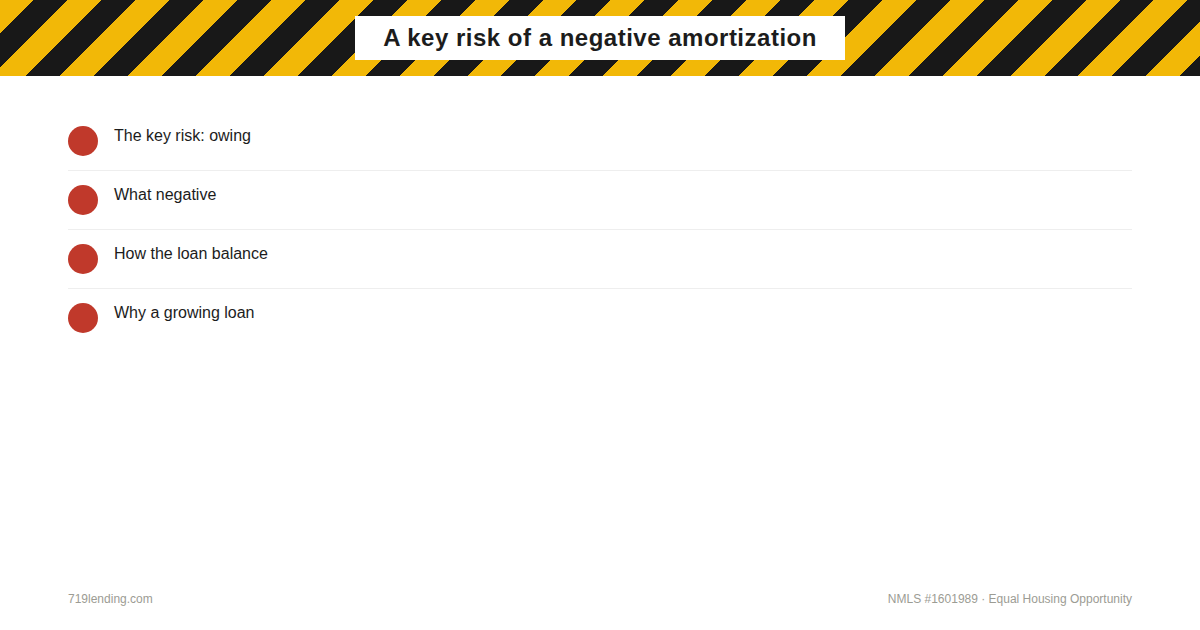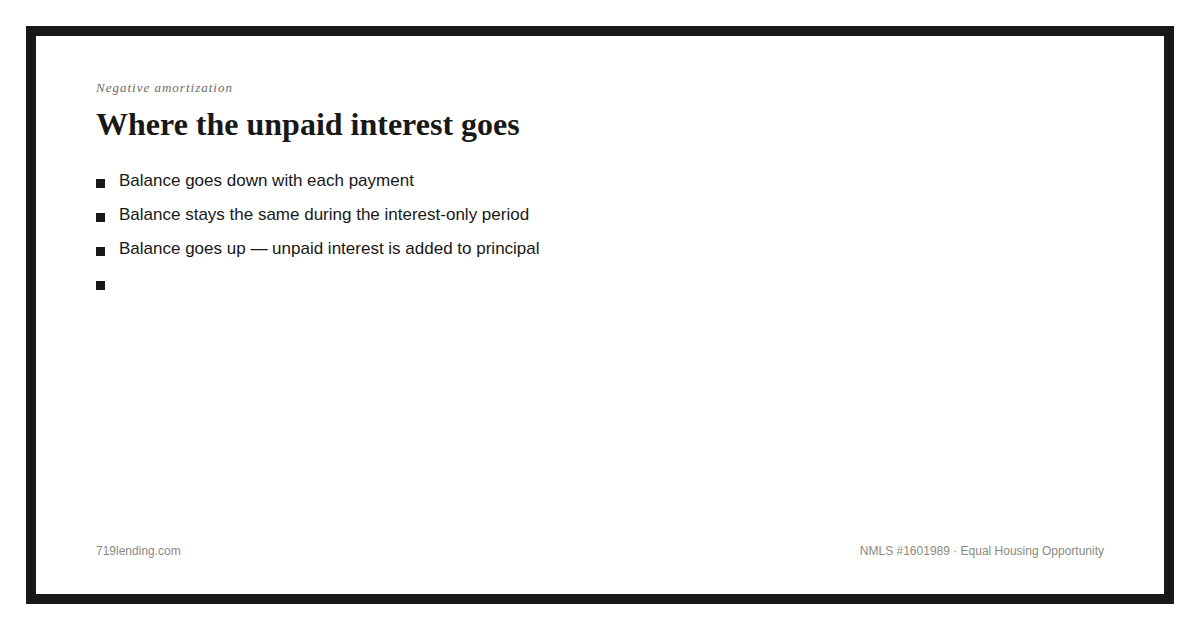
Negative amortization means the amount you owe goes up even when you make payments, because the minimum payment does not cover the interest. The key risk: you can end up owing more on the mortgage than the home is worth, which makes the house harder to sell and raises the risk of foreclosure if you hit trouble.
How Does an ARM’s Introductory Period Work?
If you are asking how an ARM’s introductory period works and what happens after it ends, here is the short version: an adjustable-rate mortgage opens with a fixed stretch where the interest rate does not move, and once that stretch expires, the rate starts adjusting on a schedule tied to a market index. This guide walks Colorado borrowers through the full mechanism — the index, the margin, the caps, and the questions the Consumer Financial Protection Bureau says to ask before signing.
Everything below comes from the CFPB’s consumer guidance on adjustable-rate mortgages and rate caps, translated into plain English for buyers in Colorado Springs and along the Front Range.
How does an ARM’s introductory period work?
With an adjustable-rate mortgage, the interest rate may go up or down over the life of the loan. The introductory period is the exception — a defined window at the start where the initial rate stays put.
According to the CFPB, many ARMs will start at a lower interest rate than comparable fixed-rate mortgages. That initial rate may stay the same for months or for a few years, depending on the loan’s structure.
During the introductory period, the monthly principal-and-interest payment is predictable. You know exactly what the mortgage portion of the housing payment will be, just as you would with a fixed-rate loan.
The key difference is what comes next, and that is where ARMs demand a closer read of the paperwork.
The core difference: fixed-rate versus adjustable-rate
With a fixed-rate mortgage, the interest rate is set when you take out the loan and will not change. The payment for principal and interest stays constant for the full term.
With an adjustable-rate mortgage, the interest rate may go up or down after the introductory period. The CFPB notes that when the index of interest rates increases, the payment goes up — and when rates decline, the payment may sometimes go down, but that is not true for all ARMs.
So the trade is predictability versus a lower starting point. Understanding the adjustment machinery is what lets you judge that trade for your own situation, which is what the next sections cover.
What happens after the introductory period ends?
When the introductory period is over, the interest rate on the loan changes on a regular interval, and the CFPB is direct about the likely outcome: the amount of the payment is likely to go up at that point.
Each new rate is not pulled out of thin air. It is calculated from two components — an index and a margin — and then limited by any caps written into the loan contract.
The index: the moving part
Part of the interest rate you pay on an ARM is tied to a broader measure of interest rates, called an index. The index reflects conditions in the wider market, not anything about you personally.
When the index rises, the payment rises at the next adjustment. When the index falls, the payment may fall — but again, not every ARM passes decreases through.
The margin: the fixed part
The margin is a number of percentage points the lender adds to the index to set the interest rate. The margin is established at closing and stays constant for the life of the loan.
At each adjustment, the new rate is the current index value plus the margin, subject to any caps. Two loans tied to the same index can behave very differently if their margins differ, so compare margins when you compare ARM offers.
The adjustment schedule
After the first adjustment, the rate continues to change on a regular interval defined in the loan documents. Before signing, the CFPB says to find out how frequently the rate will adjust and how soon the payment could go up.
Those schedule details are spelled out in the loan paperwork — which brings us to the guardrails that limit how far each adjustment can go.
Rate caps: the guardrails on every adjustment

Adjustable-rate mortgages typically include several kinds of caps that control how the interest rate can adjust up or down. The CFPB describes three kinds.
| Cap type | What it limits | When it applies |
|---|---|---|
| Initial adjustment cap | How much the rate can increase or decrease the first time it adjusts | At the end of the introductory (fixed-rate) period |
| Subsequent adjustment cap | How much the rate can change relative to the previous rate | Each adjustment period after the first |
| Lifetime adjustment cap | How much the rate can change in total from the initial rate | Over the entire life of the loan |
Initial adjustment cap
The initial adjustment cap limits how far the rate can move the very first time it adjusts, after the fixed-rate introductory period expires. This first change is often where borrowers feel the biggest jump, so this cap matters.
Subsequent adjustment cap
The subsequent adjustment cap limits how much the rate can increase or decrease in the adjustment periods that follow. Each new rate is measured against the previous rate, not the original one.
Lifetime cap and the floor
The lifetime adjustment cap limits how much the rate can change in total over the life of the loan, measured from the initial rate. The CFPB also notes that some loans have a separate lifetime limit on decreases, known as a floor.
The caps may be different for the initial change versus the subsequent regular interval changes, so read each one separately. With the machinery understood, the next step is knowing which questions to ask before committing.
Questions the CFPB says to ask before taking an ARM
The Consumer Financial Protection Bureau publishes a checklist for anyone considering an adjustable-rate mortgage. Before signing, find out:
- How high or low the interest rate and monthly payments can go with each adjustment
- How frequently the interest rate will adjust
- How soon the payment could go up
- Whether there is a cap on how high the interest rate could go
- Whether there is a limit on how low the interest rate could go
- Whether you could still afford the loan if the rate and payment rose to the maximums allowed under the contract
That last item is the stress test. The CFPB suggests asking the lender to calculate the highest payment you may ever have to pay on the loan you are considering — and the answer should fit your budget on today’s income, not a hoped-for future one.
Fortunately, you do not have to take anyone’s word for these answers, because they appear in required disclosures.
Where to verify the terms: your loan disclosures
The cap structure and the worst-case payment are not hidden. The CFPB points out that you can find this information on the Loan Estimate or Truth-in-Lending disclosure, which lenders are required to provide after you apply for a loan.
When you review those documents, compare rate caps between offers. The CFPB specifically warns that two different lenders may have the same initial interest rate but offer different rate caps — meaning the same starting point can lead to very different worst-case outcomes.
Reading these disclosures side by side is where ARM shopping is actually won or lost. A loan officer who works with multiple loan options can walk through the adjustment terms line by line with you.
Why this matters for Colorado Springs and military borrowers
Colorado Springs is a heavily military market, and ARMs often tempt buyers who expect a PCS move before the introductory period ends. The logic is simple: enjoy the introductory rate, then sell before the first adjustment.
The CFPB offers a direct caution on exactly this plan: don’t assume you’ll be able to sell the home or refinance the loan before the rate changes. The value of the property could decline, or your financial condition could change.
PCS timelines shift, housing markets soften, and a short tour can turn into a long one. If you cannot afford the higher payments on today’s income, the CFPB says you may want to consider another loan.
Even if you genuinely expect to move or refinance before the adjustable period starts, the CFPB’s advice stands: it’s a good idea to know how much the rate can change anyway. Treat the introductory period as a feature, not an escape hatch.
Common mistakes with ARM introductory periods
Budgeting only for the introductory payment
The introductory payment is the floor of your experience with the loan, not the ceiling. Run the household budget against the maximum payment the contract allows, using the figures on the Loan Estimate.
Assuming the rate will fall when the market falls
The CFPB is explicit that a payment decrease when rates decline is not guaranteed on every ARM, and some loans include a floor limiting decreases. Check whether the specific loan passes decreases through.
Comparing ARMs on the starting rate alone
Two offers with identical initial rates can carry different margins and different caps. The margin and the cap structure determine how the loan behaves for every year after the introductory period ends.
Avoiding these mistakes is mostly a matter of reading the disclosures with someone who reviews them daily — which is the concrete next step below.
What the official source says and where to read it
The guidance in this article comes from the Consumer Financial Protection Bureau’s Ask CFPB resources on adjustable-rate mortgages and on rate caps. Both are written for consumers and are worth reading in full before you apply.
The CFPB also notes that if you are behind on a mortgage or having a hard time making payments, you can contact the CFPB to be connected with a counselor from an agency approved by the U.S. Department of Housing and Urban Development, or use the CFPB’s Find a Counselor tool.
For broader homebuying prep, the CFPB’s Buying a House toolset covers the process end to end. Pair that with local guidance and you are well equipped.
Your next step
If you are weighing an ARM against a fixed-rate loan in Colorado Springs, get the adjustment terms in writing and stress-test them. Ask for the Loan Estimate, find the cap structure, and have the lender show you the highest payment the contract allows.
The team at 719 Lending can pull those numbers for the specific loan you are considering and compare them against a fixed-rate alternative side by side. Reach out to a 719 Lending loan officer or start an application to see the actual adjustment terms before you commit — and if you are PCSing into Fort Carson, Peterson, or Schriever, mention your timeline so the loan structure matches it.
Frequently asked questions
What happens when an ARM’s introductory period ends?
The interest rate begins changing on a regular interval. Each new rate is calculated from a market index plus a lender-set margin, subject to any caps in the contract. The CFPB notes the payment is likely to go up at that first adjustment.
How long does an ARM’s introductory period last?
It varies by loan. The CFPB says the initial rate may stay the same for months or a few years, depending on the structure. The exact length is stated in the loan documents and on the Loan Estimate.
What are the three types of ARM rate caps?
The initial adjustment cap limits the first rate change after the introductory period, the subsequent adjustment cap limits each change after that, and the lifetime cap limits the total change from the initial rate over the life of the loan. Some loans also have a floor limiting decreases.
Will my ARM payment go down if interest rates fall?
Not necessarily. The CFPB says that when the index declines, the payment may sometimes go down, but that is not true for all ARMs, and some loans include a floor that limits decreases. Check the specific loan’s terms.
Can I just sell or refinance before my ARM adjusts?
That is the plan many borrowers make, but the CFPB warns against assuming it will work. The property’s value could decline or your financial situation could change. If you cannot afford the higher payments on today’s income, consider a different loan.
Where can I see how high my ARM payment could go?
On the Loan Estimate or Truth-in-Lending disclosure, which lenders are required to provide after you apply. You can also ask the lender to calculate the highest payment possible under the contract before you commit.
719 Lending Inc., NMLS #1601989 · Equal Housing Opportunity
719 Lending Inc. is not affiliated with or endorsed by HUD, FHA, VA, USDA, CHFA, the CFPB, or any government agency.
Last updated: October 2026

Related Posts