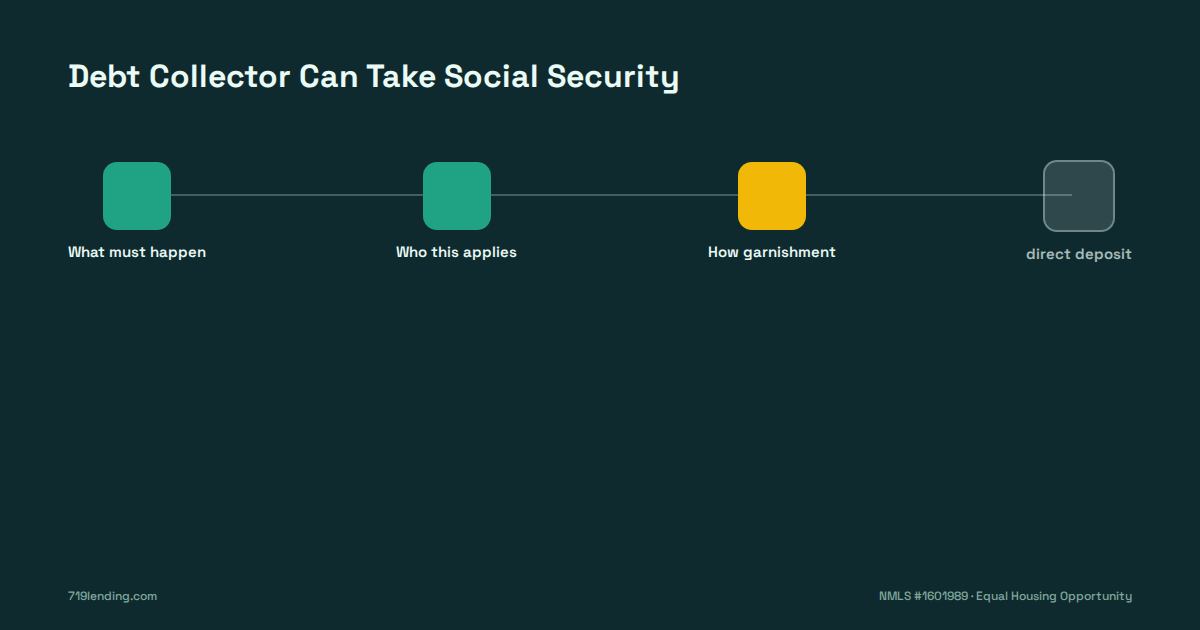
Debt collectors cannot simply take your Social Security or VA benefits. Before any garnishment can happen, a collector must sue you, win a court judgment, and then obtain a court order directed at your bank or credit union. This guide walks through the process, the automatic protections for direct-deposited federal benefits, and what to do if your account is frozen.
What Can Debt Collectors Tell My Commander About My Debt?
If you are asking what debt collectors can tell my supervisor or commander about my debt, the short answer is: almost nothing. Under federal law, a collector may contact your chain of command to locate you, but they cannot reveal that you owe a debt. This guide explains exactly what the Fair Debt Collection Practices Act (FDCPA) allows, how the Uniform Code of Military Justice (UCMJ) and security clearances come into play, and what servicemembers in Colorado Springs should do next.
What can debt collectors tell my supervisor or commander about my debt?

A debt collector trying to locate you cannot tell your supervisor or commander that you owe a debt. That disclosure is off limits under the FDCPA.
The collector can contact your chain of command without your permission, but usually only to find out your location, your phone number, and where you work.
Here is the line the law draws, at a glance:
| Collector action | Allowed? |
|---|---|
| Ask your supervisor or commander for your location, phone number, or workplace | Yes, typically only once |
| Tell your supervisor or commander that you owe a debt | No |
| Call your chain of command again when they already have your location information | No |
| Share debt details with a security manager, supervisor, or commander without your permission | No |
| Report the debt to a credit reporting company | Yes, this is not considered publishing your name |
With the direct answer established, it helps to know exactly who these protections cover.
Who these protections apply to
The FDCPA protects consumers being contacted by debt collectors, and the Consumer Financial Protection Bureau (CFPB) spells out how the rules apply to servicemembers specifically.
Servicemembers face some debt collection situations civilians do not: calls to a chain of command, exposure to disciplinary action under the UCMJ, and security clearance reviews that look at financial history.
Why this matters in Colorado Springs
Colorado Springs is home to a large active-duty and veteran population, and a PCS move can scatter old bills across several states. A collector hunting for a current address is exactly the scenario the location-contact rule covers.
Knowing who is protected is half the picture. The other half is what collectors are flatly prohibited from doing to anyone.
What the Fair Debt Collection Practices Act prohibits
The Fair Debt Collection Practices Act says debt collectors cannot harass, abuse, or mislead you — or anyone else they contact, including people in your chain of command.
Examples of illegal collector conduct
The CFPB lists examples of conduct the FDCPA makes illegal:
- Calling you repeatedly with intent to annoy or harass
- Contacting you at an unreasonable time — before 8 a.m. or after 9 p.m., unless you agree
- Using obscene language
- Making false or misleading statements, including about how much you owe
- Publishing your name for not paying a debt (reporting to a credit reporting company is not publishing)
- Threatening to have you arrested for not paying the debt
Those rules apply to every call. The next question is how far a collector can go when they contact the military side of your life.
Can a debt collector contact my chain of command at all?
Yes — a debt collector can contact your chain of command without your permission. But the purpose is narrow: locating you.
That means finding out where you are, what your phone number is, and where you work. Nothing about the debt itself.
The one-contact limit
Typically, a collector can only speak to your supervisor or commander once to get your location information. And they cannot call at all if they already have that information.
Repeated calls to your unit, or any mention of the debt during those calls, cross the line the FDCPA draws.
Even when a collector follows the contact rules, many servicemembers worry about a different threat: military discipline.
Can a debt collector prosecute me under the UCMJ?
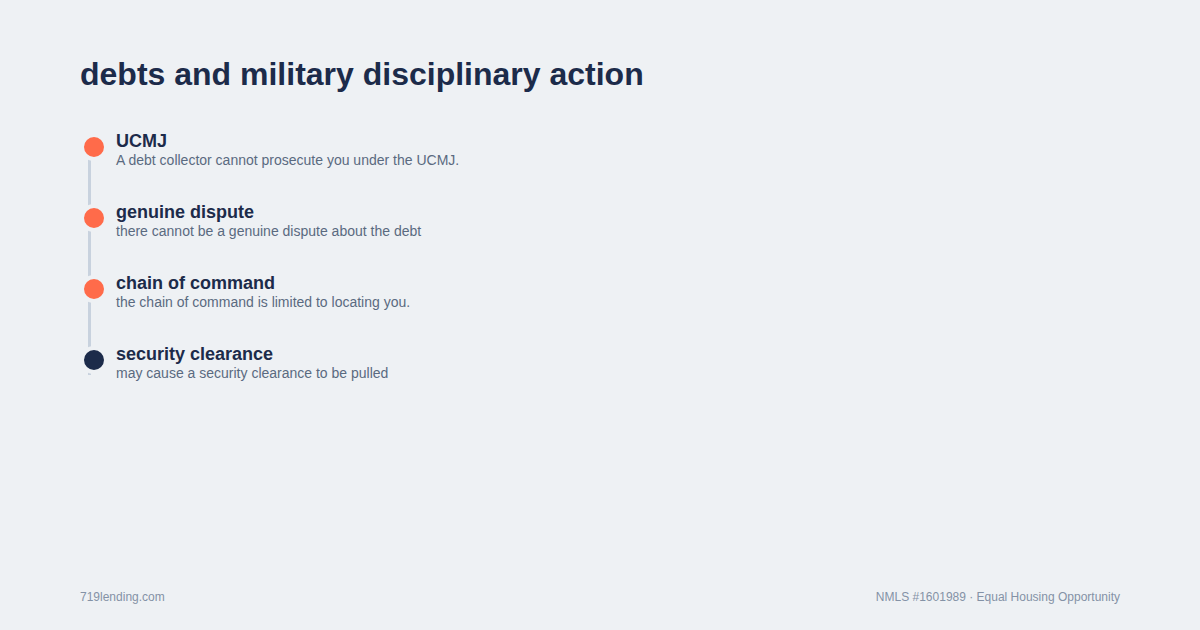
No. A debt collector cannot prosecute you under the Uniform Code of Military Justice. Only the military can do that.
A collector who threatens UCMJ action is making a threat they have no power to carry out.
Where the UCMJ actually fits in
Servicemembers are expected to pay their legitimate financial obligations in a proper and timely manner. Failure to pay a legitimate obligation may result in disciplinary action under the UCMJ, but only if certain conditions are met.
For example, there cannot be a genuine dispute between you and the debt collector about the debt. A disputed debt is not the same thing as a refusal to pay a legitimate obligation.
UCMJ exposure is one concern; the other concern unique to military careers is the security clearance.
How debt collection can affect a security clearance
Under the FDCPA, a debt collector is not permitted to share information about your debt with a third party — such as a security manager, supervisor, or commander — without your permission.
So the collector cannot call your security manager and announce the debt. The risk runs through a different channel.
The credit reporting channel
Failing to pay your debts on time can result in negative information being reported to credit reporting companies, which can lower your credit score.
That negative information may cause your security clearance to be pulled when it is up for review. The clearance risk comes from the credit report, not from a collector’s phone call to your commander.
Because the credit report is where the real consequences live, how you respond to a collector matters. Here is the sequence that works.
What should I do when a debt collector contacts me?
Depending on your situation, there are different ways to respond, and the CFPB publishes sample letters for the most common ones.
Step one: confirm you owe the debt
Debt collectors must give you certain information about the debt they say you owe, or provide it within five days of first communicating with you. Generally, this validation information must be in writing, either by mail or electronically.
That validation information helps you figure out whether you owe the debt and explains how to dispute it if you do not.
Step two: use the right sample letter
The CFPB’s sample letters cover situations where you need more information about the debt, you do not owe the debt, you want the collector to stop contacting you, you want contact only through your lawyer, or you want to specify how the collector can reach you.
Putting your position in writing creates a record — useful if the collector later calls your unit anyway.
Step three: negotiate only after the debt is confirmed
Once you confirm a debt is yours, you can pay in full or propose a repayment plan. Review your take-home pay and monthly expenses, and leave room for unexpected costs, because falling behind on other bills while paying this one can create new problems.
If you agree to a repayment or settlement plan, get the plan and the collector’s promises in writing before you make any payment. Those promises may include stopping collection efforts and ending or forgiving the debt once the plan is complete.
The CFPB also cautions against debt settlement companies that charge money in advance — some promise more than they can deliver, and certain creditors may refuse to work with them. A non-profit credit counselor can help you build a budget and work with collectors instead.
Sometimes a collector escalates past phone calls. Here is what to do if that happens.
What if a debt collector sues me?
If you are served with a lawsuit, read it carefully and respond — personally or through a lawyer — by the date specified in the court papers.
Responding does not mean you agree that you owe the debt. It forces the collector to prove to the court that the debt is valid.
Why ignoring a lawsuit backfires
If you do not respond, the court can enter a default judgment against you for the amount claimed, plus lawful fees for collection costs, interest, and attorney fees as allowed by the judgment.
A judgment gives collectors much stronger tools: depending on your state’s laws, a creditor may be able to garnish wages, place a lien against property, or move to freeze bank account funds. Judgments are court orders and are very difficult to change once the case is over.
Also know the limits: a collector cannot threaten a lawsuit they do not intend to file, and cannot sue or threaten to sue after the statute of limitations on the debt has expired.
If a collector breaks any of these rules, you have concrete ways to push back.
How to report a debt collector who crossed the line
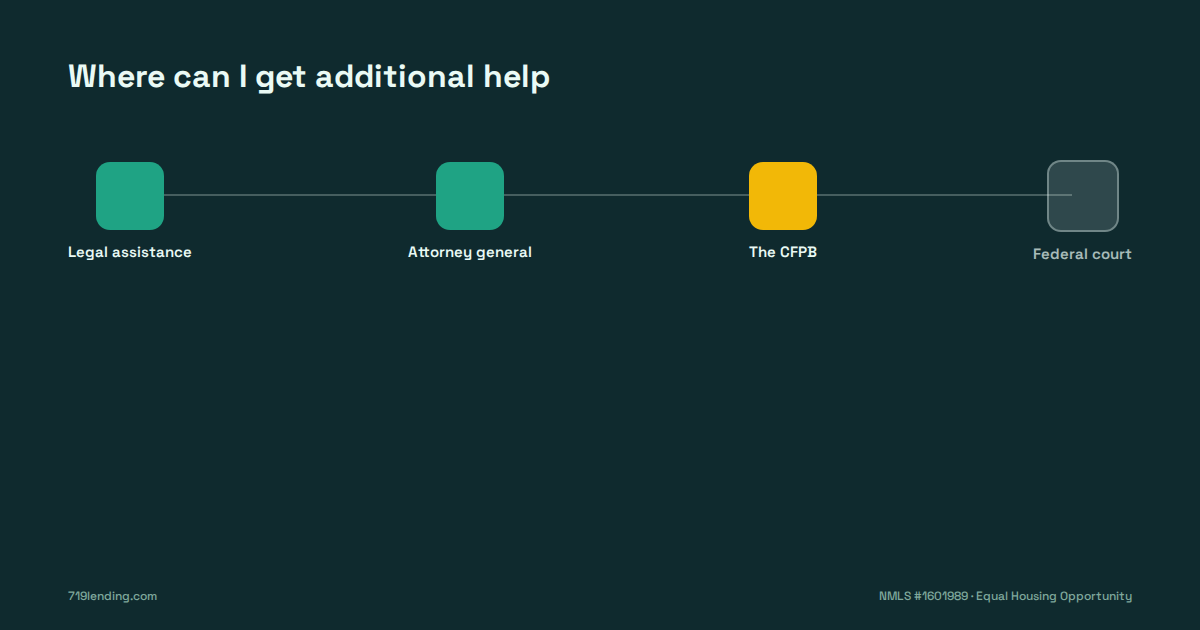
You can report problems to your state’s attorney general. You can also sue the debt collector for FDCPA violations — if you sue and win, the collector generally must pay your attorney’s fees and may also owe you damages.
You can submit a complaint to the CFPB online or by calling (855) 411-CFPB (2372). The CFPB forwards your complaint to the company and works to get a response.
Military-specific help on and near base
Your closest legal assistance (JAG) office can advise you on debt collection issues, and the CFPB publishes a JAG Legal Assistance Office locator. Your installation’s financial readiness program also offers counselors who can help you manage your finances.
For Colorado Springs servicemembers, that help is close by — and worth using before a collection turns into a credit report entry.
There is one more reason to handle collections carefully: your future home purchase.
Why this matters if you plan to buy a home
Cleaning up disputes in writing, and getting settlement agreements documented, protects the credit file you will eventually hand to a lender.
If you are stationed near Colorado Springs and thinking about buying, a loan officer can walk through your credit report with you and explain how any collection accounts fit into the overall picture.
Your next step
Start with the validation information: confirm the debt is real and the amount is right before you discuss payment. If a collector has already told your supervisor or commander about the debt, document it — that disclosure violates the FDCPA.
Then use the CFPB’s sample letters, talk to your base JAG office or financial readiness counselor, and file a complaint with the CFPB or your state attorney general if the collector broke the rules. The law is on your side here; the key is responding in writing and keeping records.
Frequently asked questions
Can a debt collector tell my commander I owe money?
No. A debt collector trying to locate you cannot tell your supervisor or commander that you owe a debt. They may contact your chain of command without your permission, but usually only once, and only to learn your location, phone number, and where you work.
How many times can a debt collector call my chain of command?
Typically only once, and only to get your location information. A collector cannot call your supervisor or commander at all if they already have your location information.
Can a debt collector have me punished under the UCMJ?
No. Only the military can take action under the Uniform Code of Military Justice. Failure to pay a legitimate obligation may result in UCMJ discipline, but only if certain conditions are met — for example, there cannot be a genuine dispute between you and the collector about the debt.
Will unpaid debt affect my security clearance?
It can. A collector cannot share debt information with your security manager without your permission, but late payments can be reported to credit reporting companies, lowering your credit score — and that negative information may cause a clearance to be pulled when it comes up for review.
What should I do if a debt collector sues me?
Respond to the lawsuit by the deadline in the court papers, personally or through a lawyer. Responding forces the collector to prove the debt is valid. Ignoring the suit risks a default judgment, which can allow wage garnishment, property liens, or frozen bank funds depending on state law.
Where can servicemembers in Colorado Springs get help with a debt collector?
Contact your installation’s legal assistance (JAG) office, use your base financial readiness program, report problems to the state attorney general, or submit a complaint to the CFPB online or at (855) 411-CFPB (2372).
719 Lending Inc., NMLS #1601989 · Equal Housing Opportunity
719 Lending Inc. is not affiliated with or endorsed by HUD, FHA, VA, USDA, CHFA, the CFPB, or any government agency.
Last updated: October 2026

Related Posts