Scammers mine public foreclosure records and show up claiming to be the new property owner, demanding rent or signatures. Here is exactly how to verify who really owns the home, what documents to ask for, and the warning signs that mark a foreclosure scam — with the official CFPB guidance behind every step.
How a Debt Management Plan Works With a Credit Counselor
If you are asking how a debt management plan works with a credit counseling organization, the short version is this: a certified credit counselor reviews your financial situation, builds a budget, and proposes a structured repayment plan to your creditors; you then make one monthly payment to the counseling organization, and it distributes monthly payments to each creditor. This guide walks through the full process for Colorado borrowers — including military families around Colorado Springs — using the Consumer Financial Protection Bureau’s own guidance as the source.
Here is the debt management plan process at a glance:
- Credit counseling organizations are usually nonprofit organizations with certified counselors.
- An initial counseling session typically lasts about an hour, with follow-up sessions offered.
- The counselor helps you set a budget and organize a debt management plan for all your debts.
- You make a single payment to the credit counseling organization each month or pay period.
- The organization then makes monthly payments to your creditors on your behalf.
- Counselors work to lower your overall monthly payment — not to erase the balances you owe.
How does a debt management plan work with a credit counseling organization?

A debt management plan — the CFPB also calls it a payment plan — is an arrangement a credit counselor sets up covering all your debts. The counselor contacts your creditors and proposes the plan on your behalf.
Credit counseling organizations are usually nonprofits that advise and educate you on managing your money and debts. Their counselors are certified and trained in consumer credit, money and debt management, and budgeting.
One payment in, many payments out
Once the plan is in place, the mechanics are simple. You stop juggling separate credit card bills and due dates and instead send one monthly payment to the credit counseling organization.
The organization then makes monthly payments to each of your creditors. That single monthly payment structure is the core of every debt management program.
What the counselor works out with creditors
Under debt management plans, credit counselors do not always negotiate reductions in the amounts you owe. Instead, they work to lower your overall monthly payment.
They might get a creditor to lengthen the time you have to repay. They might also get the creditor to lower the interest rates on the accounts, agree not to pursue collection efforts, or stop charging late fees while you are on the plan.
The CFPB also notes the arrangement usually does not affect your taxes — though tax treatment varies, so confirm your situation with a tax professional. Next, consider whether this kind of structured program fits your situation at all.
Who a debt management plan is designed for
A debt management plan is aimed at people who are having trouble making payments on their debts and want a structured way to repay in full. The CFPB’s example is exactly that: a borrower struggling with payments whose counselor organizes a plan that typically lowers monthly payments to creditors as well as interest charges and fees.
A debt management plan is not a loan and not a settlement. You repay what you owe, on terms the counselor helps arrange, which can reduce financial stress without the consequences that come with simply not paying.
A reputable credit counselor never advises you to stop paying your debt. If an organization tells you to quit paying creditors, that is a sign you are dealing with something other than credit counseling.
Colorado Springs and military households
Colorado Springs is a heavily military market, and household debt can pile up fast around a PCS move — overlapping housing costs, travel, and the gap before reimbursements land. A debt management plan gives a service member or spouse one predictable monthly payment instead of a stack of credit card balances with different due dates.
Credit counseling is also delivered in-person, online, or by phone, which matters for families who relocate on military orders mid-plan. With the fit question answered, here is what the first meeting actually looks like.
What happens at the first credit counseling session
An initial counseling session typically lasts about an hour, and most organizations offer follow-up sessions. The counselor discusses your financial situation with you and helps develop a personalized plan.
Beyond a debt management plan, credit counselors can help you develop a budget, get a copy of your credit report and scores, and offer free educational materials and workshops. The plan is one tool, not the whole service.
Credit counseling organizations are permitted to charge fees for their services, which may include set-up or monthly fees. The CFPB says to get a specific price quote in writing before you commit.
Questions to ask before you sign anything
The CFPB publishes a checklist of questions for choosing a counseling organization. The highlights:
- What services do you offer? Avoid organizations that push a debt management plan as your only option before analyzing your financial situation.
- What are your fees, and are there set-up or monthly fees? Get the quote in writing.
- What if I can’t afford your fees? If an organization won’t help you because you can’t pay, look elsewhere.
- Will I have a formal written agreement? Make sure all verbal promises are in writing.
- Are your counselors accredited or certified, and how are employees paid? If staff earn more when you sign up for certain services, treat that as a red flag.
- Can you provide contact information for past clients?
Once you understand what a credit counselor does, it helps to see how the debt management program differs from the for-profit alternatives that advertise heavily.
Debt management plan vs. debt settlement, consolidation, and credit repair
People searching for debt relief run into four very different services that sound alike. The CFPB draws sharp lines between them.
| Service | Who typically runs it | What it does |
|---|---|---|
| Credit counseling / debt management plan | Usually a nonprofit organization | One monthly payment to the organization, which pays creditors; works to lower the overall monthly payment, interest charges, and fees |
| Debt settlement | For-profit company charging a fee | Tries to settle debts with lenders or debt collectors, typically via a lump sum payment you save up first |
| Debt consolidation | Banks, credit unions, and other lenders | A new loan that repays your separate debts so you pay back one amount over time |
| Credit repair | For-profit company, often charging a monthly fee | Disputes negative items on your credit reports — something you can do yourself for free |
Debt settlement companies
Debt settlement companies are typically for-profit companies that offer to arrange settlements of your debts with lenders or debt collectors, generally with no up-front agreements with those lenders. They usually advise you to stop paying your creditors until a settlement is negotiated — which can mean fees and interest charges keep adding up, your credit is further damaged, and you are exposed to more collection efforts and lawsuits.
Debt settlement companies cannot guarantee how much you might save or how long the process takes, and many lenders and debt collectors do not negotiate with them at all. The CFPB also warns that getting debts forgiven could mean you owe taxes on the forgiven amount.
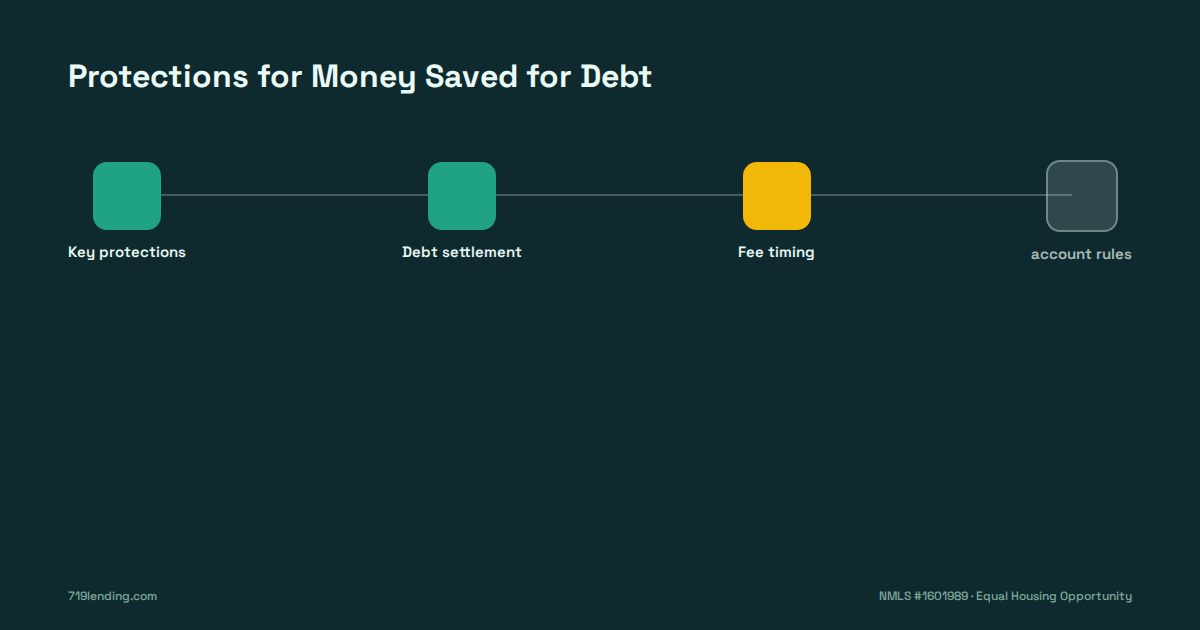
By law, a debt settlement company may be breaking the rules if it charges a fee before a successful result is reached, you agree to the settlement, and you have made at least one payment to the creditor under the new agreement.
Debt consolidation loans
A debt consolidation loan is money you borrow — from banks, credit unions, and other lenders — to repay all your separate loans and pay back just one amount over time. It simplifies the number of payments, and the loan might carry a lower interest rate than the existing debts.
The CFPB cautions that a low advertised rate can be a teaser rate that expires, and that a lower monthly payment may simply reflect a longer repayment period. Counting the loan’s length, fees, and costs, you might pay more overall than you would have on the original debts.
Credit repair companies
Credit repair companies promise to fix your credit or improve your scores, typically by disputing items on your credit report — including accurate ones. Accurate items that disappear during verification reappear once verified.
You can dispute mistakes in your credit reports yourself, for free, and credit repair companies cannot legally get accurate, timely information removed. Knowing what the alternatives can’t do leads naturally to what a debt management plan can’t do either.
What a debt management plan cannot do
Credit counselors can’t erase your debts. A debt management plan is a repayment tool, not debt forgiveness.
Counselors also do not always get the amounts you owe reduced — the focus is the overall monthly payment, repayment timeline, interest rates, and fees. If you simply cannot afford to pay what you owe, the CFPB says you could consider bankruptcy and should consult a bankruptcy attorney about how that process works.
That makes vetting the organization you choose the most important step before any money moves.
How to find a reputable credit counseling organization
The CFPB points to the Financial Counseling Association of America and the National Foundation for Credit Counseling as starting points, plus the list of approved credit counselors published through the U.S. Department of Justice. Colorado borrowers can also check prospective organizations with the state attorney general and state consumer protection agency.
Red flags the CFPB warns about
A reputable credit counseling organization should send you free information about its services without requiring details about your situation first. If it won’t, go elsewhere.
Other warning signs: charging for basic educational materials, pushing a debt management plan before analyzing your finances, refusing to put fees in writing, and paying employees more when you sign up for specific services.
Confirm the plan before you pay
The Federal Trade Commission has found that some organizations offering debt management plans have defrauded people. If you choose a plan, contact your creditors directly and confirm they have accepted the proposed plan before you send any payments to the organization handling your debt management plan.
With a vetted organization chosen, it’s worth reading the primary guidance yourself.
What the official sources say and where to read them
This article is built on two Consumer Financial Protection Bureau explainers: the difference between credit counseling and debt settlement, debt consolidation, or credit repair and the Bureau’s overview of how credit counseling works. Both are plain-English and worth the read before you sign anything.
The CFPB is the federal agency that implements and enforces consumer financial law — a neutral referee, not a seller of any of these services. Its guidance is the benchmark to measure any counseling organization against.
Debt management plans and your path to a Colorado homeownership goal
Many people start credit counseling because debt is standing between them and a home purchase.
If buying in Colorado Springs or elsewhere along the Front Range is the end goal, it’s worth talking with a loan officer at 719 Lending about how the timing of a debt management plan fits into a future mortgage application. 719 Lending is an independent mortgage broker, not a credit counseling organization and not affiliated with any government agency.
Your next step
Pull your credit report, list every debt, and book an initial session with a nonprofit credit counseling organization found through the FCAA, NFCC, or the Department of Justice list. Ask the CFPB’s vetting questions, get all fees in writing, and confirm with your creditors that they accepted the proposed plan before your first payment.
And if homeownership is the longer-term goal, loop in a Colorado loan officer early so the debt management plan and the mortgage timeline work together instead of against each other.
Frequently asked questions
What is a debt management plan?
A debt management plan — also called a payment plan — is an arrangement a credit counseling organization sets up covering all your debts. You make a single payment to the organization each month or pay period, and it makes monthly payments to your creditors. Counselors work to lower your overall monthly payment, not to erase what you owe.
Does a debt management plan reduce the amount I owe?
Not usually. Under debt management plans, credit counselors do not always negotiate reductions in the amounts you owe. Instead they work to lower the overall monthly payment — for example by getting creditors to lengthen the repayment time, lower interest rates, waive late fees, or pause collection efforts.
How is a debt management plan different from debt settlement?
Credit counseling organizations are usually nonprofits that set up a repayment plan and never advise you to stop paying your debt. Debt settlement companies are typically for-profit, usually advise you to stop paying creditors while they negotiate a lump sum settlement, and cannot guarantee results — and unpaid accounts can keep accruing fees and interest in the meantime.
Do credit counseling organizations charge fees for a debt management plan?
They are permitted to charge fees, which may include set-up or monthly fees, though many educational materials and workshops are free. The CFPB says to get a specific price quote in writing — and if an organization refuses to help because you can’t afford its fees, look elsewhere.
How do I know a credit counseling organization is legitimate?
Start with the Financial Counseling Association of America, the National Foundation for Credit Counseling, or the U.S. Department of Justice’s approved list, then check the organization with your state attorney general and consumer protection agency. Before sending any payments, contact your creditors and confirm they accepted the proposed plan.
719 Lending Inc., NMLS #1601989 · Equal Housing Opportunity
719 Lending Inc. is not affiliated with or endorsed by HUD, FHA, VA, USDA, CHFA, the CFPB, or any government agency.
Last updated: October 2026

Related Posts