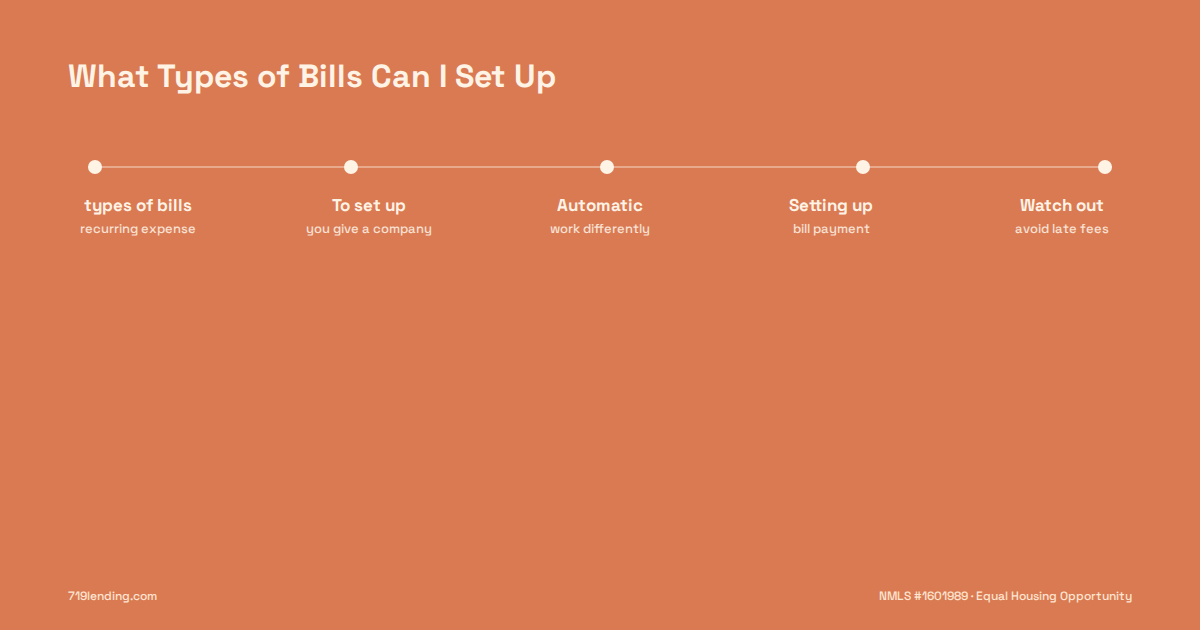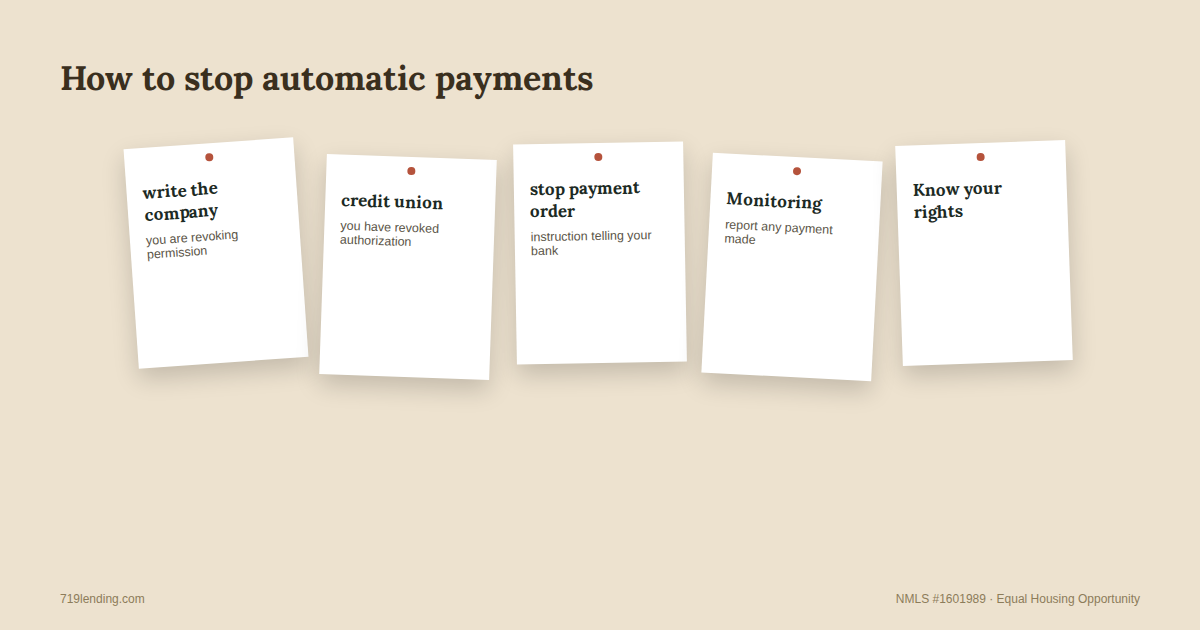
Automatic payments can cover nearly any recurring bill — utilities, credit cards, car payments, childcare, gym memberships, and your mortgage. This guide explains how automatic bill payments work, how they differ from bank bill-pay, what to check before you authorize one, and how to stop them if you change your mind.
What Federal Laws Does TRID Fall Under? TILA and RESPA
If you are asking what federal laws TRID falls under, the direct answer is the Truth in Lending Act and the Real Estate Settlement Procedures Act. This article explains what the TILA RESPA Integrated Disclosure rule is, who enforces it, which mortgage disclosures it produces, and what it means for borrowers here in Colorado Springs.
It is written for homebuyers, refinancing homeowners, and the real estate professionals who work alongside them.
What federal laws does TRID fall under?
TRID falls under the Truth in Lending Act and the Real Estate Settlement Procedures Act. That answer comes straight from the Consumer Financial Protection Bureau’s own explainer on TRID.
The key facts in one place:
- TRID is an acronym for the TILA RESPA Integrated Disclosure rule.
- The two federal laws it falls under are the Truth in Lending Act (TILA) and the Real Estate Settlement Procedures Act (RESPA).
- The rule requires lenders to disclose certain information to borrowers.
- Another name for the rule is the Know Before You Owe mortgage disclosure rule.
- The agency behind it is the Consumer Financial Protection Bureau, which implements and enforces federal consumer financial law.

With the direct answer established, it helps to unpack what each piece of that acronym actually refers to.
What is the TILA RESPA Integrated Disclosure rule?
The TILA RESPA Integrated Disclosure rule is a federal mortgage disclosure rule that requires lenders to disclose certain information to borrowers. “TRID” is simply the acronym some people use for it.
The word “integrated” is doing the heavy lifting in the name. The rule pulls disclosure obligations connected to two separate federal laws into one framework for a mortgage transaction.
The Truth in Lending Act side
The Truth in Lending Act is the first of the two federal laws TRID falls under. As a lending act, its very name points to its territory: truthful disclosure about the credit a borrower is taking on.
When your loan officer talks about TRID disclosures describing the loan terms, that conversation traces back to the Truth in Lending Act side of the rule.
The Real Estate Settlement Procedures Act side
The Real Estate Settlement Procedures Act is the second federal law TRID falls under. Again, the name signals the territory: the settlement side of a real estate purchase, where settlement costs and settlement service providers come into play.
Together, the Truth in Lending Act and the Real Estate Settlement Procedures Act give the TILA RESPA Integrated Disclosure rule its full name and its legal foundation. The CFPB gave the combined rule a friendlier nickname, which is worth knowing too.
Why is TRID called the Know Before You Owe rule?
The Consumer Financial Protection Bureau also refers to the TILA RESPA Integrated Disclosure rule as the Know Before You Owe mortgage disclosure rule. The nickname captures the point of the whole framework: a borrower should understand the mortgage before committing to it.
Consumer understanding is the goal, and the mortgage disclosures themselves are the mechanism. That brings us to the two documents most borrowers actually see.
Which mortgage disclosures does TRID produce?
The CFPB’s TRID explainer points readers to two related questions: “What is a Loan Estimate?” and “What is a Closing Disclosure?” Those are the Know Before You Owe mortgage disclosures at the center of the rule.
The CFPB also addresses whether you will receive the Know Before You Owe disclosures when you shop for a mortgage, which tells you these documents are meant to reach borrowers, not just sit in a lender’s file.
The Loan Estimate
The Loan Estimate is one of the two named TRID disclosures. When you receive a Loan Estimate, read it carefully and ask your loan officer to walk through every line with you.
Comparing Loan Estimate documents is a practical way to evaluate loan offers side by side while you shop. The CFPB publishes its own explainer on what a Loan Estimate is, and it is worth reading before you apply.
The Closing Disclosure
The Closing Disclosure is the second named TRID disclosure, tied to the closing process rather than the loan application stage. Before you sign, compare the Closing Disclosure against the Loan Estimate and question anything that changed.
Ask the loan officer how the disclosure timing requirements and any waiting period before closing interact with the dates in your purchase contract. Disclosure timing issues are one of the most common sources of closing delays, so build the conversation in early.
Knowing the documents is half the picture; knowing who polices them is the other half.
Who enforces the TRID rules?
The Consumer Financial Protection Bureau implements and enforces federal consumer financial law, and the TILA RESPA Integrated Disclosure rule sits within that mandate. The agency describes its mission as ensuring that markets for consumer financial products are transparent, fair, and competitive.
The CFPB also notes that its consumer pages provide general information, not legal advice or regulatory guidance. If you have a legal question about TRID compliance, that is a conversation for an attorney, not a blog post.
Enforcement matters most to lenders, but the rule touches nearly everyone in a transaction.
Who do the TRID rules apply to?
The TILA RESPA Integrated Disclosure rule requires lenders to disclose certain information to borrowers. Mortgage lenders carry the compliance obligation; borrowers receive the benefit of the disclosures.
Borrowers
For borrowers, TRID shows up as paperwork with a purpose: the Loan Estimate and the Closing Disclosure. You do not have to do anything to trigger these mortgage disclosures beyond moving through the mortgage process with a lender.
Your job is to actually read them. The final loan terms you agree to at the closing table should never be a surprise.
Lenders and industry participants
Mortgage lenders own TRID compliance, but other industry participants feel the rule too. Real estate agents, title companies, and settlement service providers all coordinate schedules around the disclosures a lender must deliver.
Real estate professionals in Colorado who understand how timing requirements shape a closing calendar tend to write cleaner contracts and manage client expectations better. That is reason enough for agents to learn the basics alongside their lender partners.
The rule is federal law applied nationwide, but it lands a little differently in a military market like ours.
What TRID means for Colorado Springs borrowers
Colorado Springs is a heavily military market, and PCS moves put real pressure on closing timelines. Understanding that federal disclosure timing requirements exist — and asking the loan officer early how they fit your report date — keeps a move on track.
Whether you are using a VA loan, an FHA loan, a conventional loan, or a jumbo loan, ask the loan officer which disclosures apply to your specific mortgage transaction. If you are exploring a reverse mortgage, ask that same question, since different transactions can involve different paperwork, and the lender should explain exactly what you will receive and when.
Closing costs, property taxes, homeowners insurance, and escrow all show up in the documents you sign, so the disclosures are where the full cost of the loan becomes visible. Read them the way you would read new orders: completely, and before you commit.
None of this requires taking our word for it — the primary source is public and short.
Where to read the official source
The authoritative answer lives on the Consumer Financial Protection Bureau’s page titled “What is TRID and what does it mean for my mortgage loan?” It states plainly that TRID falls under the Truth in Lending Act and the Real Estate Settlement Procedures Act and links to the bureau’s Know Before You Owe resources.
The CFPB’s broader mortgage tools and resources hub covers the rest of the journey — buying a house, reading a monthly mortgage statement, and getting help if you are having trouble paying a mortgage, including how to find a HUD-approved housing counseling agency.
Once you have skimmed the official source, the next move is practical.
Your next step
If you are buying or refinancing in Colorado Springs, start a conversation with a loan officer before you fall in love with a house. Ask how the TILA RESPA Integrated Disclosure rule shapes your timeline, when you will see a Loan Estimate, and when the Closing Disclosure arrives relative to your signing date.
Then do the one thing the Know Before You Owe rule was built for: read every disclosure, line by line, and ask questions until the loan terms make sense. The team at 719 Lending walks Colorado borrowers through those documents every day, and we are glad to walk you through yours.
Frequently asked questions
Is TRID itself a law?
No. TRID is a rule — the TILA RESPA Integrated Disclosure rule — that falls under two federal laws: the Truth in Lending Act and the Real Estate Settlement Procedures Act. It requires lenders to disclose certain information to borrowers.
What does TRID stand for?
TRID is an acronym for the TILA RESPA Integrated Disclosure rule. TILA refers to the Truth in Lending Act and RESPA refers to the Real Estate Settlement Procedures Act, the two federal laws the rule falls under.
What is the Know Before You Owe rule?
Know Before You Owe is the Consumer Financial Protection Bureau’s other name for the TILA RESPA Integrated Disclosure rule. The idea is that borrowers should understand a mortgage — its loan terms and costs — before committing to it.
Who enforces the TRID rules?
The Consumer Financial Protection Bureau implements and enforces federal consumer financial law, which includes the TILA RESPA Integrated Disclosure rule, with the stated goal of keeping consumer financial markets transparent, fair, and competitive.
Which documents are the TRID disclosures?
The two Know Before You Owe mortgage disclosures the CFPB highlights are the Loan Estimate and the Closing Disclosure. Borrowers should read both carefully and ask the loan officer to explain anything that changed between them.
719 Lending Inc., NMLS #1601989 · Equal Housing Opportunity
719 Lending Inc. is not affiliated with or endorsed by HUD, FHA, VA, USDA, CHFA, the CFPB, or any government agency.
Last updated: October 2026

Related Posts