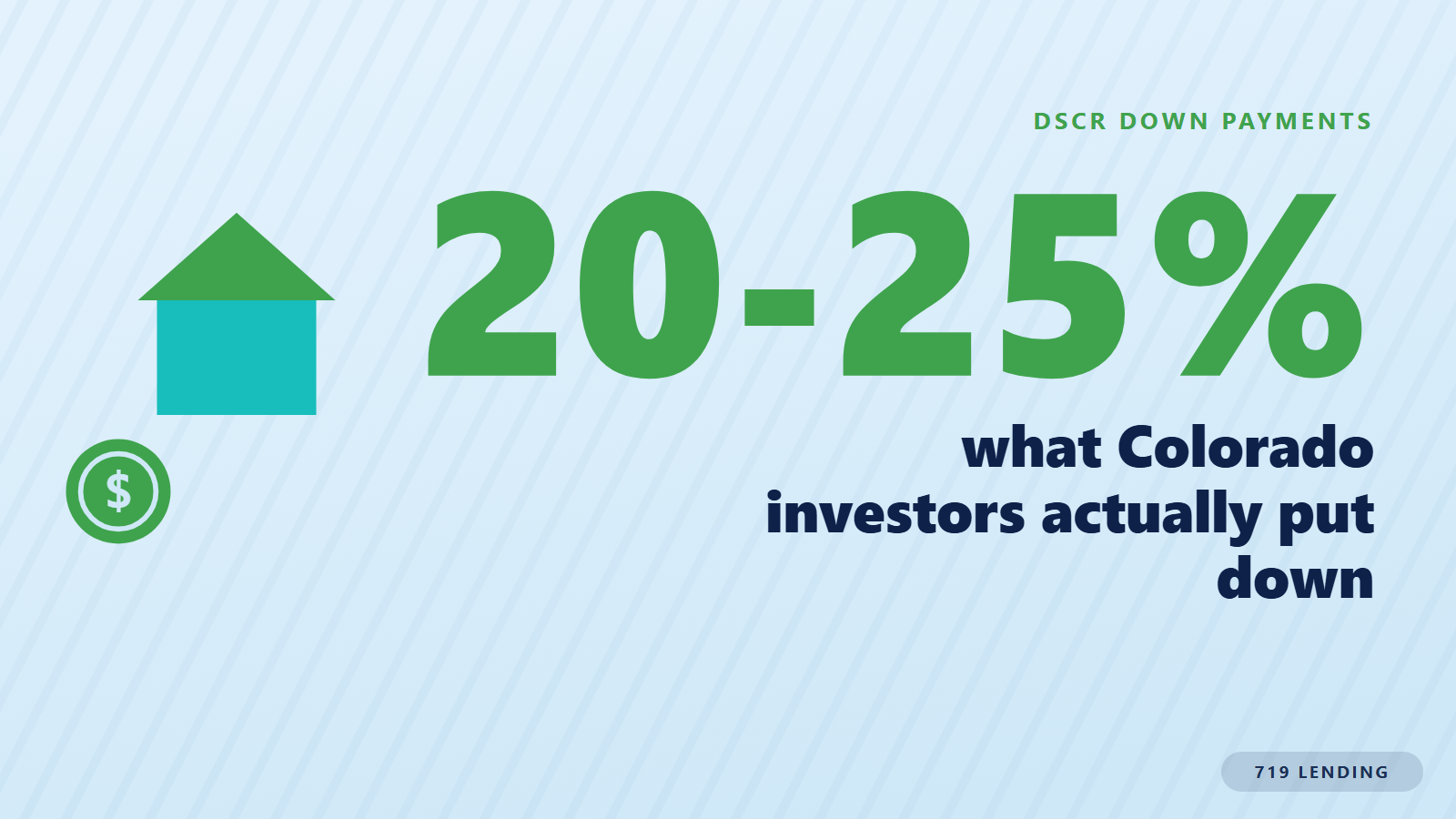
Most DSCR loans in Colorado need 20-25% down, and the exact figure tracks the property's debt-service-coverage ratio. Here's how LTV, reserves, and DSCR math play out for an El Paso County rental.
Non-QM Lenders in Colorado: How Brokers Beat Bank Overlays
Last updated: June 29, 2026 — down payment ranges, El Paso County median price, and rate framing reflect general market conditions and are subject to change; confirm current figures and terms for your scenario.
Non-QM lenders are mortgage lenders that qualify you using something other than your tax returns and a W-2. “Non-QM” means non-qualified-mortgage: loans that sit outside the federal Qualified Mortgage box, so the lender can verify income with bank statements, rental cash flow, assets, 1099s, or a profit-and-loss statement instead. In Colorado, these loans are how self-employed owners, investors, and 1099 earners get approved when a bank’s rigid rules say no.
If you’ve heard “your tax returns don’t show enough income” from a big bank, you weren’t really turned down by the loan program. You were turned down by that bank’s overlays. A broker fixes that by shopping a different shelf entirely. Here’s how the whole thing works.
What does non-QM actually mean?
Non-QM means the loan does not meet the Consumer Financial Protection Bureau’s definition of a Qualified Mortgage. That sounds scary; it isn’t. The QM rule was written after 2008 to stop the worst pre-crisis lending — no-doc loans, negative amortization, balloon traps. Non-QM loans are still fully documented and fully underwritten. They simply document income a smarter way.
The practical difference: a standard conforming loan (Fannie Mae or Freddie Mac) averages the net income on your tax returns. Every write-off you took to lower your tax bill also lowers your qualifying income. A self-employed borrower who earned $180,000 but wrote down to $70,000 of taxable income gets underwritten on the $70,000. Non-QM lenders look at the money the business actually moves — deposits, distributions, rents — and qualify closer to reality.
What are bank overlays, and why do they kill good loans?
An overlay is an extra rule a lender stacks on top of a program’s official guidelines. A program’s published guidelines might allow a certain minimum credit score or debt ratio, and then an individual bank “overlays” a tighter number on top — a higher minimum score, a lower allowable ratio. The guideline didn’t change — the bank’s appetite did. Overlays exist because banks process millions of loans through one rigid pipeline and reject anything that needs a human to think.
This is the single most misunderstood thing in mortgages. When a retail bank says no, borrowers assume they don’t qualify. Usually the truth is that this particular institution won’t make the loan. A different lender with looser overlays — or a non-QM lender with no overlays on that scenario — will.
A broker isn’t one lender. 719 Lending shops dozens of wholesale lenders and non-QM investors at once. When one says no, we already know which others tend to say yes on that profile. That’s the entire value proposition: we move your file to the shelf where it gets approved instead of forcing you into the one box that rejected you.
What types of non-QM loans are available in Colorado?
The main non-QM products are bank-statement loans, DSCR loans, P&L loans, asset-depletion loans, 1099 loans, and ITIN loans. Each one solves a specific qualifying problem. Here’s the menu and who each one fits.

| Non-QM loan type | How income is verified | Best fit | Typical down payment |
|---|---|---|---|
| Bank-statement loan | 12-24 months of personal or business bank deposits | Self-employed owners who write off heavily | 10-20% |
| DSCR loan | Property’s rental income vs. its payment (no personal income used) | Real estate investors | 20-25% |
| P&L loan | CPA- or borrower-prepared profit-and-loss statement | Established businesses with clean books | 10-20% |
| Asset-depletion loan | Liquid assets converted to a qualifying income stream | Retirees, high-net-worth, low-documented-income borrowers | 20-30% |
| 1099 loan | 1099 forms instead of full tax returns | Independent contractors, gig and commission earners | 10-20% |
| ITIN loan | Standard income docs, qualified on an ITIN instead of an SSN | Borrowers without a Social Security number | 15-25% |
Down payment, reserve, and credit requirements vary by lender and are not fixed program rules — confirm current terms for your scenario.
Bank-statement loans
The workhorse of non-QM. The lender averages your deposits over 12 or 24 months and applies an expense factor (so they’re qualifying you on roughly your net business cash flow, not gross). No tax returns. Ideal for the contractor, restaurant owner, or consultant whose Schedule C is written down to almost nothing.
DSCR loans
Debt-Service Coverage Ratio loans qualify the property, not the person. If the rent covers the mortgage payment, the deal works — your personal tax returns never enter the file. This is the go-to for investors building a portfolio, because a W-2 income cap doesn’t limit how many you can buy.
P&L, asset-depletion, 1099, and ITIN
P&L loans accept a profit-and-loss statement in place of returns. Asset-depletion turns a large account balance into “income” by dividing it over a set term. 1099 loans use your 1099s directly — useful for commissioned sales and gig workers. ITIN loans let borrowers who file taxes with an Individual Taxpayer Identification Number, rather than an SSN, still buy a home.
Who actually needs a non-QM lender in Colorado?
You’re a non-QM candidate if your income is real but your tax returns don’t show it cleanly. In Colorado Springs and across El Paso County, that’s a large slice of the market — small-business owners, gig contractors, military spouses running side businesses, and investors buying rentals around Fort Carson and the rapidly growing Falcon and Monument areas.
Consider a real-broker scenario. A Colorado Springs general contractor grosses about $220,000 a year but, after equipment write-offs and depreciation, shows roughly $68,000 of taxable income. Against the county’s median home price (in the mid-$400,000s in recent years — confirm current figures), a conventional lender qualifies him on the $68,000 — often not enough. A 24-month bank-statement loan reads his actual deposits, qualifies him near his true cash flow, and the deal can close. Same borrower, same income, different shelf.
Non-QM also rescues files that are perfectly strong but unusual: a recently retired couple with a large investment balance and little “income,” a sales rep paid almost entirely on 1099 commission, or an investor who already maxed out the number of conventional loans Fannie Mae allows.

How does a broker beat bank overlays?
A broker wins by competing the lenders against each other instead of accepting one institution’s rules. The process looks like this:
- Diagnose the real problem. Was the denial about credit, the debt ratio, the income calculation, or the property type? Each points to a different fix.
- Match the scenario to the right shelf. A heavy write-off problem goes to bank-statement; an investor income cap goes to DSCR; a thin-income/high-asset profile goes to asset-depletion.
- Shop lenders without overlays on that specific issue. The exact rule that sank you at the bank may not exist at the next lender.
- Structure to qualify. Choosing 24-month vs. 12-month statements, the right occupancy, or the right down payment can move a marginal file into a clear approval.
Non-QM rates typically run higher than conforming rates — that’s the trade for flexible documentation. But a slightly higher rate on a loan that closes beats a low rate on a loan that never funds. Many borrowers use a non-QM loan to buy now, then look to refinance into a conventional loan a year or two later once their returns or seasoning line up. We’ll map that potential exit before you ever sign.
Frequently asked questions
Are non-QM loans the same as the risky subprime loans from 2008?
No. Pre-2008 subprime loans were often unverified, no-doc, or built to fail. Non-QM loans are fully documented and fully underwritten — they just verify income with bank statements, rental cash flow, or assets instead of tax returns. The borrower’s ability to repay is still confirmed.
Will a non-QM loan have a higher interest rate?
Generally yes. Flexible documentation typically carries a rate premium over conforming loans, and pricing varies by lender, credit, and down payment. Confirm current rates for your scenario — and ask your broker whether refinancing into a conventional loan later is a realistic exit.
How much can I put down on a non-QM loan in Colorado?
Most non-QM programs start around 10-20% down, with DSCR and asset-depletion loans often requiring 20-30%. These are lender-set, not fixed federal rules, so the exact figure depends on the program and your profile. Confirm current requirements.
Do I need tax returns for a non-QM loan?
Usually not. That’s the point. Bank-statement, DSCR, P&L, and asset-depletion loans qualify you without full tax returns. You’ll still document the income the program relies on — deposits, rents, 1099s, or assets.
Can a non-QM loan be used for an investment property?
Yes. DSCR loans are built specifically for investors and qualify on the property’s rental cash flow rather than your personal income, which is why investors use them to scale a portfolio past conventional loan limits.
Talk to a Colorado broker who shops non-QM
If a bank told you your tax returns don’t show enough, that may say more about the bank than about your loan. 719 Lending shops bank-statement, DSCR, P&L, asset-depletion, 1099, and ITIN lenders across Colorado to find the shelf that approves your file. Learn more about working with a Colorado Springs mortgage broker, explore our bank-statement loan options, or see how DSCR loans for investors work. Contact 719 Lending for a straight answer on what you may qualify for.
719 Lending Inc., NMLS #1601989 · Equal Housing Opportunity · This article is educational only, is not a commitment to lend, and not all applicants will qualify.

Related Posts