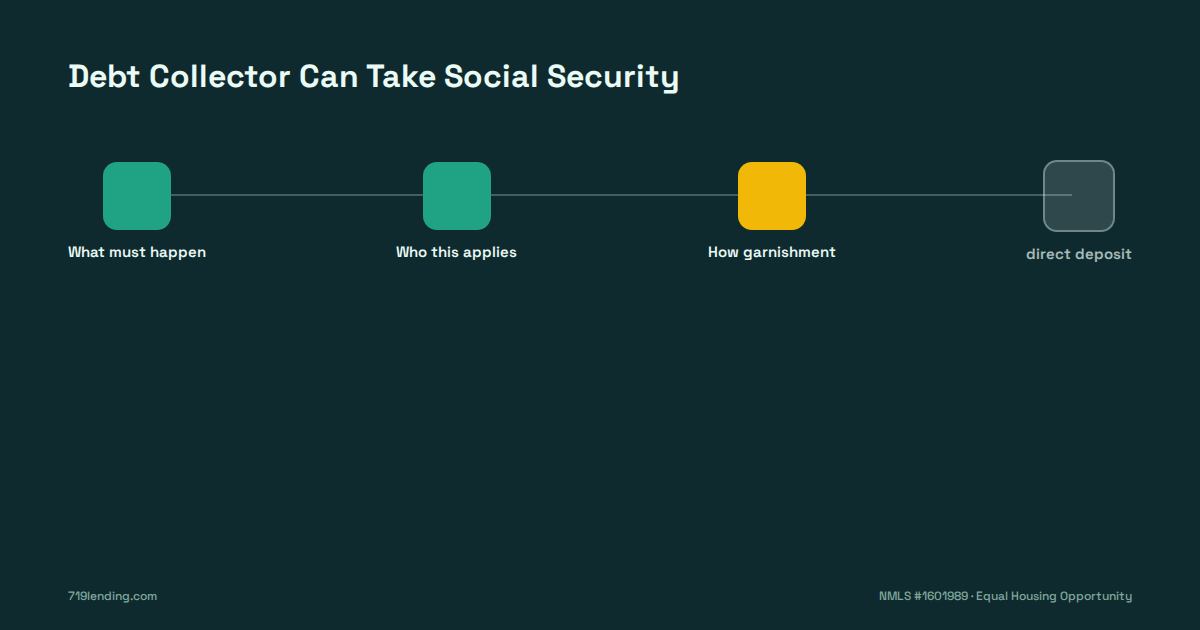
Debt collectors cannot simply take your Social Security or VA benefits. Before any garnishment can happen, a collector must sue you, win a court judgment, and then obtain a court order directed at your bank or credit union. This guide walks through the process, the automatic protections for direct-deposited federal benefits, and what to do if your account is frozen.
Unpaid Debts and Military Disciplinary Action: What to Know
What is the relationship between unpaid debts and military disciplinary action? In short, the military expects service members to pay their legitimate financial obligations on time, and failure to do so may result in disciplinary action under the Uniform Code of Military Justice (UCMJ) — but only when specific conditions are met, and only the military itself can bring that action.
This guide is for service members and military families, including the large community around Colorado Springs installations such as Fort Carson, Peterson Space Force Base, Schriever Space Force Base, and the Air Force Academy. It covers what the UCMJ connection actually is, what debt collectors are and are not allowed to do, and where to get help.
Here are the key points, drawn from the Consumer Financial Protection Bureau (CFPB):
- A debt collector cannot prosecute you under the UCMJ. Only the military can take disciplinary action.
- Discipline is possible only for legitimate obligations, and only if certain conditions are met — there cannot be a genuine dispute about the debt.
- A debt collector cannot tell your supervisor or commander that you owe a debt. Contact with the chain of command is limited to locating you.
- Unpaid debts can lower your credit score, and negative credit information may cause a security clearance to be pulled when it comes up for review.
- The Fair Debt Collection Practices Act (FDCPA) bars harassment, abuse, and misleading statements by debt collectors.
What is the relationship between unpaid debts and military disciplinary action?

The connection runs through the Uniform Code of Military Justice. According to the CFPB, service members are expected to pay their legitimate financial obligations in a proper and timely manner.
Failure to pay a legitimate obligation may result in disciplinary action under the UCMJ. That is a real consequence civilian borrowers do not face — a late bill that costs a civilian only fees and credit damage can also become a command matter for military personnel.
Only the military can act under the UCMJ
A debt collector cannot prosecute you under the UCMJ. Only the military can do that. Any collector who threatens UCMJ action as if they control it is misrepresenting their power.
Conditions must be met first
Disciplinary action is not automatic whenever a bill is late. Certain conditions must be met — for example, there cannot be a genuine dispute between you and the debt collector about the debt.
If you genuinely contest whether you owe the money, or how much, that dispute matters. The next question most service members ask is whether a collector can go to their command.
Can a debt collector contact your chain of command?
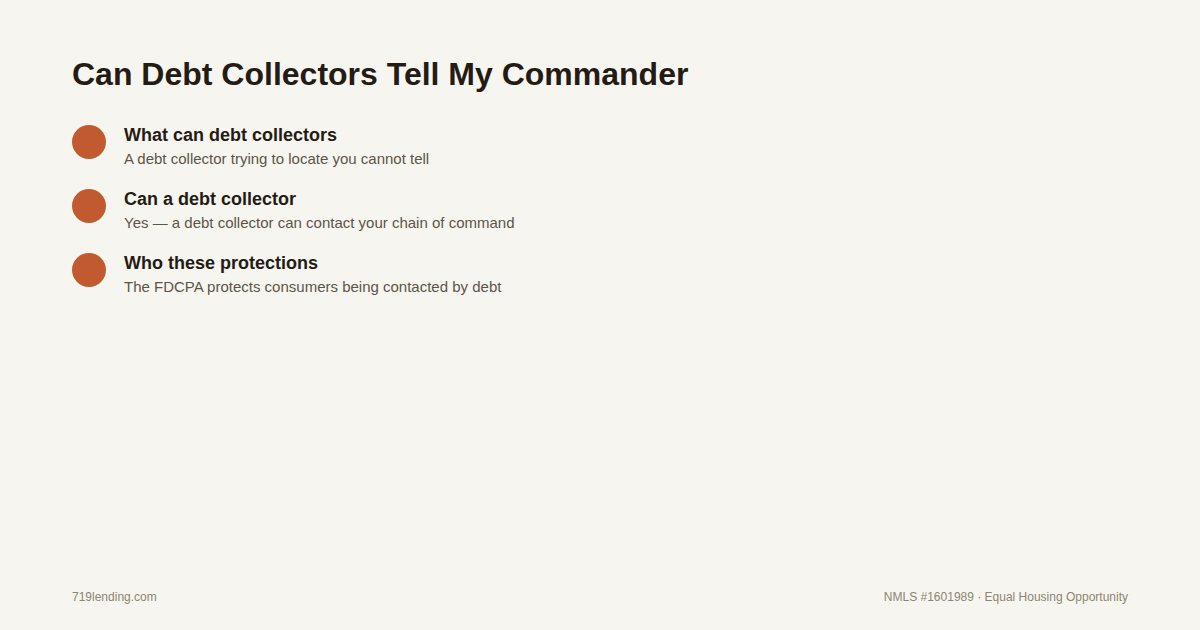
Yes, but in a very narrow way. A debt collector can contact your chain of command without your permission, but usually only to find out your location, your phone number, and where you work.
What collectors can ask your command
Contact is limited to locating you. Typically, a collector can speak to your supervisor or commander only once to get that location information, and they cannot call if they already have it.
What collectors cannot tell your command
A debt collector trying to locate you cannot tell your supervisor or commander that you owe a debt. Under the FDCPA, a collector is also not permitted to share information about your debt, without your permission, with a third party such as a security manager, supervisor, or commander.
So the collector cannot be the one who turns your debt into a command problem. The credit reporting system, however, is a different pathway — and that is where security clearances come in.
How unpaid debts affect a security clearance
Failing to pay your debts on time can result in negative information being reported to credit reporting companies. That reporting is legal — publishing your name for not paying a debt is prohibited, but reporting to a credit reporting company is not.
Negative information can lower your credit score, and that may cause your security clearance to be pulled when it is up for review. For service members in clearance-heavy assignments around Colorado Springs, the clearance review is often the highest-stakes consequence of letting bills slide.
Before worrying about any of that, though, it helps to know your baseline rights when a collector calls.
Your rights under the Fair Debt Collection Practices Act
The FDCPA says debt collectors cannot harass, abuse, or mislead you or anyone else they contact. These protections apply to service members and civilians alike.
Examples of illegal collector conduct
- Calling you repeatedly with intent to annoy or harass
- Contacting you at an unreasonable time — very early morning or late night — unless you agree
- Using obscene language
- Making false or misleading statements, including about how much you owe
- Publishing your name for not paying a debt
- Threatening to have you arrested for not paying the debt
Allowed versus not allowed
| Debt collector action | Allowed? |
|---|---|
| Contact your command to locate you | Yes, typically once |
| Tell your commander you owe a debt | No |
| Prosecute you under the UCMJ | No — only the military can |
| Threaten arrest for nonpayment | No |
| Report the debt to credit reporting companies | Yes |
| Share debt details with a security manager without permission | No |
Knowing these rules is easier when you also understand who is actually calling you.
Original creditor versus debt collector: who is contacting you?
The original creditor is the company that gave you the loan or credit. An original creditor may collect a past-due account itself, or it may hire a debt collector.
A debt collector is generally a third party contracted to collect the debt. The name of the company contacting you may differ from the original creditor, because the original creditor may also sell the debt to another party, who may place it with a different collector.
That is why verifying the debt matters before you pay anyone. Here is how to respond.
How service members should respond to a debt collector
The CFPB publishes sample letters for the most common situations. Depending on your circumstances, you can use them if you:
- Need more information about the debt
- Do not owe the debt
- Want the collector to stop contacting you
- Want the collector to contact you only through your lawyer
- Want to specify how the collector can contact you
Verifying first protects you two ways: it keeps you from paying a debt you do not owe, and a genuine dispute is exactly the condition that bears on whether UCMJ discipline can apply. Once you have responded, you also have enforcement options.
Where to report problems and get help
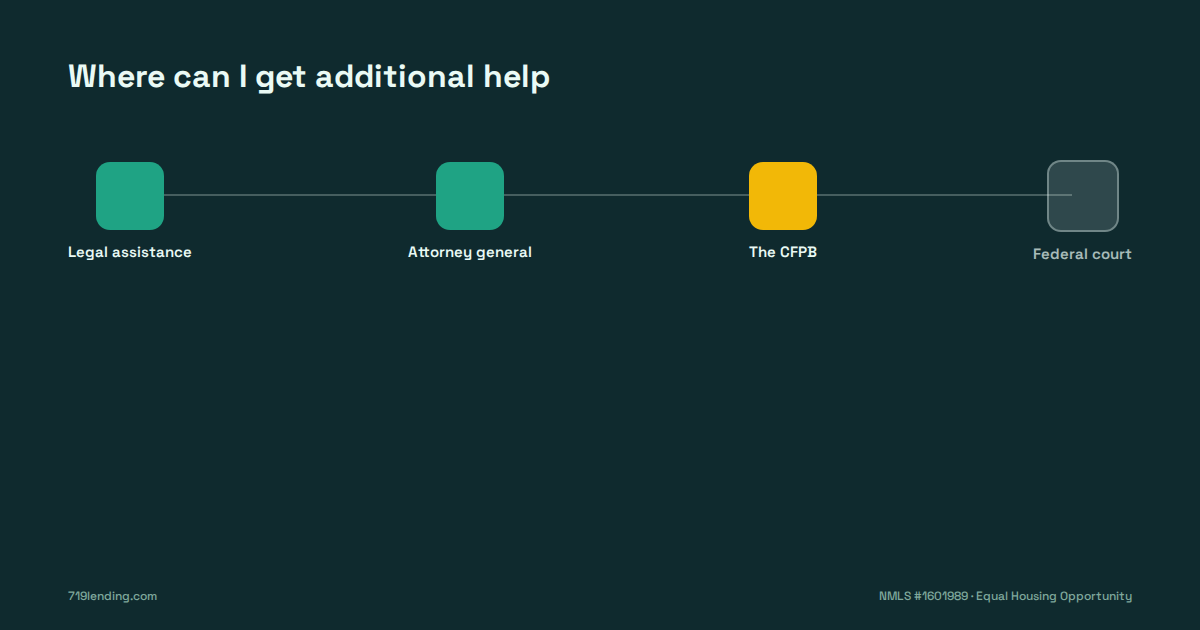
You can report collector problems to your state attorney general. You can also sue a collector for FDCPA violations — if you sue and win, the collector must generally pay your attorney’s fees and may also have to pay you damages.
Military-specific resources
Contact your closest legal assistance (JAG) office for guidance on your situation. A counselor at your local military financial readiness program can help with managing your finances.
The CFPB complaint process
You can submit a complaint with the CFPB online or by phone. The CFPB forwards the complaint to the company and works to get a response.
Nonprofit credit counseling organizations are another option — they advise on managing money and debts and can set up a debt management plan where you make a single payment each period and the organization pays your creditors. All of this matters down the road if homeownership is a goal.
Why this matters for Colorado Springs service members
Colorado Springs is a heavily military market, and PCS moves, deployments, and clearance reviews all intersect with personal finances.
Keeping legitimate obligations current protects your standing with your command, your clearance, and your future borrowing ability all at once. The playbook is the same regardless of rank: verify, respond in writing, and use the free help the military already provides.
Next steps
If a debt collector is contacting you, start by requesting information about the debt in writing using the CFPB’s sample letters. If anything about the debt is wrong, dispute it — do not ignore it.
Then loop in your installation’s JAG legal assistance office and financial readiness program before the matter ever reaches your command. And if you are a Colorado service member thinking about buying a home, getting debts resolved and your credit report clean first makes every later conversation with a lender simpler — the team at 719 Lending can walk you through what shows up on a credit report and what questions to ask.
Frequently asked questions
Can you get in trouble in the military for not paying debts?
Yes. Service members are expected to pay legitimate financial obligations in a proper and timely manner, and failure to pay may result in disciplinary action under the UCMJ — but only if certain conditions are met, including that there is no genuine dispute about the debt.
Can a debt collector report me to my commander?
No. A debt collector can contact your chain of command without permission only to find out your location, phone number, and workplace — typically once. They cannot tell your supervisor or commander that you owe a debt.
Can a debt collector prosecute me under the UCMJ?
No. A debt collector cannot prosecute you under the UCMJ. Only the military can take disciplinary action under the UCMJ.
Do unpaid debts affect a security clearance?
They can. Failing to pay debts on time can result in negative information on your credit report, which can lower your credit score and may cause your security clearance to be pulled when it comes up for review.
Where can service members get help with debt collectors?
Contact your closest legal assistance (JAG) office, a counselor at your local military financial readiness program, your state attorney general, or submit a complaint with the Consumer Financial Protection Bureau. You can also sue a collector for FDCPA violations.
719 Lending Inc., NMLS #1601989 · Equal Housing Opportunity
719 Lending Inc. is not affiliated with or endorsed by HUD, FHA, VA, USDA, CHFA, the CFPB, or any government agency.
Last updated: October 2026

Related Posts