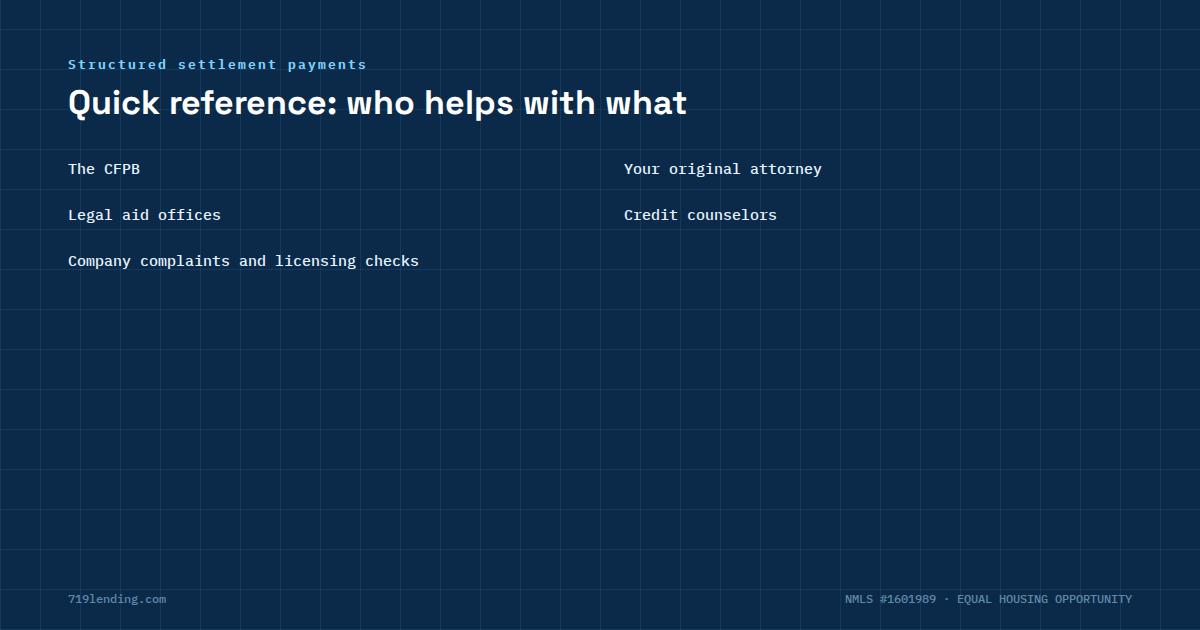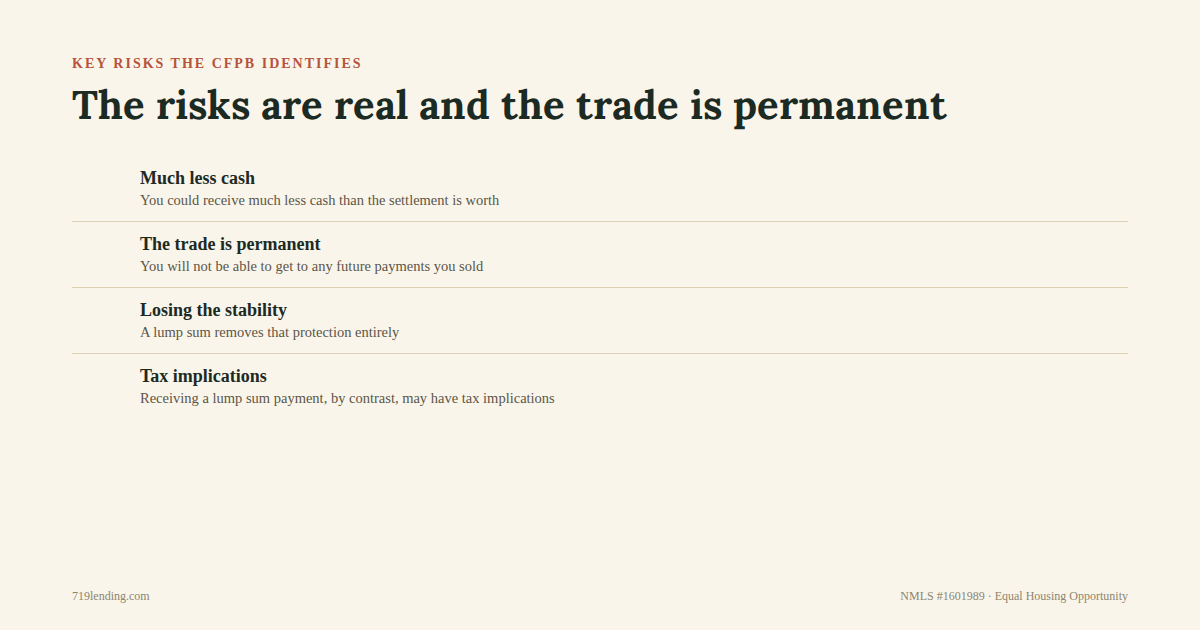
Before trading structured settlement payments for a lump sum, talk to someone who is not trying to buy them. Here are the organizations the Consumer Financial Protection Bureau points to: your own attorney, legal aid, nonprofit credit counselors, and state consumer protection offices.
What Is My Right Regarding Automatic Payments From My Bank Account?
What is my right regarding automatic payments from my bank account? In plain terms: you can take back permission at any time, even if you previously allowed a company to debit your account. This guide explains what the Consumer Financial Protection Bureau (CFPB) says about that right, how to stop automatic payments correctly, and what to do if money keeps coming out anyway — written for Colorado borrowers who pay recurring bills like a mortgage, utility bills, or a gym membership by automatic debit.
The short answer: you can revoke authorization at any time
When you set up automatic payments, you give a company permission to electronically withdraw money from your checking account on a recurring basis. That permission is yours, and you can take it away.
According to the CFPB, you have the right to stop a company from taking automatic payments from your account, even if you previously allowed them. You might cancel a subscription, or simply want to switch to a different payment method and start making manual payments when invoices arrive.

Here is the sequence the CFPB lays out:
- Call the company and tell it you are revoking permission for automatic debits, then follow up in writing.
- Call your bank or credit union and say you have revoked authorization, then follow up in writing.
- Consider a stop payment order if your financial institution recommends one.
- Monitor your bank statements and report any payment made after you revoked authorization.
Next, it helps to understand how automatic payments actually work, because the mechanics explain why both the company and the bank need to hear from you.
How automatic payments from a bank account work
Automatic debit payments start with an authorization: you give a company your checking account or debit card information and allow it to pull money on a schedule. Payments can be the same amount each time, or vary within a range you agreed to — like a utility bill that changes monthly.
The company must give you a copy of the terms of the payment authorization, laid out in a clear and understandable way. Keep that copy; it defines how much can be taken and how often.
Automatic payments vs. bank bill-pay
Automatic payments are different from the recurring bill-pay feature at your bank or credit union. With bill-pay, you tell the bank to send payments to the company. With automatic payments, the company has permission to take money from your bank account — which is exactly why revoking that permission is the key step.
That distinction matters when things go wrong, so let’s walk through the stop process in order.
How to stop automatic payments: the step-by-step process
Step one: call and write the company
Tell the company you are taking away its permission to take automatic payments out of your bank account. Customer service can usually handle this, and there may be an online form.
Then follow up with a letter or email. Be clear about whether you are canceling the entire contract or subscription, or only changing how you pay — for example, keeping the service but paying each invoice manually.
Step two: call and write your bank or credit union
Next, tell your bank or credit union that you have revoked authorization for that company. Again, call first, then confirm in writing. Many banks have an online form for this.
Once both the company and your financial institution know you revoked authorization, any additional payments initiated by that company are errors — and you can contact your bank for a refund.
Step three: consider a stop payment order
Some banks or credit unions may recommend a stop payment order as well. A stop payment order is an instruction telling your bank not to make a payment to a specified company from your account.
Banks and credit unions generally charge fees for stop payment orders, so ask about the cost first. Follow your institution’s suggested process and keep close track of every request and the date you made it.
Good records are also your leverage in the final step: disputing a payment that slips through.
What federal law says if payments keep coming out
Tell your bank or credit union right away if you see a payment you did not allow, or a scheduled payment that went through after you revoked authorization. Federal law gives you the right to dispute unauthorized transfers from your account and get your money back — as long as you tell your bank in time.
This is why the CFPB stresses reviewing bank statements regularly. Monitoring your account is what turns the right into an actual refund.
One caution before you cancel, though: stopping the payment is not the same as stopping the debt.
Canceling automatic payments does not cancel what you owe
If you cancel automatic payments on a loan, you still owe money and must keep making payments by another method. Missing a due date because autopay was turned off can mean late fees — the obligation survives the payment method.
Likewise, to end an ongoing contract for a service like cable or a gym, cancel the contract itself with the company, not just the automatic debits. Otherwise the service provider may keep billing you.
Know your rights before you set up automatic payments
The CFPB also flags protections on the front end. A company cannot require you to repay a loan by automatic debit from your checking account as a condition of giving you the loan, unless the loan is an overdraft line of credit. Be wary of anyone who pressures you to pay that way.
Verify the company first
Before you set up automatic payments, make sure the company is legitimate. Consider a different payment method until you are confident, and never hand your bank account or debit card information to a company you are unsure about.
Watch for overdraft and nonsufficient funds fees
Autopay helps you make timely payments and avoid late fees, but only if there is enough money in the account when the payment is scheduled. If the balance is too low, both the bank and the company might charge a fee, and those fees can add up quickly.
Pay close attention to your balance and upcoming payment dates — especially around irregular pay cycles or a PCS move, when accounts and allotments are in flux.
Why this matters for Colorado Springs borrowers
Automatic bill payment is a convenient way to pay recurring bills — mortgage payments, car payments, credit card bills, childcare, utility bills. The CFPB notes some lenders even offer an interest-rate reduction on loans for paying by automatic debit.
For military families around Colorado Springs, autopay keeps bills current during deployments and PCS moves. The same families also need to know how to cancel automatic payments cleanly when closing out a lease, a gym contract, or a local service before relocating.
Where to read the official source
The authority here is the Consumer Financial Protection Bureau, the federal agency that implements and enforces federal consumer financial law. Its Ask CFPB pages on stopping automatic payments and on how automatic payments work include sample letters you can adapt, including a sample revocation letter and a sample stop payment order.
Search “CFPB stop automatic payments” at consumerfinance.gov to find them.
Your next step
If you want to stop an automatic debit: call the company today, revoke authorization in writing, do the same with your bank or credit union, and watch your statements. Keep copies of everything with dates.
And if the autopay in question is a mortgage payment you are restructuring — because of a refinance, a sale, or a move — talk with a loan officer at 719 Lending in Colorado Springs before you change anything, so the loan stays current while the payment method changes.
Frequently asked questions
Can I stop automatic payments even if I previously authorized them?
Yes. The CFPB confirms you have the right to stop a company from taking automatic payments from your bank account even if you previously allowed them. Revoke authorization with the company, then notify your bank or credit union, both in writing.
What is a stop payment order?
A stop payment order is an instruction to your bank or credit union telling it not to make a payment to a specified company from your account. Banks generally charge fees for stop payment orders, so ask about the cost and follow your institution’s suggested process.
What if a company takes a payment after I revoked authorization?
Once you have told both the company and your bank that authorization is revoked, any additional payments initiated by that company are errors. Contact your bank right away — federal law gives you the right to dispute unauthorized transfers and get your money back if you report them in time.
Does canceling autopay cancel the bill or loan?
No. Canceling an automatic payment does not cancel what you owe. If you cancel autopay on a loan, you must keep making payments by another method, and to end a service contract you must cancel the contract itself, not just the debits.
Can a lender require autopay as a condition of a loan?
Generally no. The CFPB states a company cannot require you to repay a loan by automatic debit from your checking account as a condition of giving you the loan, unless the loan is an overdraft line of credit.
What’s the difference between automatic payments and bank bill-pay?
With automatic payments, you give the company permission to take money from your bank account. With recurring bill-pay, you give your bank or credit union permission to send payments to the company. Revoking authorization works differently depending on which one you set up.
719 Lending Inc., NMLS #1601989 · Equal Housing Opportunity
719 Lending Inc. is not affiliated with or endorsed by HUD, FHA, VA, USDA, CHFA, the CFPB, or any government agency.
Last updated: October 2026

Related Posts