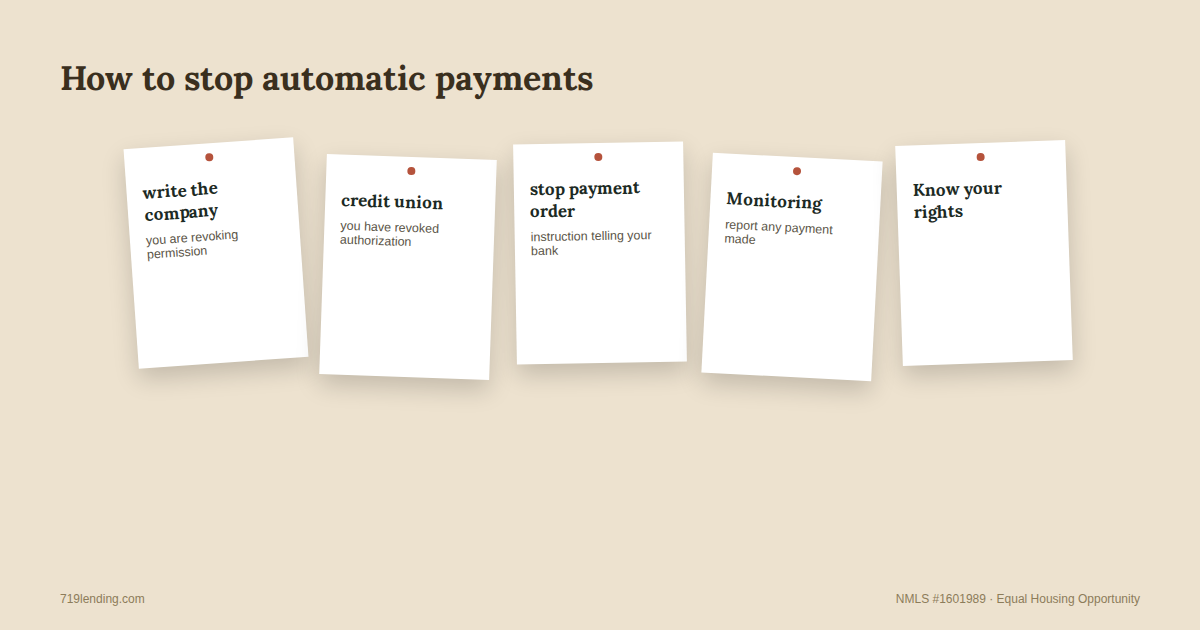
Federal consumer protection rules give you the right to revoke a company's permission to take automatic payments from your bank account. This guide walks Colorado borrowers through how to stop automatic debits, use stop payment orders, and dispute unauthorized withdrawals.
Risks of Trading Your Settlement Payments for a Lump Sum
If you are asking what the risks are of trading my settlement payments for a lump sum, the honest answer is that the risks are real and the trade is permanent. This article walks through what the Consumer Financial Protection Bureau (CFPB) warns about, who it applies to, what to demand in writing, and what to do before you sign anything. It is written for Colorado borrowers — including the many military families around Colorado Springs — who receive structured settlement payments and are being pitched fast cash.
The short answer on trading settlement payments for a lump sum
Dealing with companies that offer a lump sum payment for your disability, personal injury, or structured settlement payments can be very risky. That is the CFPB’s framing, not ours.
The core problem is simple: these companies make money by acquiring your structured settlement for much less than the total settlement is worth over time. You get cash now; they collect your future payments.
Once the deal closes, you are permanently giving up your right to receive payments under the structured settlement. There is no going back to the old payment schedule later.
Here are the key risks the CFPB identifies, each covered in detail below:
- You could receive much less cash than the settlement is worth
- You permanently lose access to all future payments you sold
- You lose the stability that regular payments provide for rent, a mortgage, and bills
- A lump sum payment may have tax implications your tax-free structured settlement payments did not
- A lump sum may affect eligibility for public benefits, now or in the future
- Some companies aggressively target people with disabilities who have structured settlements

Next, let’s be clear about who this warning actually applies to.
Who this applies to
This applies to anyone receiving periodic payments from a personal injury settlement, a disability-related settlement, or any other structured settlement — and who is being solicited to sell some or all of those payments for a one-time lump sum payment.
What a structured settlement is
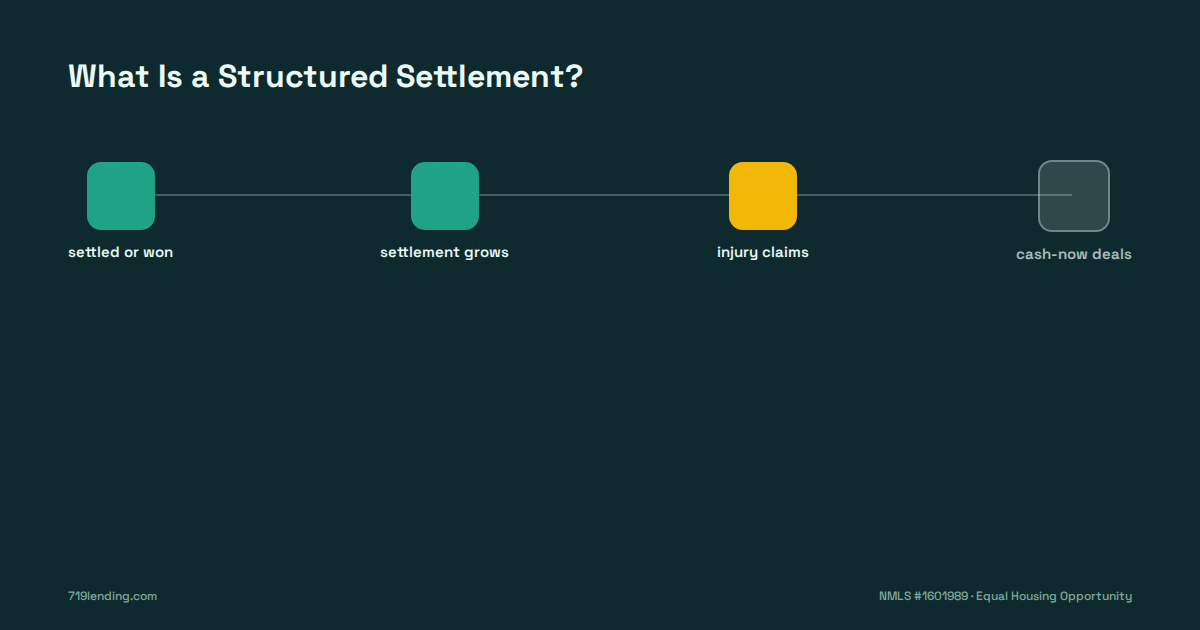
If you made a personal injury claim and settled or won your case, you are likely receiving money through either a traditional settlement or a structured settlement. A traditional settlement is generally paid out in one payment.
Under a structured settlement, you receive regular tax-free payments for a specified length of time. The payment structure can be monthly, quarterly, semi-annually, annually, or a set number of lump-sum payments.
A structured settlement protects you from immediately spending the entire settlement at once. It provides a steady flow of income, which can contribute to long-term financial stability.
These payments are not SSDI or SSI
Structured settlement payments are sometimes called disability payments because you receive money for injuries. But they are not government-provided Social Security Disability Insurance (SSDI) or Supplemental Security Income (SSI) payments.
That distinction matters because, as we cover later, taking a lump sum can affect eligibility for public benefit programs. First, though, the biggest risk of all: the price.
Risk: you get much less than the settlement is worth
While receiving a large amount of money all at once may be helpful, in the long run you will get a lot less money. That is how the business model works.
How the buying companies make money
Companies that market cash-now deals profit on the spread between what they pay you today and the total value of the settlement payments they collect over time. The wider that gap, the more they make.
They will want either the entire settlement payment stream or a portion of it. Even a partial lump sum sale follows the same math: you trade a larger future amount for a smaller present one.
The trade is permanent
Usually, you get one lump sum payment upfront. The payments you would have received then go to the company that took over the structured settlement.
You will not be able to get to any future payments you sold. If the money runs out, the settlement income is gone with it.
Losing the money is only half the problem — the other half is losing what the payment schedule was doing for you.
Risk: losing the stability of periodic payments
Monthly or periodic payments may give you more stability to manage your finances, pay your rent or mortgage, and keep up with your bills. A structured settlement exists partly to protect you from spending everything at once.
A lump sum removes that protection entirely. Immediate access to settlement money requires financial discipline that the original payment structure was designed to supply for you.
If you do take a lump-sum payment, the CFPB says to make sure you have a plan in place for how you will pay monthly expenses without the benefit of monthly payments from the structured settlement.
For homeowners, that question is concrete: if the settlement payments were part of how the mortgage got paid, what replaces them? Stability is not the only thing at stake — taxes come next.
Risk: tax implications of the lump sum
Your monthly structured settlement payments may be tax-free. Receiving a lump sum payment, by contrast, may have tax implications.
Tax treatment varies by situation, and this is not an area to guess. The CFPB’s guidance is direct: consult a tax advisor before signing. Tax professionals can tell you what the trade actually means for your federal return and any state income taxes.
Taxes are one downstream consequence; public benefits are another.
Risk: losing eligibility for public benefits
If you receive public benefits, or plan to in the future, getting a lump sum payment may impact your eligibility. This includes needs-based programs you may rely on later even if you do not use them today.
Before signing anything, check with your lawyer, your local legal aid office, or the department that administers those benefits. This risk is easy to overlook because the harm may not show up until long after the lump sum settlement closes.
Beyond the financial mechanics, the CFPB also warns about how these deals get sold in the first place.
Risk: aggressive marketing that targets vulnerable people
Some companies aggressively market cash-now deals to people with structured settlements. The CFPB specifically warns that some companies target people with disabilities who have structured settlements.
If you receive a flyer or solicitation promising fast cash or a lump sum payment for your monthly or periodic payments, be careful. A pitch that arrives unsolicited is a signal to slow down, not speed up.
Be cautious of recommendations from the company trying to get the structured settlement. Get an independent evaluation from a trusted source, your own attorney, or a financial adviser instead.
The good news: you are not on your own. State law builds in several protections.
Protections: court approval and your rights under state law
Nearly all states require a judge to approve the agreement to give up a structured settlement. These states may require a judge to decide if the agreement is in your best interest or is necessary, reasonable, or appropriate.
State law may also provide for certain disclosures to be made before you sign. Court approval is a safeguard, but it works best when you arrive informed rather than relying on the judge to catch a bad deal for you.
Cancellation rights
Depending on state law, you may have the right to cancel or rescind the agreement within a certain time frame, even after you have signed. Get the cancellation rights in writing before you consider signing — not after.
Check the company’s record
Check with the state Attorney General’s Office or state consumer protection office to see if the company is licensed to do business in your state. Complaints on file are worth knowing about before you commit future payments to a company you have never dealt with.
Licensing and court approval cover the legal side. The paperwork side is next: what the company must put in front of you.
What to get in writing before you consider selling
The CFPB says to get a written statement from the company that wants the structured settlement, covering all of the following:
| Disclosure item | Why it matters |
|---|---|
| Total dollar amount of all remaining payments | Shows what you are actually giving up over time |
| Value in today’s dollars of that total | Lets you compare the offer to the settlement’s present value |
| Number of payments remaining | Confirms exactly which future payments transfer to the buyer |
| Amount you would receive as a lump sum | The actual cash in hand, after everything else |
| All fees, interest or discount rate, and costs | Reveals how much of the settlement’s value the company keeps |
Then get an independent review of those numbers. Your own attorney or a financial adviser can tell you whether the offer is reasonable — the company making the offer cannot be your only source of advice.
Before you even reach the disclosure stage, though, it is worth asking whether you need to sell at all.
Alternatives to selling your settlement payments
If you are having trouble paying bills and see a lump sum payment as a way out of debt, the CFPB suggests exhausting other options first.
Work with your creditors
Contact your creditors directly to see if you can work something out. Many problems that feel like they require a pile of cash can be handled through negotiation instead.
Address medical bills specifically
If you have hospital bills, know your rights when it comes to medical bills. Check whether your hospital has a charity care program or another way of providing free or reduced prices on medical expenses.
Get free or low-cost counseling
A non-profit credit counselor may be able to help you weigh your options. The CFPB points to the Financial Counseling Association of America and the National Foundation for Credit Counseling as starting points, both reachable through their websites.
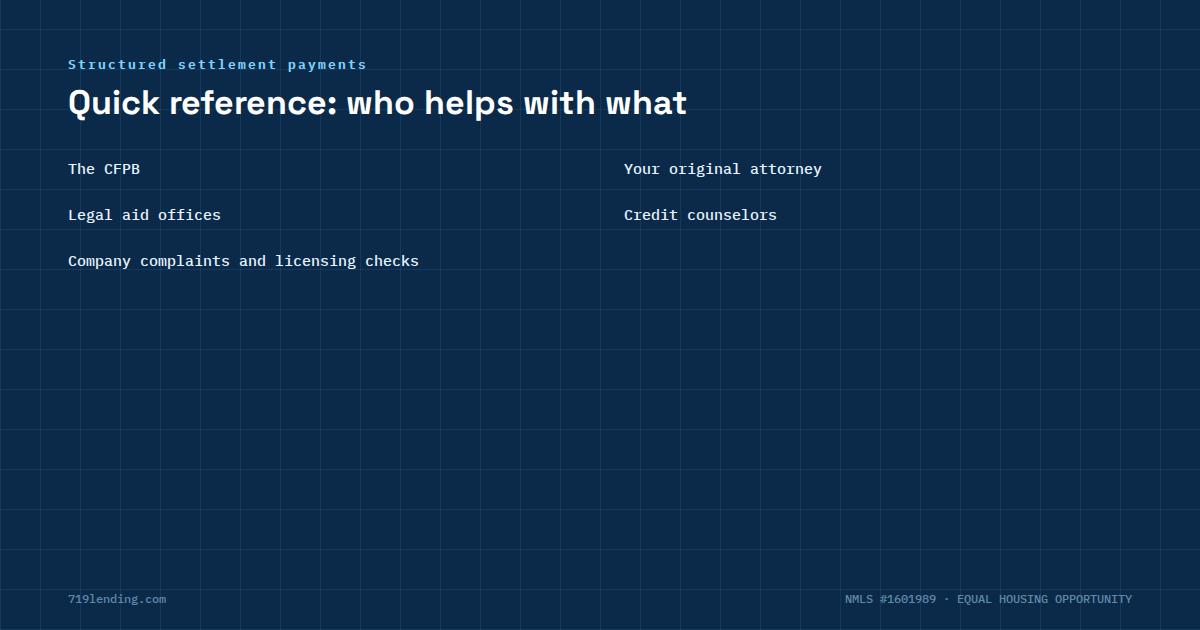
Legal help is available too: the lawyer who represented you in the original disability or structured settlement matter, your local legal aid office, or a volunteer attorney program. The American Bar Association also maintains a list of lawyer resources.
All of this applies anywhere in the country — but a few local realities deserve a mention.
A note for military families in Colorado Springs
Colorado Springs is a heavily military market, and cash crunches around a PCS move are common. An unsolicited offer of immediate access to settlement funds can look tempting when a move date is bearing down.
The same rules apply: the trade is permanent, the long-run cost is high, and alternatives are worth exhausting first.
And if the lump sum is being considered as a path to a down payment, slow down.
Where to read the official guidance
The authoritative source for everything in this article is the CFPB’s consumer guidance titled "What should I know before giving up my monthly disability, personal injury, or structured settlement payments in exchange for a one-time lump sum payment?" It is available on consumerfinance.gov in the Ask CFPB section.
The CFPB is the federal agency that implements and enforces federal consumer financial law. Its page covers the risks, the written disclosures to demand, cancellation rights, court approval, and where to find legal and financial help.
That leaves one question: what should you actually do right now?
What to do next
Do not sign anything yet. Before trading future payments for instant cash, the CFPB’s advice is to consider all your options, talk to people you trust with your finances, and reach out to your lawyer or a financial counselor.
Get the full written cost statement, get the cancellation policy in writing, confirm the company is licensed in Colorado, and get an independent opinion from someone who is not being paid by the buyer. Talk to a tax advisor about the tax implications and to legal aid or the benefits agency if you receive public benefits.
Frequently asked questions
Is it a bad idea to sell my structured settlement for a lump sum?
It can be very risky. The CFPB warns you could receive much less cash than the settlement is worth, you permanently give up future payments, and a lump sum may carry tax implications and affect public benefits eligibility. Get independent legal or financial advice before signing anything.
Do I need court approval to sell structured settlement payments?
In nearly all states, yes. A judge must approve the agreement and may be required to decide whether the sale is in your best interest or is necessary, reasonable, or appropriate. State law may also require specific disclosures before you sign.
Are structured settlement payments tax-free?
Monthly structured settlement payments may be tax-free, while receiving a lump sum payment may have tax implications. Tax treatment varies by situation, so the CFPB recommends consulting a tax advisor before signing any agreement to sell your payments.
Can I cancel after signing an agreement to sell my settlement payments?
Possibly. Depending on your state’s law, you may have the right to cancel or rescind the agreement within a certain time frame, even after signing. Get the cancellation rights in writing before you sign, not after.
Will a lump sum settlement payment affect my public benefits?
It may. If you receive public benefits or plan to in the future, a lump sum payment can impact your eligibility. Check with your lawyer, your local legal aid office, or the department that administers those benefits before agreeing to anything.
What should the company buying my settlement give me in writing?
The CFPB says to get a written statement showing the total dollar amount of all remaining payments, the value of that total in today’s dollars, the number of payments remaining, the lump sum you would receive, and all fees, interest or discount rate, and costs.
719 Lending Inc., NMLS #1601989 · Equal Housing Opportunity
719 Lending Inc. is not affiliated with or endorsed by HUD, FHA, VA, USDA, CHFA, the CFPB, or any government agency.
Last updated: October 2026

Related Posts