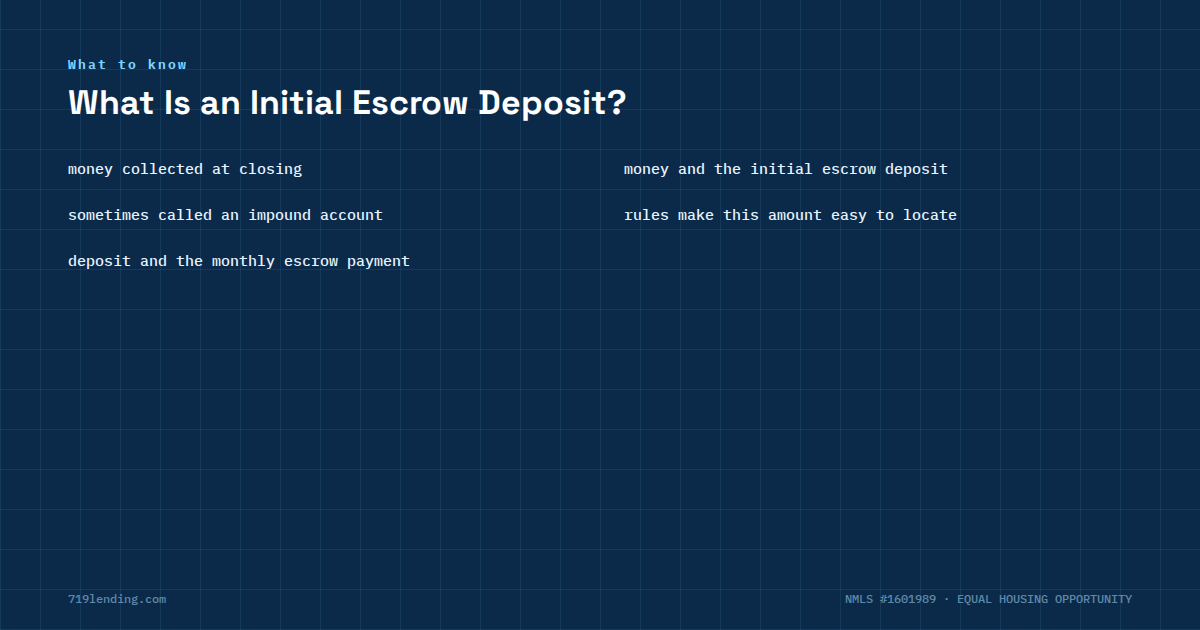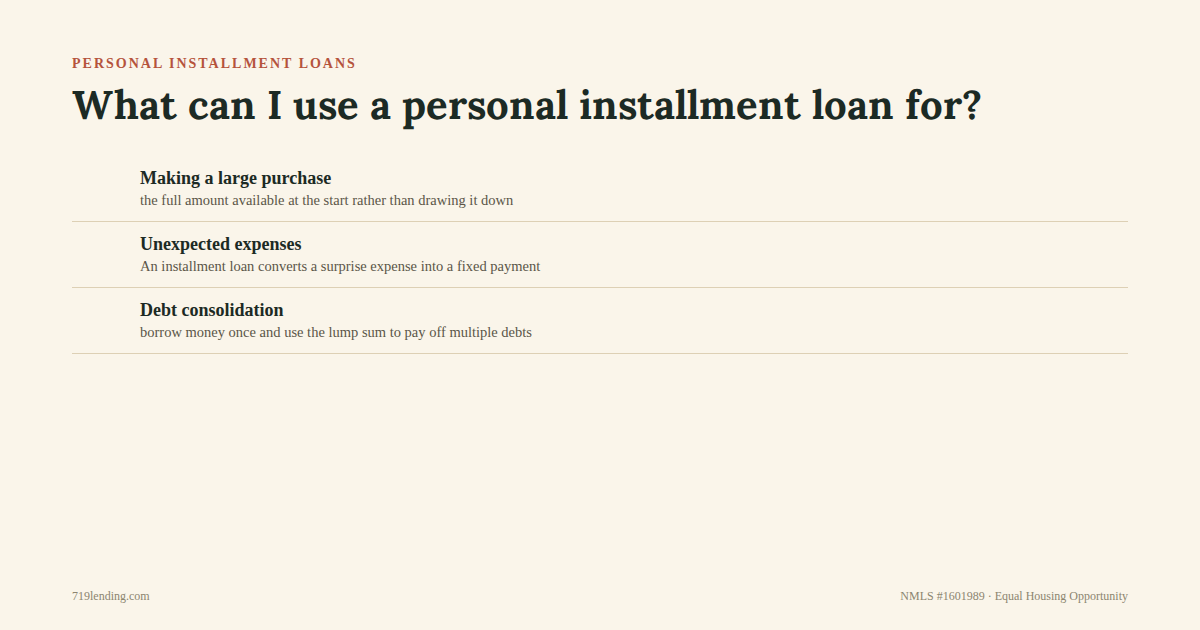
The initial escrow deposit is the amount you pay at closing to fund your new escrow account so your servicer can pay property taxes and homeowners insurance on your behalf. Here's where it appears on your Loan Estimate, how it differs from your monthly escrow payment and earnest money, and what Colorado buyers should check before closing.
Missing a Payment on a Personal Installment Loan: What Happens
What are the consequences of missing a payment on a personal installment loan? In short: late fees, damage to the credit report and credit score, and potentially debt collection if the account stays unpaid.
This guide walks Colorado borrowers through what happens after a missed payment, what the Consumer Financial Protection Bureau (CFPB) says about it, and the concrete steps to take before and after the due date passes.
Here are the main consequences at a glance:
- Late fee — charged according to the loan agreement and loan disclosures.
- Credit reporting — the lender may report late and missed payments to Experian, Equifax, and TransUnion.
- Lower credit score — the CFPB notes that failing to pay on time can have a significant impact on credit scores and the credit report.
- Debt collection — the lender might use third-party debt collectors to recover what you agreed to repay.
What happens if you miss a payment on a personal installment loan?

A personal installment loan is a closed-end loan: the lender gives you all the money up front, and you repay it in fixed amounts over a set period. Each monthly payment is part of that schedule, so a missed payment breaks the agreement you signed.
According to the CFPB, if you miss a payment the lender may report it to one or more of the three major credit bureaus and may use third-party debt collectors to collect the amount owed.
How quickly each consequence kicks in depends on the lender and the loan agreement, which is why the paperwork matters so much.
Late fees and what the loan agreement controls
Late fees are one of the common charges the CFPB lists for personal installment loans, alongside items like origination and documentation fees. The loan disclosure from the lender spells out which fees apply and when.
Whether the loan includes a grace period — a window after the payment date before a late fee applies — is also a question for the loan documents. Not every personal loan works the same way, so read the agreement or ask the lender directly rather than assuming a grace period exists.
If you cannot find the answer in the paperwork, call the lender and ask two questions: when is a payment officially late, and what fee applies once it is.
Fees are the immediate cost. The longer-lasting consequence is what shows up on the credit report.
How a missed payment affects the credit report and credit score
The CFPB states that lenders may report payments to one or more of the three major credit bureaus: Experian, Equifax, and TransUnion. That reporting works in both directions — on-time payments build a record, and late payments damage it.
Why payment history matters so much
Payment history is the part of the credit report that future lenders read first. The CFPB is direct about the stakes: failing to make payments on time can have a significant impact on credit scores and the credit report.
A lower credit score can follow you into future loans. When lenders set terms on a personal installment loan, they consider your credit score and reports, income, and debts — so a damaged report can mean tougher loan terms the next time you borrow.
Why this matters extra for future homebuyers
For Colorado Springs borrowers — including service members planning a purchase around a PCS move — the credit report is part of the file reviewed when you apply for a mortgage. A string of late payments on a personal loan today can complicate a home loan application later.
Credit damage is serious, but it is not the end of the escalation path. Unpaid accounts can move to collections.
Debt collection on an unpaid personal loan
If payments stop, the CFPB notes the lender might use third-party debt collectors to try to collect the amount you agreed to repay. That can mean phone calls and letters from a collection agency instead of the original lender.
Dealing with debt collectors adds stress and does not make the underlying debt go away. The CFPB publishes separate guidance on what may happen if you ignore or avoid a debt collector — ignoring the problem is the one strategy with no upside.
The good news is that most of this is avoidable if you act before the account goes seriously delinquent.
What to do if you can’t make the loan payment
The CFPB’s advice is simple: if you’re unable to make a payment, contact your lender as soon as possible to understand your options. Lenders would generally rather work something out than send an account to collections.
Deferment
Deferment may allow you to postpone payments for a period. The specifics — how long, and what happens to interest during that time — come from the lender, so ask for the terms in writing.
Forbearance
Forbearance is another option the CFPB names. Depending on the lender, it could allow postponed or partial payments while you get through financial difficulties.
A payment plan
A payment plan restructures how you repay. The CFPB notes these arrangements could allow you to postpone payments, make partial payments, or lower the interest on the loan.
None of these options is automatic. They exist only if you ask, and asking before the first missed payment puts you in the strongest position.
How to avoid missing a payment in the first place
Prevention is cheaper than cleanup. A few practical habits help:
- Set up automatic payments so the due date never slips past you — especially useful during a deployment or PCS move when mail and routines get disrupted.
- Put the payment date on a calendar with a reminder a few days ahead.
- Trim nonessential spending the moment money gets tight, before the loan payment is at risk.
- If the budget genuinely does not stretch, call the lender first — not after the due date.
If debt across several accounts is the real problem, a credit counselor can help you evaluate options such as a debt management plan or debt consolidation. The point is to act while you still have choices.
What the official source says and where to read it
The guidance in this article comes from the Consumer Financial Protection Bureau, the federal agency that implements and enforces federal consumer financial law. Its Ask CFPB pages on personal installment loans cover what these loans are, what fees they carry, and what happens if you miss a payment or fail to pay the loan back.
You can read the originals at consumerfinance.gov by searching “personal installment loan.” The CFPB notes its content is general consumer information, not legal advice — the same is true here.
Your next step
If a payment is already late or about to be, call the lender today and ask about deferment, forbearance, or a payment plan. Then pull the loan agreement and confirm the late fee terms and any grace period.
If you’re in Colorado Springs and thinking about how your credit and debts fit into a future home purchase, the team at 719 Lending can review your situation and explain how lenders look at payment history and debt-to-income ratio when you apply.
Frequently asked questions
What happens if you miss a payment on a personal loan?
The lender may charge a late fee under the loan agreement, report the missed payment to Experian, Equifax, and TransUnion, and — if the account stays unpaid — use third-party debt collectors. The CFPB says missed payments can have a significant impact on credit scores and the credit report.
Do personal installment loans have late fees?
Yes. The CFPB lists late fees among the common charges on personal installment loans. The loan disclosure and loan documents from the lender spell out exactly when a late fee applies and how it is calculated, so review them before and after signing.
Will one missed payment hurt my credit score?
It can. Lenders may report late and missed payments to one or more of the three major credit bureaus, and the CFPB notes that failing to pay on time can significantly affect credit scores. Whether and when a single late payment gets reported depends on the lender.
What should I do if I can’t afford my personal loan payment?
Contact the lender as soon as possible — ideally before the due date. The CFPB says options may include deferment, forbearance, or a payment plan, which could let you postpone payments, make partial payments, or lower the interest on the loan.
Can a personal loan go to a collection agency?
Yes. If you miss payments, the CFPB notes the lender might use third-party debt collectors to collect the amount you agreed to repay. Working with the lender early on a repayment plan is the most direct way to avoid debt collection.
719 Lending Inc., NMLS #1601989 · Equal Housing Opportunity
719 Lending Inc. is not affiliated with or endorsed by HUD, FHA, VA, USDA, CHFA, the CFPB, or any government agency.
Last updated: October 2026

Related Posts