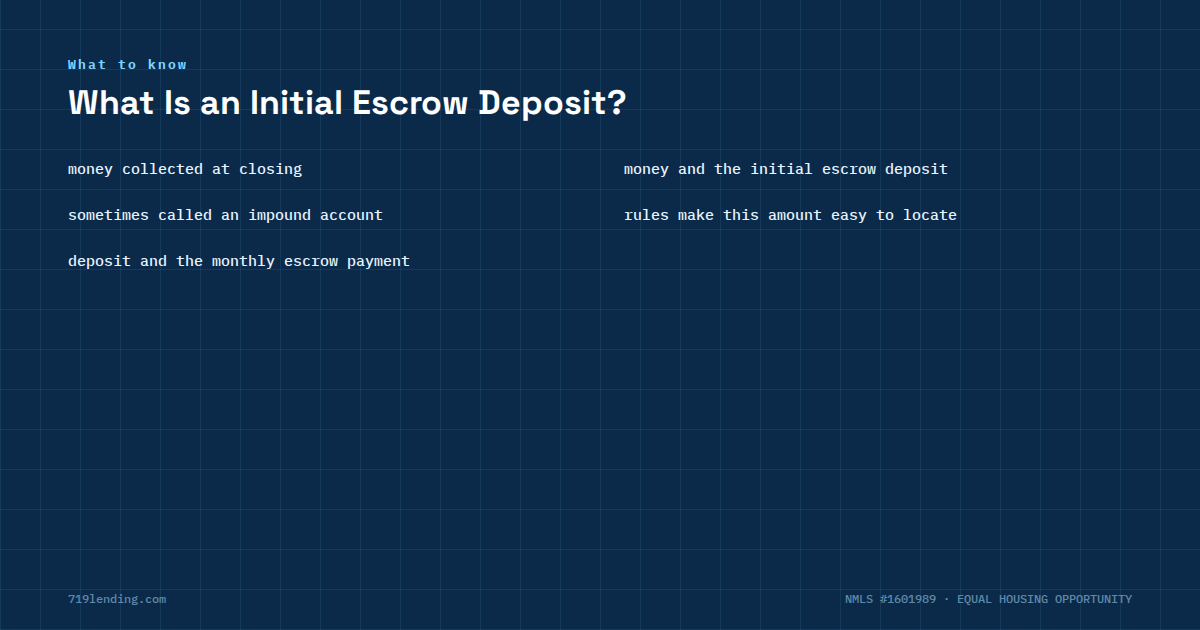
The initial escrow deposit is the amount you pay at closing to fund your new escrow account so your servicer can pay property taxes and homeowners insurance on your behalf. Here's where it appears on your Loan Estimate, how it differs from your monthly escrow payment and earnest money, and what Colorado buyers should check before closing.
What Is a Loan-to-Value Ratio? LTV Explained Simply
What is a loan-to-value ratio? In plain English, the loan-to-value (LTV) ratio is a measure comparing the amount you are financing with the appraised value of the property, and it is one of the core numbers every mortgage lender weighs on a mortgage application.
This guide explains how the LTV ratio is calculated, why lenders care, how it connects to private mortgage insurance and the interest rate offered, and what Colorado Springs buyers can do about it.
- The LTV ratio compares the loan amount with the value of the property.
- A higher down payment means a lower LTV ratio.
- Lenders use LTV to decide whether to lend and how much you can borrow.
- A higher LTV ratio can mean mortgage insurance and a higher interest rate.
What is a loan-to-value ratio?
A loan-to-value ratio describes how much of a property’s value you are borrowing against. The Consumer Financial Protection Bureau defines it as a comparison between the amount financed and the appraised value of the property.
The loan-to-value (LTV) ratio moves in the opposite direction of the down payment. The higher the down payment, the lower the LTV ratio; the smaller the down payment, the higher the LTV ratio.
Lenders read the LTV ratio as a signal of lending risk. With the definition settled, the next question is how the math actually works.
How to calculate an LTV ratio
The formula in plain words
Calculating LTV is simple division: take the loan amount and divide it by the value of the property. Borrow the full value of a home and the LTV ratio sits at its maximum; put money down and the ratio drops.
Every dollar of down payment shrinks the loan amount, and a smaller loan amount against the same property value means a lower LTV ratio.
Purchase price or appraised value?
On a purchase, there are two candidate values: the purchase price you agreed to and the appraised value the appraiser assigns. Whether the lender works from either the purchase price or the appraised value is worth confirming up front, because the appraisal can come in different from the contract.
On a refinance there is no purchase price at all, so the appraised value carries the weight. Either way, you cannot know the final LTV ratio until the appraisal is complete — which is exactly why lenders care so much about it.
Why lenders care about the LTV ratio
Lending risk from the lender’s perspective

From the lender’s perspective, the LTV ratio measures how much cushion exists between the loan balance and the value of the property. A borrower with more equity has more of their own money at stake.
According to the CFPB, mortgage lenders may use the LTV to decide whether to lend to you at all, and to determine how much you can borrow.
How LTV affects the interest rate
The LTV ratio also influences the interest rate you will be offered. Higher-risk borrowers — those with a higher LTV ratio — will usually be offered a higher interest rate.
The reverse is also true: you may be able to get a better interest rate with a larger down payment. The other major cost tied to the LTV ratio is mortgage insurance.
LTV and private mortgage insurance
Lenders may use the LTV ratio to determine whether they will require private mortgage insurance, or whether a loan guaranteed or insured by the government — such as an FHA loan through the Federal Housing Administration — comes into play instead.
If you will need private mortgage insurance or are getting a government-backed loan, that can increase both upfront and monthly costs on the home loan.
The CFPB’s advice is to compare the amounts, terms, and costs of several mortgage loans, including the cost of mortgage insurance if it will be required. A lower LTV ratio is one of the levers a borrower actually controls, which brings us to the down payment.
How a down payment changes the LTV ratio
The down payment is the most direct tool for lowering an LTV ratio. A larger down payment reduces the loan amount against the same property value, which produces a lower LTV ratio.
That lower LTV ratio can ripple through the whole loan: it may change whether mortgage insurance is required, and it may improve the interest rate a lender offers.
A higher down payment also means borrowing less overall, which reduces what you pay over the life of the loan. But what happens when the ratio tips the other way?
What if the loan balance exceeds the value?
It is possible for a loan balance to be larger than the value of the asset securing it — a situation often called negative equity. The CFPB illustrates this in auto lending, where rolling an unpaid balance from an old loan into a new one pushes the LTV above the value of the vehicle.
Negative equity is risky for the borrower, not just the lender. If you need to sell, you could owe more than the sale brings in.
Reverse mortgages have a specific safeguard here. On a Home Equity Conversion Mortgage (HECM), if the loan balance grows larger than the value of the home and the home sells for its appraised fair market value, mortgage insurance covers the remaining balance rather than the borrower or their heirs.
Negative equity involves one loan; some homeowners have several, which is where combined LTV comes in.
Combined loan-to-value: more than one loan
When a property carries more than one loan — a primary mortgage plus a second mortgage, a home equity loan, or a home equity line of credit — the picture gets wider.
That combined loan-to-value view matters when you want to borrow against home equity you have built through regular mortgage payments or rising property value. Ask the lender how they measure combined LTV on the specific product you are considering.
The LTV ratio, however, is never the only thing a lender reviews.
Other factors lenders weigh alongside LTV
Credit score and credit history give a lender insight into how much debt you carry and how you have managed other credit accounts, and they influence the rates and terms offered.
Income and employment help a lender assess your ability to repay. The debt-to-income (DTI) ratio looks at how much of your gross monthly income goes to existing debts each month.
A strong file on these factors works together with a lower LTV ratio when lenders assess a mortgage application. For buyers in this market, there is a local wrinkle worth noting.
LTV for Colorado Springs and military buyers
Colorado Springs is a heavily military market, and buyers arriving on PCS orders often have questions about how the LTV ratio interacts with different loan types — conventional loans, FHA loans, and VA loans among them.
Program rules differ, so the practical move is to have a loan officer walk through how each program treats the down payment, mortgage insurance, and the LTV ratio for your specific situation rather than assuming one answer fits all.
Front Range home values also move, and the appraised value — not last year’s estimate — is what sets the LTV ratio on the loan. That is exactly what the official guidance emphasizes.
What the official source says
The Consumer Financial Protection Bureau publishes a plain-language answer to “What is a loan-to-value ratio and how does it relate to my costs?” on consumerfinance.gov, last reviewed in early 2025.
The CFPB’s core points: the LTV ratio compares the amount financed with the appraised value, a higher down payment lowers the ratio, and lenders use the LTV to decide whether to lend, whether mortgage insurance is required, how much you can borrow, and the interest rate offered.
The CFPB also urges borrowers to shop and compare several loans, including mortgage insurance costs. That is the right instinct — here is how to act on it.
Your next step
Estimate where the LTV ratio on your purchase or refinance would land, then talk it through with a local loan officer. At 719 Lending in Colorado Springs, we can run the numbers both ways — with a larger down payment and a smaller one — so you can see how the LTV ratio changes mortgage insurance and the interest rate quoted before you commit to anything.
Frequently asked questions
What is a good loan-to-value ratio for a mortgage?
Lower is generally viewed as less risky by lenders. A lower LTV ratio — created by a larger down payment or more home equity — can reduce or remove the need for private mortgage insurance and may lead to a better interest rate offer. The specific thresholds vary by lender and loan program, so confirm them with a loan officer.
How do I calculate my LTV ratio?
Divide the loan amount by the value of the property. On a purchase, ask the lender whether they use the purchase price or the appraised value. On a refinance, the appraised value is what matters, along with the current principal balance of the loan.
Does a high LTV ratio mean I need mortgage insurance?
It can. Lenders may use the LTV ratio to determine whether they will require private mortgage insurance or whether a government-backed loan such as an FHA loan applies, and either can increase upfront and monthly costs. Compare several loans including the cost of mortgage insurance.
Can a loan-to-value ratio be higher than the property’s value?
Yes — that is negative equity, where the loan balance exceeds what the asset is worth. It can happen when an old unpaid balance is rolled into a new loan, and it makes selling or replacing the asset harder because the shortfall must still be paid.
How does my down payment affect the LTV ratio?
Directly. A larger down payment shrinks the loan amount against the same property value, producing a lower LTV ratio. That can reduce lender risk, potentially remove the mortgage insurance requirement, and may improve the interest rate a lender offers.
719 Lending Inc., NMLS #1601989 · Equal Housing Opportunity
719 Lending Inc. is not affiliated with or endorsed by HUD, FHA, VA, USDA, CHFA, the CFPB, or any government agency.
Last updated: October 2026

Related Posts