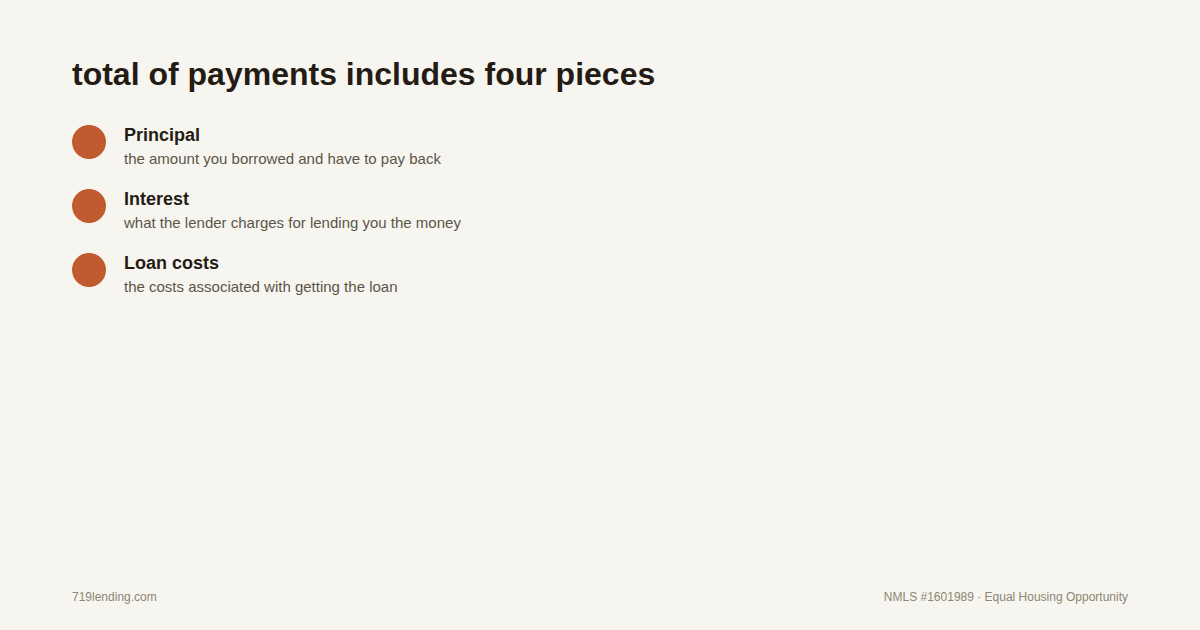
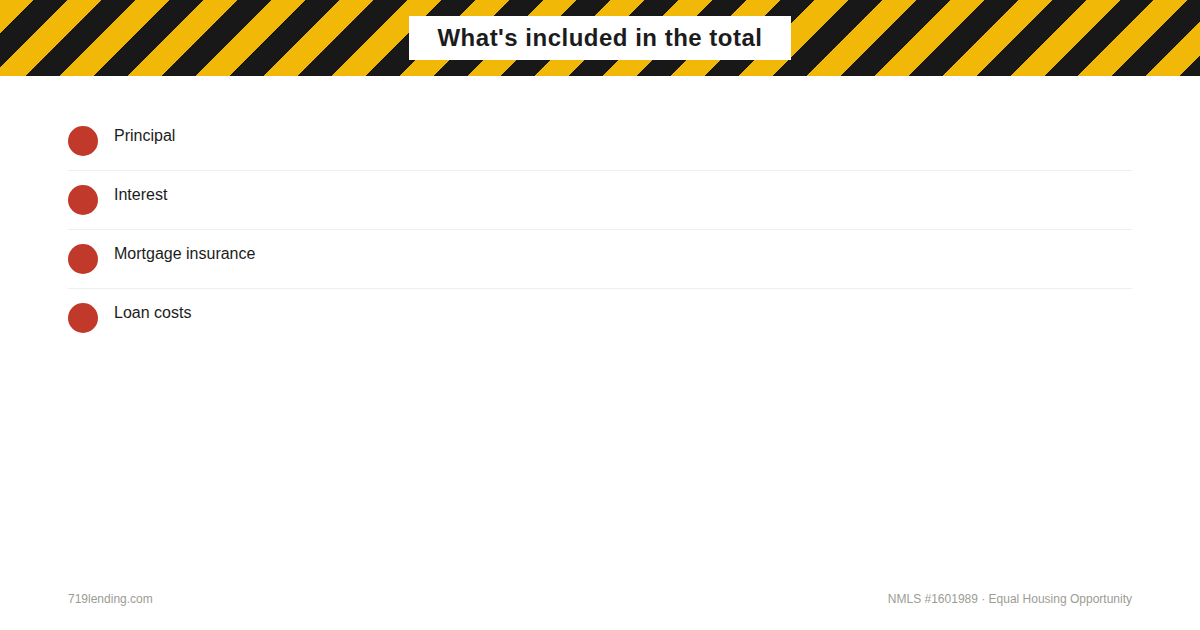
The total of payments figure on your Closing Disclosure adds up everything you'd pay over the full life of the mortgage. This guide breaks down exactly which components go into it, where to find it on the form, and how Colorado borrowers can use it when comparing loan offers.
What Can Happen to Me as a Co-Signer if a Loan Defaults?
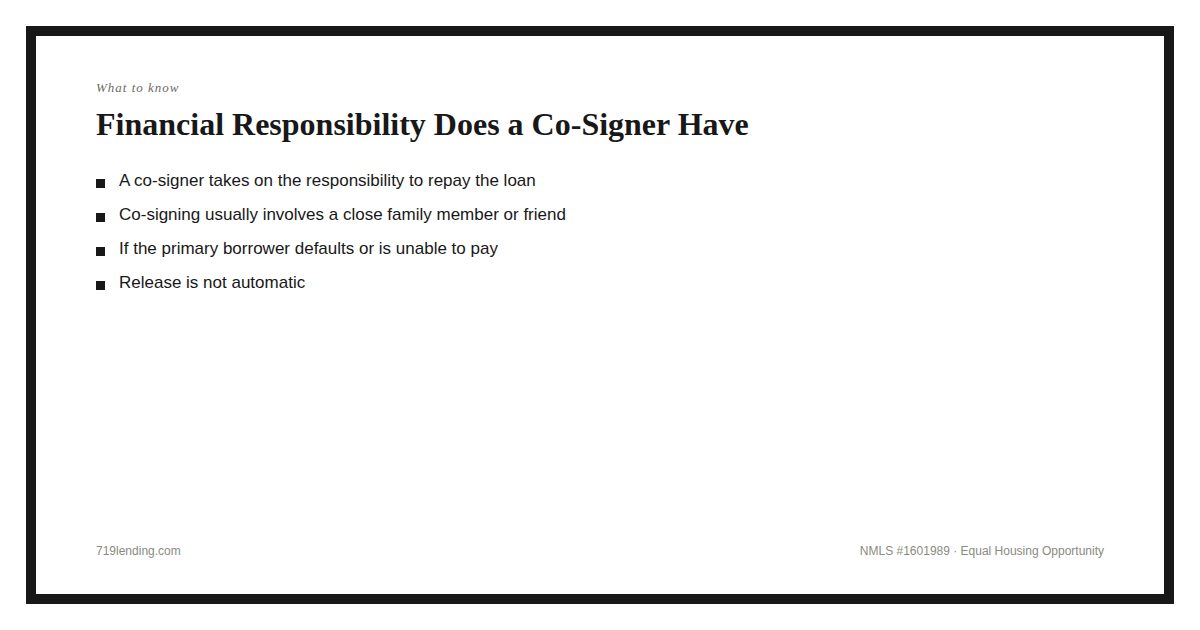
What can happen to me as a co-signer if a loan defaults? The direct answer: everything that can happen to the primary borrower can also happen to you, because cosigning a loan makes you equally responsible for repaying it. This article is for anyone in Colorado who has co-signed — or is thinking about cosigning a loan — for a child, a friend or family member, or a fellow service member, and wants to know the real downside before the first missed payment lands.
Here is the short list of what the Consumer Financial Protection Bureau (CFPB) says can happen to a co-signer when the primary borrower stops paying:
- Late or missed payments are reported on both the borrower’s and the co-signer’s credit history.
- The lender or a hired collection agency can pursue the co-signer for repayment directly.
- The co-signer can be sued by the lender or a debt collector.
- The co-signer remains legally obligated for the debt even though they never used the money.
You are equally responsible for the loan — not a backup

A lot of people believe a co-signer is a second string: the lender only comes after you if the primary borrower is completely tapped out. That is not how the loan contract works.
The CFPB puts it plainly: co-signers are equally responsible for and legally obligated to repay the loan. From the moment you sign, the debt is yours just as much as it is the primary borrower’s.
That is why the CFPB’s advice before cosigning a loan is blunt: consider whether you are willing and able to repay the entire loan yourself if the primary borrower does not repay it on time. If the honest answer is no, the time to say so is before signing, not after the borrower defaults.
Equal responsibility is the foundation — and it explains the first consequence most co-signers notice: credit damage.
What happens to your credit when the primary borrower misses payments
You do not have to wait for a full default to feel the effects. According to the CFPB, any late or missed payments on a co-signed loan affect both the primary borrower’s and the co-signer’s credit history.
The damage starts before default
A single late payment can show up on your credit report even if you never received a bill, because the account belongs to both of you. The borrower misses a due date in another state; your credit record takes the hit in Colorado Springs.
The CFPB frames this as a risk to weigh up front: before cosigning a loan, consider whether you are willing to risk harm to your credit record if the primary borrower does not repay.
Default compounds the problem
If the loan actually goes into default, the lender can report that default to consumer reporting agencies, which can harm your credit further. A damaged credit score follows you into every future application — a car loan, personal loans, a credit card, and especially a mortgage.
Credit reporting is the quiet consequence. Collections is the loud one, and it comes next.
Collection agencies can come after you directly
When the primary borrower defaults on a private loan, the CFPB notes that private lenders may attempt to collect on the debt directly, or they may hire collection agencies to try to collect.
Here is the part co-signers often do not expect: the CFPB specifically says that when a co-signed loan goes into default, private lenders often hire collection agencies to get the co-signer to repay. Not the borrower — you.
From the financial institution’s perspective, this is rational. You were likely added to the loan because of your stronger credit record and income, so when the borrower defaults, the lender uses the same collection methods on the person most likely to be able to pay.
Calls and letters are one layer of collection. The courtroom is another.
Can I be sued as a co-signer?
Yes. The CFPB states that as the co-signer, you could be sued by a debt collector or the lender. Equal responsibility means equal exposure to a lawsuit.
The statute of limitations sets the window
Lenders can take you to court within the statute of limitations — the legal maximum amount of time in which a lawsuit can be filed after default. For private student loans, the statute of limitations varies from state to state, so the window that applies in Colorado may differ from the one in the state where the loan was originated.
After the statute of limitations expires, the lender is no longer legally allowed to sue to collect the debt. If you are worried about a specific co-signed loan, an attorney licensed in your state can tell you which limitations period applies.
Read the loan contract — it controls
The CFPB’s repeated advice is to read the loan documents carefully, because the loan agreement defines what counts as default and what the lender can do about it. The contract will also spell out whether things like late fees, collection costs, court costs, or attorney fees can be added to what you owe — do not assume; read the actual terms or ask the lender to point to them.
How default is defined depends heavily on what kind of loan it is, which is the next piece.
Private vs. federal student loans: why the loan type matters
Student loans are the most common context the CFPB addresses for co-signers, and the private-versus-federal distinction changes what default looks like.
Private student loans
Private student loans often require a co-signer for the primary borrower to qualify at all, or a borrower may add one to get a lower interest rate based on the co-signer’s good credit record. Private loans often go into default when monthly payments are missed — and depending on the terms of the loan contract, a borrower can also default by declaring bankruptcy or by defaulting on another loan.
That last point deserves emphasis: a cross-default clause means the loan you co-signed can default even while its own payments are current. One more reason the promissory note is worth reading line by line.
Federal student loans
For most federal student loans, the borrower is in default after going more than 270 days — nine months — without a payment and without an agreement like deferment or forbearance to postpone payments. During the months of missed payments, the servicer must exercise due diligence, making repeated efforts to locate and contact the borrower about repayment.
Once a federal student loan defaults, the CFPB lists consequences for the borrower that include wage garnishment without a court order, loss of a tax refund or Social Security check to offset the debt, notification of credit reporting companies, and loss of eligibility for additional federal student aid until the default is cured. Federal borrowers may also have options such as income-driven repayment plans or the Department of Education’s Fresh Start initiative to get loans out of default.
If you co-signed, the loan paperwork tells you which category you are in — and that determines which playbook the lender follows when the borrower defaults.
Who this applies to in Colorado
Cosigning a loan is usually an act of generosity toward a friend or family member, which is exactly why the risks get glossed over.
Parents and grandparents
The classic scenario is a parent cosigning a private student loan so a child can qualify or borrow at a lower interest rate on the strength of the parent’s positive credit history. The CFPB’s guidance is aimed squarely at this situation: the student is required to make all payments on time under the terms of the loan, but if the borrower misses, both credit histories suffer.
Military families around Colorado Springs
In a market like Colorado Springs — home to a large active-duty and veteran community — co-signed debt has an extra wrinkle. A PCS move can scatter a family across time zones, and a co-signed account can quietly go delinquent while the primary borrower is mid-move or deployed. The account still reports against the co-signer’s credit record either way.
Anyone planning to buy a home
If a mortgage is in your future, a co-signed loan is not a background detail. It is part of your financial picture, and any missed payments on it travel with you into the application. More on that below.
How a co-signed loan can affect your mortgage plans
When you apply for a home loan, the lender reviews your credit report. Because late or missed payments on a co-signed loan affect your credit history — the CFPB is explicit on this — problems on someone else’s loan can surface at the worst possible moment: while you are trying to qualify for a mortgage in Colorado.
How a co-signed obligation is counted in a debt-to-income ratio, and how recent credit events are weighed, depends on the specific loan program and your full file. That is a conversation to have with a loan officer before you start house hunting, not after you have a contract on a home. The team at 719 Lending in Colorado Springs can walk through how a co-signed account shows up in your credit profile and what questions to ask.
If you already co-signed and payments have been spotty, the goal shifts from prevention to damage control — which is what the next section covers.
What to do before — and after — the borrower defaults
Default is a process, not a single event, and the CFPB’s consistent advice is to act early at every stage.
Before you sign anything
Read the loan documents carefully, as you would with any legal obligation. Make sure you understand what counts as default under the loan agreement, whether there are cross-default triggers, and exactly what you are promising. Only agree to equal responsibility if you could genuinely absorb the loan payments yourself.
At the first missed payment
If you learn the primary borrower is struggling, do not wait. The CFPB advises contacting the lender or servicer as soon as possible — it may be possible to negotiate a new repayment plan or otherwise settle the debt before the account formally defaults.
If you think the loan is already in default
If you have not received a letter from the servicer but believe the loan may be in default, contact the servicer immediately to discuss repayment options and find out whether default can still be avoided. On federal student loans, borrowers behind on payments who are being contacted by a debt collector may still be able to arrange repayment options to get out of default.
Ask about co-signer release
The CFPB addresses this question for private student loans, and whether release is available — and what the borrower must do to qualify for it — is set by the specific lender and loan contract. Ask directly and get the answer in writing.
What the official source says and where to read it
Everything in this article is drawn from the Consumer Financial Protection Bureau, the federal agency that implements and enforces federal consumer financial law. Three pages are worth reading in full:
| CFPB resource | What it covers |
|---|---|
| What is a co-signer for a student loan? | Equal responsibility, credit-history impact on both parties, collection agencies pursuing co-signers, lawsuit risk |
| What happens if I default on a private student loan? | Default triggers, credit reporting, direct collection, statute of limitations by state, negotiating with the lender |
| What happens if I default on a federal student loan? | The 270-day default threshold, servicer due diligence, garnishment and offset consequences, options to get out of default |
The CFPB notes its content is general consumer information, not legal advice — for a specific co-signed loan headed toward default, a consumer attorney in Colorado is the right call for legal questions.
Your next step
If you are being asked to co-sign, read the full loan contract first and assume you will end up making the monthly payment yourself — because legally, you have agreed to. If you already co-signed and the primary borrower is slipping, call the servicer today, before the account defaults and collection methods escalate.
And if you are a Colorado co-signer with homeownership on the horizon, get ahead of it: talk to a loan officer at 719 Lending about how the co-signed account appears on your credit report and what to monitor before you apply for a mortgage. Knowing where you stand costs nothing; finding out at underwriting is a lot less fun.
Frequently asked questions
Am I legally responsible for a loan I co-signed if the borrower stops paying?
Yes. The CFPB states that co-signers are equally responsible for and legally obligated to repay the loan. If the primary borrower defaults, the lender can pursue you for the full remaining debt using the same collection methods it would use against the borrower.
Does cosigning a loan hurt my credit if the borrower misses payments?
It can. Any late or missed payments on a co-signed loan affect both the primary borrower’s and the co-signer’s credit history, according to the CFPB. If the loan defaults, the lender can report that to consumer reporting agencies, which can harm your credit further.
Can a co-signer be sued when a loan defaults?
Yes. The CFPB says a co-signer can be sued by the lender or a debt collector, and private lenders often hire collection agencies specifically to get the co-signer to repay. Lawsuits must be filed within the statute of limitations, which varies by state.
How long until a federal student loan is considered in default?
For most federal student loans, the borrower is in default after more than 270 days — about nine months — without a payment and without an arrangement like deferment or forbearance. During that time, the servicer must make repeated efforts to contact the borrower about repayment.
Can I be released from a loan I co-signed?
Possibly. Some private lenders have co-signer release processes, and the CFPB addresses the question for private student loans. Whether release is available and what it requires is set by the individual lender and loan contract, so ask the lender directly and get the answer in writing.
What should I do if the primary borrower on my co-signed loan is about to default?
Contact the lender or servicer as soon as possible. The CFPB says it may be possible to negotiate a new repayment plan or otherwise settle the debt before the loan formally defaults — acting early protects both your credit record and the borrower’s.
719 Lending Inc., NMLS #1601989 · Equal Housing Opportunity
719 Lending Inc. is not affiliated with or endorsed by HUD, FHA, VA, USDA, CHFA, the CFPB, or any government agency.
Last updated: October 2026

Related Posts