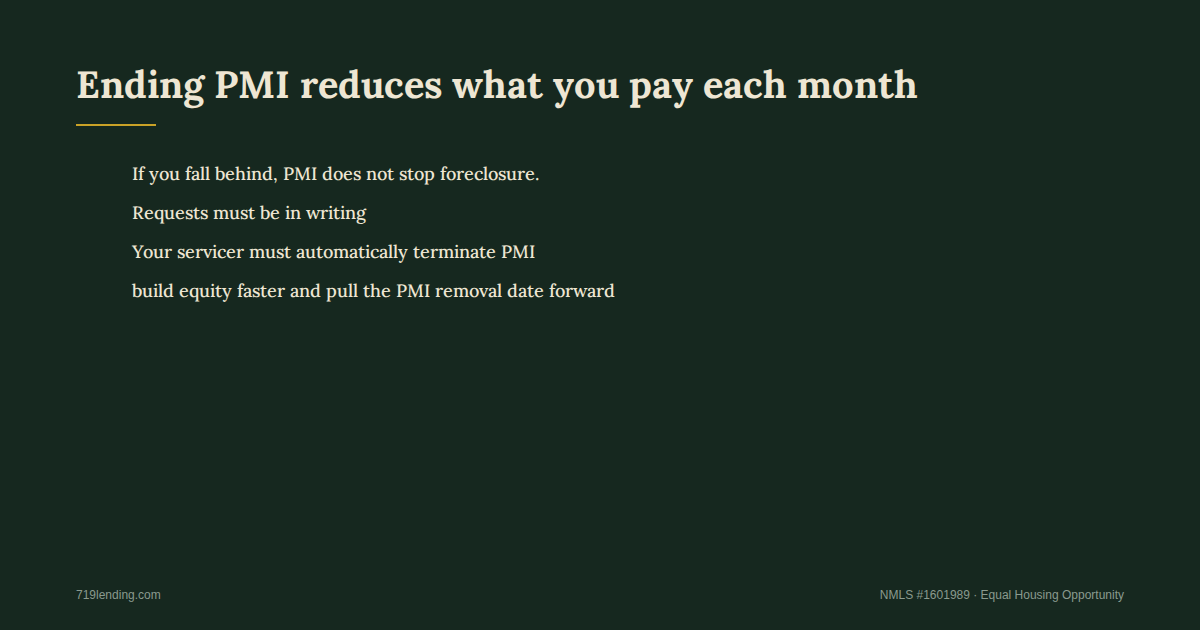
Private mortgage insurance protects the lender, not you, and it adds to your monthly mortgage payment. Here is the main benefit of removing PMI, when federal law says you can cancel it, and the exact steps Colorado homeowners can take to request PMI removal from their servicer.
What form of payment is required for cash to close?
If you’re asking what form of payment is required to bring the Estimated Cash to Close to closing, the short answer comes straight from the Consumer Financial Protection Bureau: this payment is usually made by cashier’s check or wire transfer. This guide explains why, how the cash to close amount is calculated, and what Colorado Springs buyers should do to prepare before closing day.
What form of payment is required to bring the Estimated Cash to Close to closing?
The Estimated Cash to Close is the amount you will have to pay at closing, in addition to any money you have already paid, such as your earnest money deposit. The CFPB’s Loan Estimate explainer states that this payment is usually made by cashier’s check or wire transfer.
That means walking into closing with a personal check or a stack of cash is generally not the plan. Your closing team wants funds that are verified and traceable.
Equally important: you will need to provide your mortgage lender with proof of the source of these funds. The form of payment and the paper trail behind it go hand in hand.
Before we get into the mechanics, here is the whole picture in one place.
Quick answer at a glance
- Accepted form of payment: usually a cashier’s check or wire transfer, per the CFPB.
- Where the amount comes from: the Estimated Cash to Close section of your Loan Estimate, finalized on the Closing Disclosure.
- What it includes: your down payment plus closing costs, minus your earnest money deposit, seller credits, and other adjustments.
- What the lender needs from you: documentation of where the funds came from.
- Who to confirm with: your loan officer and the escrow or title company handling the closing.
With the summary in hand, let’s define exactly what this number is and where you’ll find it.
What is the Estimated Cash to Close?
The Estimated Cash to Close is the estimated amount of money you will have to bring to closing to complete your home purchase. It is a core figure on the Loan Estimate, the disclosure a mortgage lender sends after you apply.
Think of it as the bottom line of the real estate transaction from your side of the closing table: everything you owe upfront, netted against everything you’ve already paid or been credited.
Where it appears on the Loan Estimate
Your Loan Estimate includes a section showing how the Estimated Cash to Close was calculated, line by line. The CFPB publishes an interactive sample Loan Estimate so you can see exactly where to look on your own form.
If the Estimated Cash to Close isn’t what you were expecting, the CFPB’s guidance is direct: ask the lender to explain why.
Cash to close vs closing costs
People often use these terms interchangeably, but they are different numbers. Closing costs, sometimes called settlement costs, are the upfront costs you are charged to get the loan and transfer ownership of the property.
The cash to close amount is bigger-picture. It bundles closing costs together with the down payment, then subtracts credits and deposits you’ve already made. Understanding that distinction makes the next section — the actual math — much easier to follow.
How the cash to close amount is calculated
Per the CFPB, your Estimated Cash to Close includes your down payment and closing costs, minus any deposit you have already paid to the seller, any amount the seller has agreed to pay toward your closing costs, and other adjustments. Let’s break down each piece.
Down payment
The down payment is the portion of the home’s purchase price you pay upfront rather than finance. On a purchase, the CFPB suggests checking that the loan amount plus your down payment equals the sale price of the home — if it doesn’t, ask the lender why.
Your down payment amount is typically the largest single component of the total cash to close on a home purchase, which is why the estimate can feel much larger than the closing costs alone.
Closing costs
Closing costs cover getting the loan and transferring the property. They include origination fees charged by the lender — which may cover application, underwriting, processing, verification, and rate-lock charges depending on how the lender itemizes — along with third-party settlement services.
Some of those services you cannot shop for, because the lender chooses the providers. Others you can shop for: the lender must give you a written list of approved providers, and you can often use a provider not on the list if the lender agrees.
Costs tied to owning the home appear here too. Property taxes are set by your local or state government, and the homeowners insurance premium is set by the insurance company you choose — not by the lender. Contact your local tax authority or ask your real estate agent to confirm whether the property taxes on the estimate look accurate for your area.
Prepaid expenses and escrow deposits
The CFPB notes you’ll usually pay the first stretch of homeowners insurance premiums at or before closing. These prepaid expenses are part of what shows up in the total.
Many loans also involve an escrow account, where charges like property taxes and homeowners insurance are bundled into the monthly payment. Whether your closing includes initial escrow deposits to start that account is something your Loan Estimate and your loan officer can confirm — review the taxes, insurance, and assessments section to see which items are escrowed and which you’ll pay directly.
Credits and deposits that reduce the total
Three things pull the number down. First, your earnest money deposit — money you already paid to the seller — is subtracted, since it’s part of what you owe that has already changed hands.
Second, seller credits: any amount the seller agreed to pay toward your closing costs comes off the total. Seller credits are negotiated in the purchase contract, so they vary deal to deal.
Third, lender credits. If your Loan Estimate shows lender credits, the lender is giving you a rebate to offset closing costs, possibly in exchange for a higher interest rate on the loan. The CFPB encourages you to ask whether a similar loan is available without lender credits and how each option affects the total cost of the loan.
Once you understand the math, the next question is why the payment method is so restricted.
Why lenders require a cashier’s check or wire transfer
A cashier’s check or wire transfer gives the closing team certainty. Both methods involve verified funds moving through a financial institution, which matters when a real estate purchase changes hands in a single sitting.
Documenting the source of funds
The CFPB is explicit that the lender you choose will need to document the source of the funds you bring to closing. Ask the lender early which documents you will need, so there are no surprises the week of closing.
This is one reason to avoid moving money between accounts right before closing day without telling your loan officer. Every movement of funds may need a paper trail.
Confirming wiring instructions safely
If you wire funds, confirm the wiring instructions directly with your escrow or title company and your loan officer through a phone number you already know to be genuine — not just a number in an email. Verifying instructions before sending money is a habit every buyer should build into the mortgage process.
So which method should you actually pick? Here’s how they compare.
Cashier’s check vs wire transfer: how they differ

Both satisfy the usual requirement. The right choice depends on your bank, your timeline, and what your closing agent prefers.
| Feature | Cashier’s check | Wire transfer |
|---|---|---|
| How it’s obtained | Issued by your bank, drawn on the bank’s own funds | Sent electronically from your account to the closing agent’s account |
| How it’s delivered | You bring the physical check to the closing table | Funds arrive electronically before or on closing day |
| Best practice | Confirm the exact payee name and amount with your closer first | Verify wiring instructions by phone with the escrow or title company |
| Watch for | Bank branch hours and check-issuing policies | Bank cutoff times and sending limits — ask your bank in advance |
Whichever you choose, ask the closing agent which they accept and when they need the funds. Next: how the estimate turns into the number you actually pay.
How the estimate becomes the final number
The Loan Estimate is exactly that — an estimate. The figures get finalized in closing paperwork before you sign.
The Closing Disclosure
Before closing, you receive a Closing Disclosure among your closing documents. Compare its total cash to close against your initial Loan Estimate, and if anything looks different from what you discussed, ask why. The CFPB’s guidance throughout the Loan Estimate explainer is to question anything unexpected.
What can change between estimate and closing day
Amounts tied to third parties can shift as real numbers replace estimates — the homeowners insurance premium you actually choose, the property taxes your local government actually assesses, and the settlement services you shop for from the lender’s written provider list.
Seller credits and other adjustments negotiated during the transaction also flow into the final figure. Your loan officer should walk you through every change. It’s also worth knowing what the government itself says about all this.
What the official source says
The Consumer Financial Protection Bureau’s Loan Estimate explainer answers this question directly. Under “Do you have enough cash on hand to pay your Estimated Cash to Close?” it states: “This payment is usually made by cashier’s check or wire transfer. You will need to provide your lender with proof of the source of these funds.”
The same page explains that the Estimated Cash to Close includes your down payment and closing costs, minus your deposit to the seller, seller credits, and other adjustments. You can read it at consumerfinance.gov’s Loan Estimate explainer.
The CFPB also recommends requesting Loan Estimates from multiple lenders for the same kind of loan so you can compare offers side by side. Now, a few notes for buyers in our corner of Colorado.
A note for Colorado Springs and military buyers
Colorado Springs closings often involve buyers who are relocating — including service members arriving on PCS orders who may be closing from another state or another time zone.
Closing during a PCS move
If you’re wiring funds from an out-of-state bank, build in extra time and confirm your bank’s process for large wires before closing day. Verify the wiring instructions by phone with the title company handling your closing.
If you’ll be signing remotely or a spouse is handling the closing locally, tell your loan officer early so the logistics of delivering funds are settled well before the closing date.
Keeping funds documented during a move
Moves scatter money across accounts. Because the lender must document the source of your closing funds, keep statements for every account the money touches, and loop in your loan officer before shifting funds around. The team at 719 Lending in Colorado Springs works with relocating buyers on exactly this kind of timing question.
One last wrinkle: not every loan uses a Loan Estimate at all.
Loans that don’t use a Loan Estimate
Per the CFPB, you will not receive a Loan Estimate or Closing Disclosure if you are shopping for a reverse mortgage, a home equity line of credit, a manufactured housing or mobile home loan not secured by real estate, or a subordinate loan through certain types of homebuyer assistance programs.
For those kinds of loans, you should receive Truth-in-Lending disclosures instead. If your financing falls into one of these categories, ask your loan officer how your funds-to-close will be presented and paid.
Everything above assumes a standard purchase or refinance covered by the Loan Estimate and Closing Disclosure. So what should you do right now?
Your next step
Pull out your Loan Estimate and find the Estimated Cash to Close section. Confirm the calculation matches your contract: down payment, closing costs, earnest money already paid, seller credits, and lender credits.
Then call your loan officer and the escrow or title company with two questions: exactly how do you want the funds delivered — cashier’s check or wire transfer — and what documentation do you need on the source of my funds?
If you’re buying in Colorado Springs or anywhere along the Front Range and want someone to walk the numbers with you line by line, start a conversation with 719 Lending or explore the loan program options that fit your situation. A clear plan for closing funds is one of the easiest parts of the mortgage process to get right — as long as you handle it early.
Frequently asked questions
Can I pay my cash to close with a personal check or cash?
Generally, no. The Consumer Financial Protection Bureau states the payment is usually made by cashier’s check or wire transfer. Confirm the accepted form of payment with your escrow or title company before closing day, since they set the delivery requirements for your specific closing.
Why does my lender need to know where my closing funds came from?
The CFPB states you will need to provide your lender with proof of the source of the funds you bring to closing. Ask your loan officer early which documents you’ll need, and avoid moving money between accounts right before closing without telling them, since every transfer may need a paper trail.
Is my earnest money deposit part of the cash to close?
Your earnest money deposit reduces your Estimated Cash to Close. The CFPB explains the figure includes your down payment and closing costs, minus any deposit you already paid to the seller, seller credits, and other adjustments — so the earnest money you’ve already handed over is subtracted from what you bring on closing day.
What is the difference between cash to close and closing costs?
Closing costs are the upfront charges to get the loan and transfer ownership of the property. Cash to close is the broader total: down payment plus closing costs, minus your earnest money deposit, seller credits, lender credits, and other adjustments. Cash to close is the actual amount you deliver at closing.
What should I do if the Estimated Cash to Close isn’t what I expected?
Ask the lender to explain why — that’s the CFPB’s direct guidance. Your Loan Estimate shows how the figure was calculated line by line, so review the down payment, closing costs, seller credits, and lender credits with your loan officer, and compare the Loan Estimate against the Closing Disclosure before you sign.
Do all loans come with a Loan Estimate showing cash to close?
No. Per the CFPB, reverse mortgages, home equity lines of credit, manufactured home loans not secured by real estate, and certain subordinate homebuyer-assistance loans don’t receive a Loan Estimate or Closing Disclosure. Those loans use Truth-in-Lending disclosures instead, so ask your loan officer how funds-to-close will be presented.
719 Lending Inc., NMLS #1601989 · Equal Housing Opportunity
719 Lending Inc. is not affiliated with or endorsed by HUD, FHA, VA, USDA, CHFA, the CFPB, or any government agency.
Last updated: September 2026

Related Posts