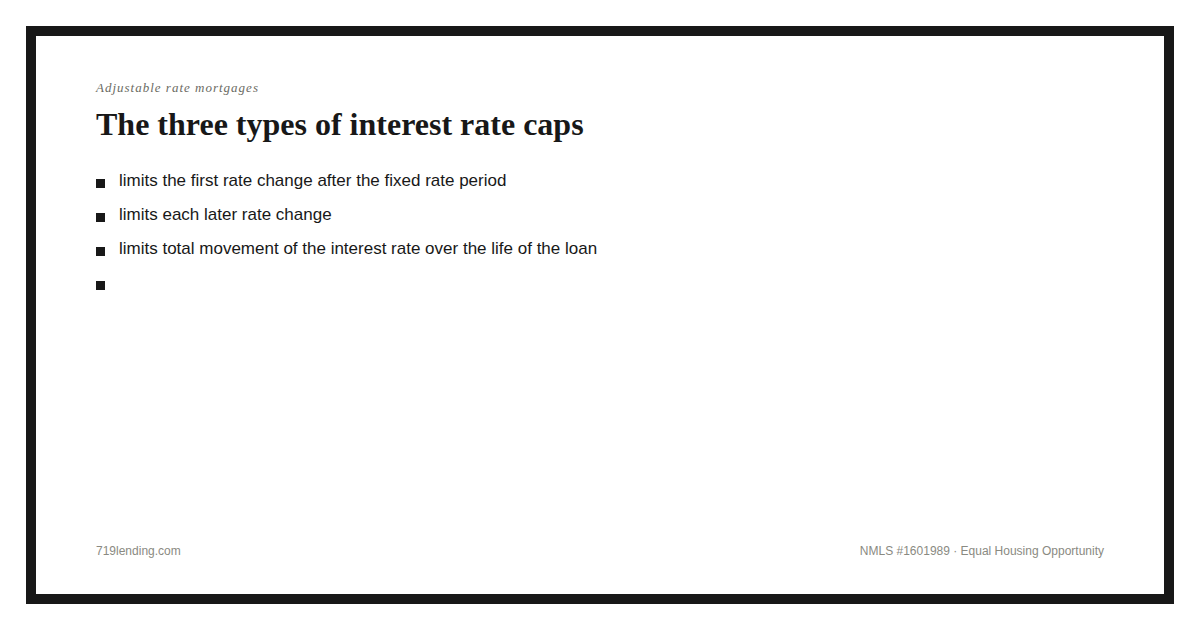
Rate caps are the built-in guardrails of an adjustable-rate mortgage. They limit how far the interest rate can move at the first adjustment, at each later adjustment, and in total over the life of the loan. Here is what each cap does, where to find them in the loan documents, and the questions to ask before you sign.
Forbearance vs. Loan Modification: What’s the Difference?
The difference between forbearance and a loan modification comes down to one word: temporary versus permanent. Forbearance pauses or reduces your mortgage payments for a set stretch of time and you repay what you skipped later. A loan modification rewrites the terms of your mortgage so the monthly payment becomes something you can actually afford going forward.
This guide explains how each tool works, how repayment differs, and how to decide which conversation to have with your mortgage servicer. It is written for Colorado homeowners facing a financial hardship — a job loss, unexpected medical costs, storm or wildfire damage, or a disruption tied to military life.
Forbearance vs. loan modification at a glance

Before the deep dive, here is the side-by-side view of how mortgage forbearance and a loan modification compare.
| Feature | Mortgage forbearance | Loan modification |
|---|---|---|
| What it is | A temporary pause or reduction of mortgage payments | A permanent change in the terms of your mortgage |
| Does the debt shrink? | No — you still owe the full amount and repay missed payments later | Possibly — a modification may involve reducing or forbearing part of the principal balance |
| Best fit | Temporary hardship with a clear end date | Long-term financial hardship where the current payment is no longer workable |
| What changes | Nothing about the loan itself — only the payment schedule during the forbearance period | The loan itself — possibly the loan term, the interest rate, and/or the principal balance |
| How it ends | Regular mortgage payments resume and the missed payments are repaid | You make the new, modified payment for the remaining life of the loan |
With that framework in place, let’s look at each option on its own terms, starting with forbearance.
What is mortgage forbearance?
Mortgage forbearance is a process that can help if you’re struggling to pay your mortgage. Your servicer or lender arranges for you to temporarily pause mortgage payments or make smaller payments during a defined forbearance period.
Here is the critical part: forbearance does not erase or decrease the amount you owe. You still owe the full loan balance, and you have to repay any missed or reduced payments after the forbearance period ends.
When forbearance makes sense
Forbearance is designed for a financial hardship you expect to recover from. The Consumer Financial Protection Bureau‘s examples include a home damaged in a natural disaster, unexpected medical costs, or a job loss.
In the Colorado Springs market, that can also look like an income gap between duty stations during a PCS move, or a wildfire or hailstorm that damages a home. If the hardship has an end date, forbearance is the tool built for it.
What forbearance does not do
A forbearance agreement does not change the terms of your mortgage. The interest rate stays the same, the loan term stays the same, and the loan balance stays the same.
Forbearance simply buys time. The missed mortgage payments still have to be addressed, which is why the repayment structure matters as much as the pause itself. That leads directly to the next question: how do you pay it back?
How do you repay a forbearance?
The CFPB describes several ways servicers structure repayment of paused or reduced payments. Before you sign a forbearance agreement, keep asking questions until you understand the amount you must pay, how long payments are paused or reduced, how interest accrues during that time, and when and how you pay back the paused or reduced amounts.
Paused payments repaid all at once
Under this structure, your servicer lets you stop making payments for a specified number of months, then you pay the whole amount back at once when payments restart.
The catch is obvious: a big lump sum payment comes due at one time. Interest on the paused amounts could also continue to add up until you repay them. If you will not have that lump sum ready, ask about the other structures before agreeing to this one.
Paused payments repaid at the end of the mortgage
Here, your servicer pauses payments for a set number of months, and the amount is repaid either by adding more payments at the end of your mortgage loan or by taking out a new loan.
Adding the missed payments at the end of the loan means your mortgage could extend longer than the original term. Repaying with a new loan means that at the end of the mortgage term, you have to pay back that new loan all at once. Interest on the missed amounts could continue to accrue until repaid.
Payment reduction repaid during the loan term
In this version, your servicer lets you reduce your monthly mortgage payment for a specified number of months. When that period ends, the reduced amounts are spread out over a set repayment period and added to your monthly payment.
That means higher monthly payments for a stretch after the forbearance period ends. Interest on any reduced amounts could continue to add up until you repay them.
Every one of these paths assumes you can return to regular monthly payments. When you can’t, that is where a loan modification enters the picture.
What is a loan modification?
A mortgage loan modification is a change in the terms of your mortgage. The CFPB classifies a modification as a type of loss mitigation — a tool servicers use to help borrowers avoid foreclosure.
Unlike forbearance, a loan modification is not about pausing payments and catching up. It restructures the loan itself so the monthly payment lands at an amount you can afford for the long haul.
What a loan modification can change
According to the CFPB, a loan modification may involve one or more of the following:
- Extending the loan term — adding years to the repayment schedule, which spreads the loan balance over more payments.
- Reducing the interest rate — lowering the rate applied to the loan going forward.
- Forbearing or reducing the principal balance — setting aside or reducing part of what you owe.
Some servicers use one lever; others combine them. Ask the servicer to spell out exactly which changes are in the modification offered to you.
The trade-off you must understand before signing
The CFPB’s warning is direct: carefully consider what kind of modification best addresses your needs, because if you receive a loan modification and you still can’t make the payments, you may lose your home.
Before accepting, be sure you know how the modification will change your monthly payments and the total amount you will owe — both short-term and long-term. Extending the loan term, for example, can lower the payment while changing what you owe over the full life of the loan.
So the two tools solve different problems. The next section pins down exactly where they diverge.
What is the difference between forbearance and a loan modification?
The difference between forbearance and a loan modification is duration and depth. Forbearance is a temporary arrangement layered on top of an unchanged loan; a loan modification is a permanent rewrite of the loan itself.
Temporary relief vs. permanent restructuring
A forbearance agreement ends. When the forbearance period is over, the original terms of your mortgage are still in force and the missed payments must be repaid.
A loan modification does not end. Once the terms of your mortgage are modified, the new loan term, the new rate, or the adjusted principal balance govern every payment going forward.
What happens to the money you didn’t pay
With forbearance, the paused or reduced amounts remain fully owed. You repay them in a lump sum, at the end of the mortgage, or spread across a repayment period — and interest on those amounts could continue to accrue in the meantime.
There is no separate catch-up bill sitting outside the loan, because the loan itself was changed to absorb the problem.
Temporary hardship vs. long-term hardship
Forbearance fits a temporary hardship: you know income is coming back, and you just need the bridge. A loan modification fits a long-term financial hardship: the old payment is not going to be affordable again, so the payment itself has to change.
The honest question to ask yourself is simple: when this hardship ends, can I resume regular mortgage payments and handle the repayment of the missed payments? If yes, forbearance is worth discussing. If no, ask the servicer about a loan modification instead. Either way, the conversation starts the same place.
Can forbearance lead to a loan modification?
Yes, the two tools are not mutually exclusive. A borrower’s financial situation can change mid-forbearance — a hardship expected to be temporary can turn out to be lasting.
The CFPB also notes that a modification itself can include forbearing part of the principal balance, so the concepts overlap inside some workout structures. If you reach the end of a forbearance period and still cannot resume the original payment, tell your servicer immediately and ask what loss mitigation options remain, including modification.
Whichever direction the conversation goes, the request process looks the same, which is what we cover next.
How do you request forbearance or a loan modification?
Both tools run through the same door: your mortgage servicer. The servicer is the company you send payments to, which is not always the lender who originated the loan.
Call your servicer immediately
The CFPB’s guidance is to call your mortgage servicer and explain your situation as soon as you know you are struggling — not after you have already missed mortgage payments. Ask what forbearance or hardship options may be available to you.
Timing matters. Some mortgage servicers require that forbearance or hardship assistance be requested within a specified amount of time after a disaster or other qualifying event. Waiting can close doors.
Questions to ask before you agree to anything
Forbearance is complicated, and there is no one-size-fits-all answer — the options depend on many factors and on your specific servicer. Keep asking questions until you understand:
- The amount you must pay, and for how long payments are paused or reduced.
- How interest accrues during the forbearance period.
- When and how you pay back the paused or reduced amounts.
- For a modification: exactly how it changes the monthly payment and the total you will owe, short-term and long-term.
- How the arrangement will be documented and reported — including anything that may appear on your credit report. Get the answer from the servicer in writing.
Have your paperwork ready when you call. Servicers evaluating a hardship typically want a picture of your financial situation, so gather what documents they request — and confirm the exact list with them rather than guessing.
If the conversation with the servicer stalls or confuses you, free professional help exists — and it is worth using.
Where can you get free help deciding?
You do not have to negotiate with a mortgage company alone. Several no-cost resources exist specifically for homeowners weighing forbearance, a loan modification, or other ways to avoid foreclosure.
HUD-approved housing counselors
Housing counselors certified or approved by the U.S. Department of Housing and Urban Development (HUD) can discuss options with you if you’re having trouble paying your mortgage. They can walk through a forbearance agreement or a modification offer line by line before you sign.
If you have a reverse mortgage, contact a reverse mortgage housing counseling agency or default counseling agency approved by HUD — the workout rules differ, and specialized counseling exists for exactly that reason.
Help for servicemembers and homeowners facing foreclosure
If you are a servicemember, contact your local Legal Assistance Office. For the large active-duty and veteran population around Colorado Springs, that resource is close at hand on the local installations.
If you are facing imminent foreclosure or have been served with legal papers, there could be resources through your local bar association or legal aid, and the CFPB suggests consulting an attorney. Foreclosure prevention counseling and legal help work best when engaged early.
With help lined up, the last piece is avoiding the mistakes that trip up borrowers in both processes.
Common mistakes with forbearance and loan modifications
Most of what goes wrong in hardship workouts is preventable. These are the patterns to avoid.
Assuming forbearance means forgiveness
Forbearance does not erase or decrease the amount you owe. Borrowers who treat paused payments as skipped payments get blindsided when the repayment obligation arrives. Know the repayment structure before the forbearance period starts, not after it ends.
Not asking how interest accrues
Interest on paused or reduced amounts could continue to add up until you repay them. Ask the servicer to explain, in writing, how interest is handled under the specific forbearance agreement being offered.
Accepting a modification you still can’t afford
The CFPB is blunt about this: if you receive a loan modification and still can’t make the payments, you may lose your home. A modification only works if the new payment genuinely fits your budget. Run the numbers on your income and expenses honestly, ideally with a HUD-approved housing counselor.
Waiting too long to call
Some servicers put time limits on hardship requests after a qualifying event, and every missed payment narrows the menu of options. The single most valuable move is calling the servicer the moment trouble appears.
Avoid those four traps and you have already done more than most borrowers in hardship. Here is how to move forward from here.
Your next step
If the hardship is temporary, call your mortgage servicer and ask about forbearance — and get the repayment structure explained before you agree. If the hardship looks permanent, ask the same servicer about a loan modification and any other loss mitigation options, and have a HUD-approved housing counselor review the offer.
And if your situation is stable but the loan itself is the problem, restructuring through the market may be an option worth exploring — you can read about how a mortgage refinance works, review mortgage basics like servicers versus lenders, or see what applies specifically to VA loans for Colorado Springs military families. The team at 719 Lending can talk through where your loan stands and point you to the right resource, even when that resource is your servicer or a free counselor rather than a new loan.
Whatever you choose, choose it early. Both forbearance and loan modification exist to help you avoid foreclosure — and both work best when you raise your hand at the first sign of trouble.
Frequently asked questions
Is a loan modification better than forbearance?
Neither is better — they solve different problems. Forbearance is a temporary pause or reduction in mortgage payments suited to a short-term financial hardship, and you repay the missed payments afterward. A loan modification permanently changes the terms of your mortgage, such as the loan term or interest rate, and fits a long-term hardship where the original payment is no longer workable.
Does forbearance forgive any of my mortgage debt?
No. Forbearance does not erase or decrease the amount you owe. You still owe the full loan balance and must repay any missed or reduced payments — as a lump sum, through payments added at the end of the mortgage, or spread across a repayment period. Interest on the paused amounts could also continue to accrue until repaid.
Can a forbearance turn into a loan modification?
It can. If you reach the end of a forbearance period and still cannot resume regular mortgage payments, contact your servicer immediately and ask about loss mitigation options, including a loan modification. Modifications themselves can also include forbearing or reducing part of the principal balance, so the tools sometimes combine.
How do I request mortgage forbearance or a modification?
Call your mortgage servicer as soon as you know you’re struggling and explain your situation. Ask what forbearance or hardship options are available. Some servicers require hardship assistance to be requested within a set time after a disaster or qualifying event, so acting early matters. Keep asking questions until you understand the payment amount, duration, interest accrual, and repayment terms.
What are the risks of accepting a loan modification?
The main risk is accepting a modification you still can’t afford — the CFPB warns that if you receive a loan modification and still can’t make the payments, you may lose your home. Before signing, confirm exactly how the modification changes your monthly payment and the total amount owed, both short-term and long-term.
Where can I get free help choosing between forbearance and a modification?
HUD-approved housing counselors can discuss your options at no cost if you’re having trouble paying your mortgage. Servicemembers can contact their local Legal Assistance Office, and homeowners facing foreclosure or served with legal papers may find help through a local bar association or legal aid.
719 Lending Inc., NMLS #1601989 · Equal Housing Opportunity
719 Lending Inc. is not affiliated with or endorsed by HUD, FHA, VA, USDA, CHFA, the CFPB, or any government agency.
Last updated: September 2026

Related Posts