Mortgage forbearance pauses or reduces payments during a financial hardship, but it does not erase what you owe. Here is exactly how forbearance works, how missed payments get repaid, and the questions to ask your mortgage servicer before you agree to anything.
Compare Home Loans: What Actually Matters | 719 Lending
If you want to compare home loans, you need a method — not just a gut feeling about which monthly payment looks friendlier. This guide walks Colorado borrowers through the numbers that actually decide the total cost of a mortgage, and how to get lenders to hand them over in a form you can line up side by side.
Before the deep dive, here is the short list of what to compare on any two mortgage loans:
- The interest rate, and whether it is fixed or adjustable
- The annual percentage rate (APR)
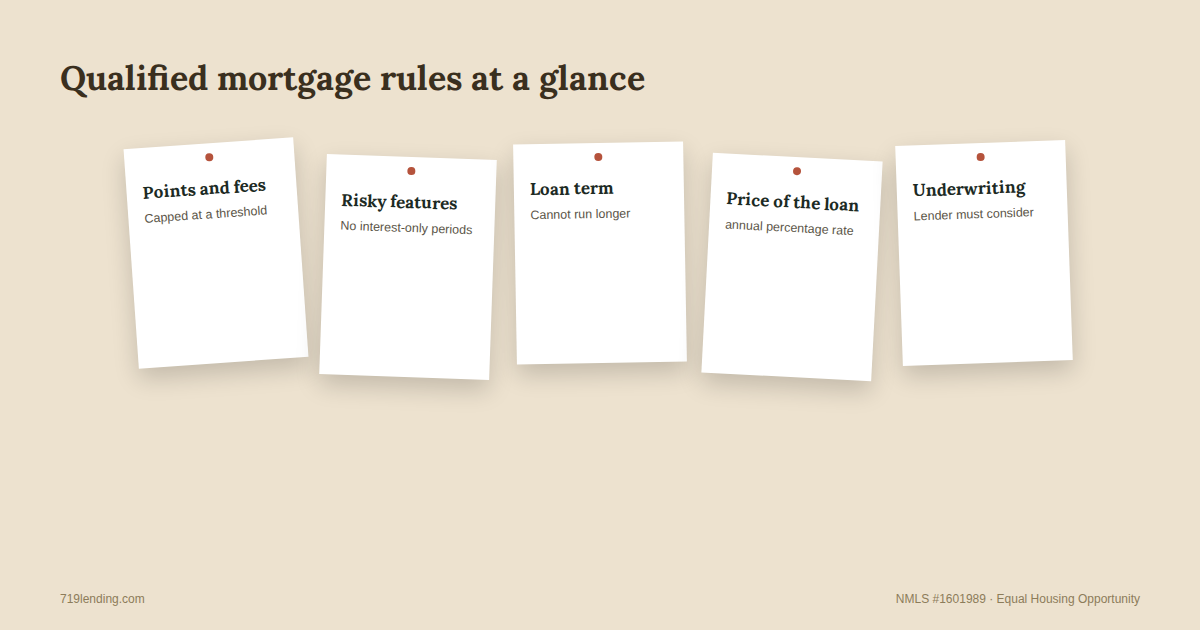
- Points and lender fees
- The loan term
- The monthly payment, and whether it will change over the life of the loan
- Closing costs and what gets rolled into the loan amount
What does it mean to compare home loans?

Comparing home loans means evaluating complete offers, not just quoted mortgage rates. Two loans with the same interest rate can carry very different fees, terms, and risks.
The Consumer Financial Protection Bureau recommends requesting loan estimates from at least three different lenders and comparing them before you choose. A single quote tells you nothing about the market.
Once you have offers in hand, the question becomes which numbers to weigh most heavily.
Which numbers matter most when comparing two mortgage loans?
Interest rate versus APR
The interest rate determines what you pay to borrow the principal each year. It drives the monthly payment, but it is not the whole story.
The APR tells you the yearly cost of the loan based on the interest rate plus points, broker fees, and certain other charges, including some closing costs. When you compare mortgage rates across lenders, comparing APRs keeps a low quoted rate with heavy fees from fooling you.
Points and lender fees
Sometimes a lender offers a lower interest rate in exchange for points — additional fees paid up front. That trade can make sense, but confirm you are actually getting a lower interest rate in exchange for the extra points you pay.
Ask each lender what fees it normally charges for each loan product, and whether you pay those fees yourself or the lender adds them to the loan amount. Fees financed into the loan accrue interest costs over the life of the loan.
Monthly payment and total cost
The monthly payment is what you live with; the total cost is what you actually pay. A loan can carry a comfortable payment amount and still cost more money over time because of a longer term or a higher interest rate.
Ask whether the payment will eventually pay off the principal, what other costs get added to the monthly payment, and whether you can repay the loan early without penalty. A mortgage loan comparison calculator lets you run two offers side by side and see how the numbers diverge.
Numbers only mean something once you know whether they can change — which brings us to rate structure.
Fixed rate mortgages versus adjustable rate mortgages
Fixed rate mortgages keep the same interest rate for the entire loan term, so the principal-and-interest portion of the payment stays predictable. That stability is why many borrowers plan around a fixed rate.
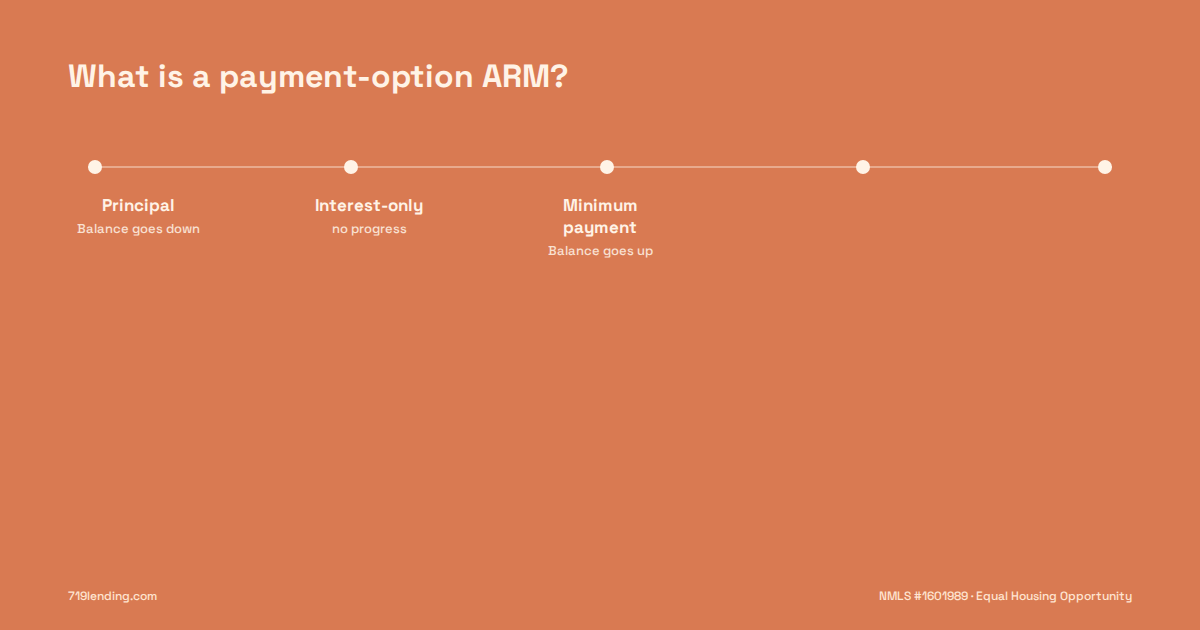
Adjustable rate mortgages can change over the life of the loan. Before comparing one against a fixed rate offer, ask how high the payment can go, and whether the payment adjustments and the interest rate are capped.
Whether the rates quoted for various products are fixed or adjustable — and what points or fees go along with different rates — should be on the list of questions for every lender you call.
Rate structure is one lever; the loan term is the other big one.
How does the loan term affect the comparison?
The loan term is how long you have to repay. Shorter terms generally mean a higher monthly payment but less time paying interest; a longer term spreads the balance out, lowering the payment while extending how long interest accrues.
Neither choice is automatically right. It depends on income, how long you plan to stay in the property, and how much room the budget has each month.
For military families around Colorado Springs, a PCS move can arrive before a long loan term does — worth factoring in how long you realistically expect to keep the home.
Term and rate set the framework; the loan program sets the rules you qualify under.
What loan programs should you ask about?
VA loans for veterans and service members
If you are a veteran or service member, you may qualify for a VA loan. In a market like Colorado Springs, with several installations nearby, it is a program worth asking every lender about when you explore VA loan options.
FHA loans
If you have concerns about credit history or only have enough saved for a smaller down payment, you may qualify for an FHA loan. Lenders can walk you through how the qualification review works for each program.
There are many different types of mortgage loans available, so make sure you understand all of the options before you commit to one.
What about loans that use a home you already own?
Home equity loans
A home equity loan lets you borrow money using the equity in the home as collateral — equity being what the property is currently worth minus any existing mortgage. You receive the money as a lump sum, and the loan usually carries a fixed interest rate.
Because the home secures the debt, the lender could foreclose if you cannot repay. Home equity loans may also have upfront fees and costs, so compare more than just the monthly payment, and talk to a qualified nonprofit credit counselor before using one to consolidate debts.
Reverse mortgage for purchase
Borrowers 62 and older can use a Home Equity Conversion Mortgage (HECM) for Purchase to buy a new principal residence. There are no monthly payments on the loan, but you still need cash for the down payment, and you must keep the home as the principal residence, maintain it, and pay property taxes and homeowners or flood insurance on time.
Closing costs on a HECM for Purchase run higher than on other reverse mortgage loans, and most reverse mortgages come with a three-business-day right to cancel after closing. Talking with a reverse mortgage housing counselor comes first.
Whatever the product, the shopping process itself follows the same playbook.
How to shop lenders the right way
Start with a broad online search to get a sense of the market, then contact banks, credit unions, lenders, and mortgage brokers in your area. Ask each one for current interest rates, the fees for each loan product, and each loan’s APR.
Confirm whether quoted rates are fixed or adjustable, what down payment you will need, and whether the written offer matches what you were told.
Borrowers who gather at least three loan estimates can see, in writing, how offers differ before signing a loan application.
Next step for Colorado borrowers
Pull together the offers you have, run them through the loan comparison calculator, and then talk through the results with a 719 Lending loan officer. Comparing complete offers — rate, APR, fees, and term together — is how you find the loan that fits, whether the goal is a first purchase or the dream home you plan to keep for decades.
Frequently asked questions
How many lenders should I compare when shopping for a mortgage?
The Consumer Financial Protection Bureau suggests requesting loan estimates from at least three different lenders and comparing them side by side before choosing a loan.
What is the difference between the interest rate and the APR?
The interest rate is the cost of borrowing the principal. The APR reflects the yearly cost of the loan including the interest rate plus points, broker fees, and certain other charges, so it gives a fuller basis for comparing offers.
Is a fixed rate or an adjustable rate better for comparing loans?
Fixed rate mortgages keep the same interest rate for the whole term, while adjustable rate mortgages can change. Before choosing an adjustable option, ask how high the payment can go and whether the payment adjustments and interest rate are capped.
What is a home equity loan?
A home equity loan lets you borrow against the equity in a home — the current value minus any existing mortgage. You receive a lump sum, the rate is usually fixed, and the lender could foreclose if the loan is not repaid.
Can a reverse mortgage be used to buy a home?
Yes. The HECM for Purchase program allows people 62 and older to buy a new principal residence with reverse mortgage proceeds. There are no monthly loan payments, but the borrower needs cash for the down payment and must keep up property taxes and insurance.
719 Lending Inc., NMLS #1601989 · Equal Housing Opportunity
719 Lending Inc. is not affiliated with or endorsed by HUD, FHA, VA, USDA, CHFA, the CFPB, or any government agency.
Last updated: September 2026

Related Posts