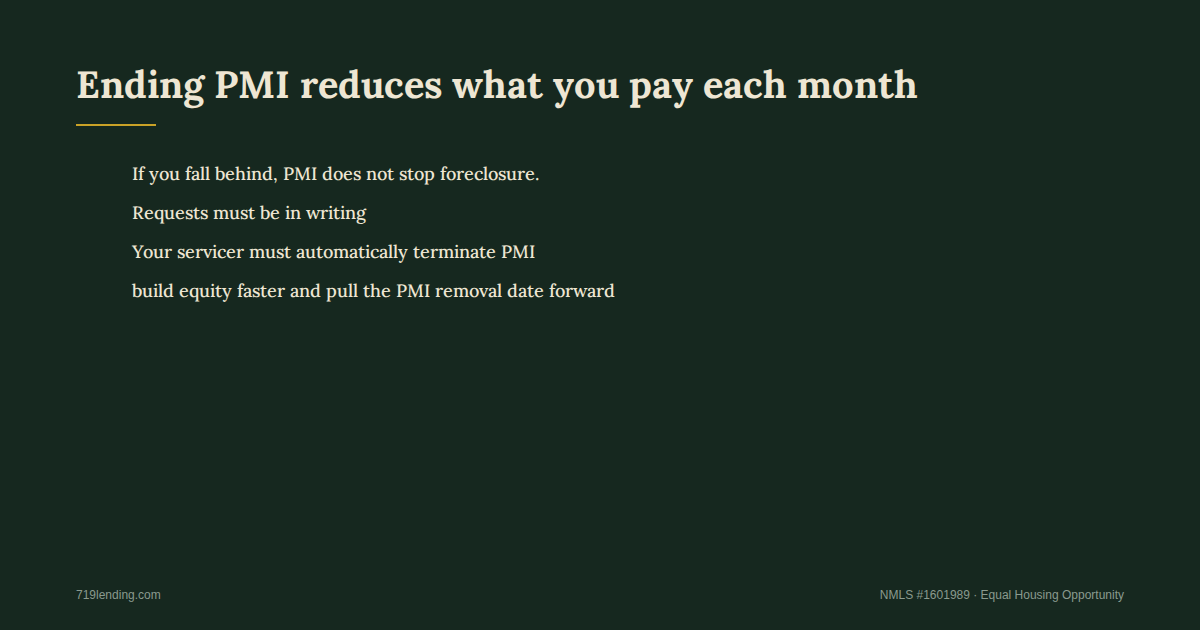
Private mortgage insurance protects the lender, not you, and it adds to your monthly mortgage payment. Here is the main benefit of removing PMI, when federal law says you can cancel it, and the exact steps Colorado homeowners can take to request PMI removal from their servicer.
What Is Loss Mitigation? How It Helps You Avoid Foreclosure
What is loss mitigation in the context of avoiding foreclosure? In plain English, loss mitigation is the name mortgage servicers use for the process of working with a borrower who has missed payments to find alternatives to foreclosure. This guide explains what the term means, what your mortgage servicer is generally required to do, the options you may hear about, and what a Colorado homeowner should do first.
What is loss mitigation in the context of avoiding foreclosure?
Loss mitigation refers to the ways a borrower and a mortgage servicer can work together to avoid foreclosure after the borrower falls behind on mortgage payments. The Consumer Financial Protection Bureau (CFPB) notes that many mortgage servicers have to work with you to see if you qualify for ways to avoid foreclosure — and your servicer may refer to this as loss mitigation.
The mortgage servicer is the company you send your monthly mortgage payments to. It may or may not be the same company that originated the mortgage loan, and it may or may not own the loan.
Loss mitigation is not one single program. It is a process with a defined starting sequence, and it can end in several different outcomes depending on your financial circumstances and the mortgage loan itself.
Before looking at outcomes, it helps to know what the servicer is actually required to do once you become delinquent.
What your mortgage servicer must do after missed payments
According to the CFPB, if you have missed payments on your mortgage loan, your mortgage servicer generally must take specific steps on a specific timeline.
| Servicer obligation | Deadline after you become delinquent |
|---|---|
| Try to contact you directly | Within the first 36 calendar days |
| Send a written notice describing examples of loss mitigation options and how to apply or get more information | No later than 45 calendar days |
| Have policies to assign people as your point of contact | Within 45 calendar days |
Early contact from the servicer
The servicer generally must try to reach you directly within the first 36 calendar days after you become delinquent. That early call or letter is the opening of the loss mitigation process, not a foreclosure threat.
Answering it — or calling first — is how you get into the process instead of drifting further past due.
The written notice of loss mitigation options
No later than 45 calendar days after you become delinquent, the servicer generally must send a written notice. It has to include a description of examples of loss mitigation options that may be available to help you avoid foreclosure, plus application instructions or information about how to learn more about those options, if applicable.
Keep that notice. It tells you what a complete application involves for your specific mortgage loan.
A dedicated point of contact
The servicer also must have policies and procedures in place to assign people to be your point of contact within 45 calendar days after you become delinquent. Per the CFPB, those people should be reachable by phone, respond to your inquiries, and give you accurate information about available loss mitigation options and how to pursue them — including the actions you must take to submit a loss mitigation application.
They should also have information about any loss mitigation application you have already submitted, so you are not starting over with every call.
With the servicer’s obligations clear, the next question is what the options themselves generally look like.
Common loss mitigation options you may hear about
The specific loss mitigation options available depend on your mortgage loan, your financial circumstances, and who owns or backs the loan — the written notice and your assigned point of contact are the authoritative sources on what applies to you.

In general terms, these are the words borrowers encounter.
Forbearance
Forbearance is one of the key mortgage terms the CFPB lists for borrowers having trouble paying. Forbearance plans generally involve a temporary pause or reduction in monthly mortgage payments, with the past-due amounts still owed afterward.
Ask the servicer exactly how and when the amounts from a forbearance must be repaid before you agree to one.
Repayment plan
A repayment plan is the common term for catching up: you resume regular monthly payments and add something toward the past due amounts until the mortgage is current again. Whether a repayment plan is a viable option depends on your income and how far past due the loan is — your point of contact can walk through the math with you.
Loan modification
Loan modification is another key term on the CFPB’s list. A loan modification generally means a permanent change to the terms of the mortgage loan itself, as opposed to a temporary arrangement.
What a modification can change — the term, the interest rate on the loan, or how the remaining mortgage balance is structured — is defined by the servicer and the investor behind the loan, so get the specifics in writing.
Payment deferral and partial claim
You may also hear the terms payment deferral or partial claim, which some servicers and investors use for arrangements that address past due amounts without an immediate lump sum. Whether a payment deferral or partial claim exists for your loan, and how any deferred balance is later repaid, depends entirely on who backs the mortgage — this is a direct question for your assigned point of contact.
Short sale and deed in lieu of foreclosure
When keeping the property is not workable, servicers may discuss exits that still avoid a completed foreclosure. A short sale generally means selling the property with the servicer’s involvement, and a deed in lieu of foreclosure generally means transferring the deed to the lender voluntarily.
Both a short sale and a deed in lieu are significant decisions with lasting consequences, so talk them through with a HUD-approved housing counselor before committing.
Refinance
Refinance also appears on the CFPB’s list of key terms for homeowners maintaining a mortgage.
Knowing the vocabulary matters, but so does knowing whether these rules apply to you at all.
Who loss mitigation applies to
Loss mitigation is relevant to any homeowner who has missed monthly mortgage payments or expects to — because of a job loss, a divorce, a medical event, or any other change in financial circumstances.
In Colorado Springs, that often includes military households. A PCS move, a separation from service, or a change in household income can strain a budget quickly, and the same servicer obligations described above apply to service members’ mortgage loans.
The CFPB does note one caveat: some lenders have claimed to be exempt from mortgage servicing rules, and the Bureau publishes guidance on that question. If your servicer says the rules do not apply, verify it rather than taking it at face value.
You also have foreclosure protections under both state and federal law, according to the CFPB — which is exactly why the official source is worth reading directly.
What the official source says and where to read it
The authoritative consumer explanation is the CFPB’s page Does my mortgage servicer have to help me avoid foreclosure?, which lays out the contact, notice, and point-of-contact requirements described above.
The CFPB’s broader mortgage tools hub covers reading your monthly mortgage statement, why a monthly payment might change, escrow issues, and how to spot mortgage assistance scams.
If you have a problem with your mortgage servicer, you can submit a complaint with the CFPB online or by calling (855) 411-CFPB (2372). The Bureau forwards complaints to the company and works to get you a response.
Reading the rules is step one; acting on them is what actually protects the house.
What to do next
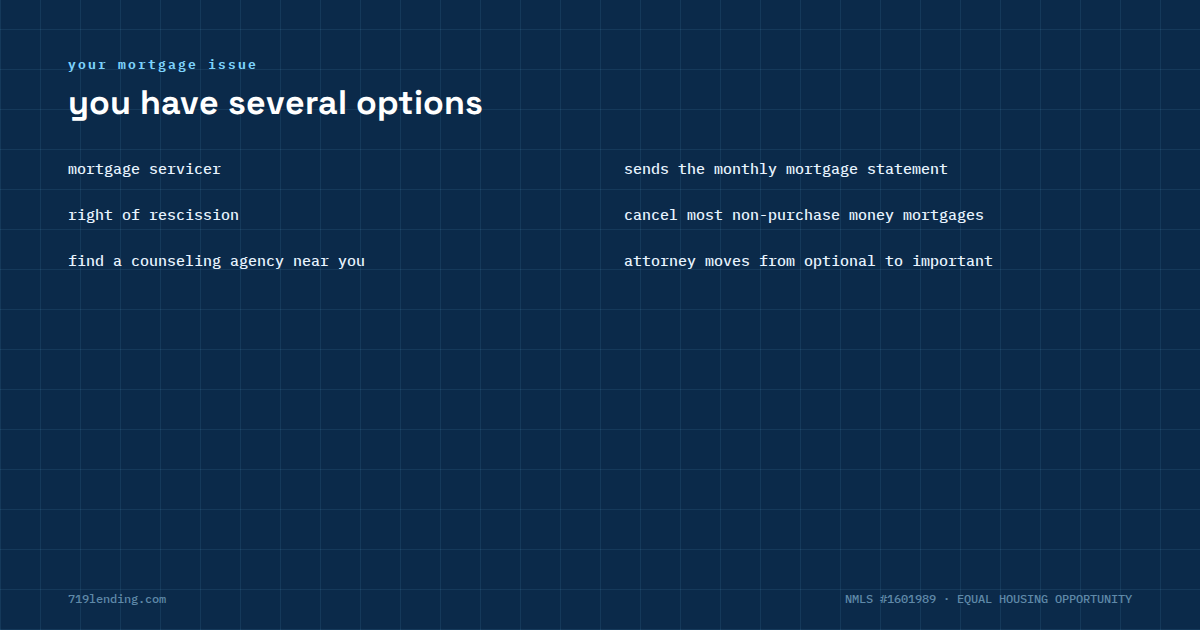
First, call your mortgage servicer — the number is on your monthly mortgage statement. The CFPB’s core advice for anyone having trouble paying is to reach out to the servicer and a HUD-approved housing counselor, and the servicer’s assigned contact must give you accurate information about available loss mitigation options.
Second, find a HUD-approved housing counseling agency through the CFPB’s locator, or call the HOPE Hotline. Counseling from a HUD-approved agency is independent of the servicer.
Third, respond to every notice and keep copies of everything you send, including any loss mitigation application.
Frequently asked questions
What does loss mitigation mean on a mortgage?
Loss mitigation is the term mortgage servicers use for the process of working with a borrower who has missed payments to find ways to avoid foreclosure. The CFPB says many servicers must review whether you qualify for these options.
How soon must my mortgage servicer contact me after a missed payment?
According to the CFPB, your servicer generally must try to contact you directly within the first 36 calendar days after you become delinquent, and send a written notice describing loss mitigation options no later than 45 calendar days after delinquency.
What loss mitigation options might a servicer offer?
Depending on the loan and your circumstances, servicers commonly discuss forbearance, a repayment plan, a loan modification, a payment deferral or partial claim, a short sale, or a deed in lieu of foreclosure. Your servicer’s written notice and assigned point of contact confirm which apply to your mortgage loan.
Does loss mitigation stop foreclosure?
Loss mitigation is the process for avoiding foreclosure, not an automatic guarantee of one outcome. Responding to your servicer quickly and submitting a complete loss mitigation application is how you get your options formally reviewed.
Who can help me if my servicer isn’t cooperating?
The CFPB recommends working with a HUD-approved housing counseling agency, and you can submit a complaint to the CFPB online or by calling (855) 411-CFPB (2372) if you have a problem with your mortgage servicer.
719 Lending Inc., NMLS #1601989 · Equal Housing Opportunity
719 Lending Inc. is not affiliated with or endorsed by HUD, FHA, VA, USDA, CHFA, the CFPB, or any government agency.
Last updated: September 2026

Related Posts