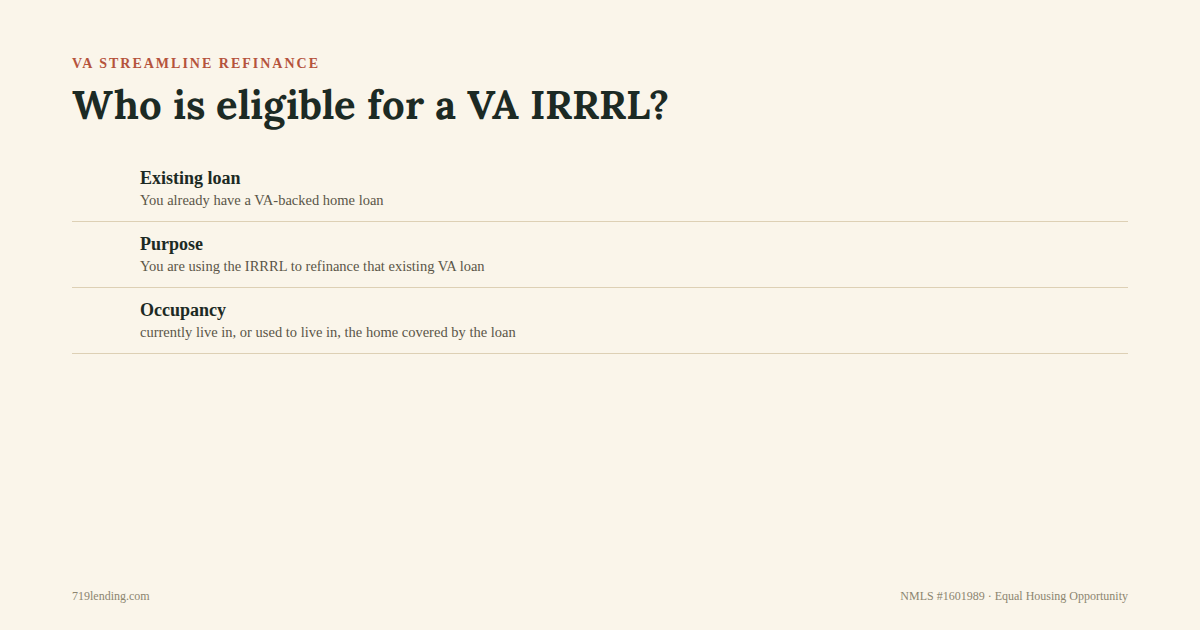
The VA does not publish an IRRRL rate. Private lenders set VA streamline refinance pricing, and it moves with the market and the borrower's profile. Here is how the VA IRRRL works, who qualifies, and how Colorado Springs veterans can compare quotes the right way.
PCS Orders VA Loan: Timing Rules That Actually Matter
It’s a unique challenge, isn’t it? The excitement of a new assignment, the logistics of packing up your life, and then, navigating the nuances of buying a home with your hard-earned VA loan benefit—all while on the move. For military families facing a Permanent Change of Station (PCS), the homebuying journey can feel like a high-stakes puzzle, especially when it comes to understanding the timing rules and ensuring your VA loan works seamlessly with your transition. A PCS is a significant event that brings both opportunity and stress, as you relocate to a new duty station and must quickly evaluate housing options in an unfamiliar area.
At 719 Lending Inc. in Colorado Springs, we understand this journey intimately. We’re dedicated to empowering Southern Colorado’s military community, veterans, and their families with clear, expert-level guidance. The VA loan benefit is also available to eligible members of the National Guard and Reserves, as recognized by the Department of Veterans Affairs. This isn’t just about transactions; it’s about helping you achieve stable homeownership, no matter where your service takes you. The home buying process can be complex, so it’s crucial to work with a real estate professional who understands VA loans and the unique needs of military families.
Consider this your definitive guide. We’re going to cut through the confusion, offering deep insights into how PCS orders intersect with VA loan timing, occupancy rules, and vital strategies to ensure your homebuying process is as smooth and stress-free as possible. Ready to master the PCS homebuying challenge?

The Unbeatable Advantage of a VA Loan
Before we dive into the specifics of PCS, let’s quickly reiterate why the VA loan is such an invaluable benefit for military families. It’s a testament to your service, designed to remove many common barriers to homeownership. With a VA loan, qualified borrowers can often enjoy:
- Zero Down Payment: Yes, you read that right. In many cases, you can finance up to 100% of the home’s purchase price, eliminating the need for a hefty upfront cash outlay that often burdens conventional buyers.
- No Private Mortgage Insurance (PMI): Unlike most conventional loans with less than 20% down, VA loans don’t require PMI, saving you a significant amount each month.
- Competitive Interest Rates: Because a portion of the loan is guaranteed by the Department of Veterans Affairs, lenders can often offer more favorable interest rates.
- Flexible Credit Guidelines: The VA loan program is built to accommodate the unique financial situations that can arise during and after military service, often offering more flexible credit requirements than other loan types.
- Reduced Closing Costs: The VA limits what lenders can charge for closing costs, and sellers are also permitted to contribute towards these costs.
Compared to conventional mortgages, VA loans typically have more relaxed requirements, no PMI, and lower out-of-pocket costs, making them an attractive alternative for eligible borrowers. These benefits make the VA loan an incredibly powerful tool for building wealth and stability. But like any powerful tool, it comes with specific operating instructions—especially when a PCS is in the mix.
Understanding the Department of Veterans Affairs
When it comes to supporting military families on their journey to homeownership, the Department of Veterans Affairs (VA) stands as a cornerstone government agency. The VA’s mission is to provide a range of benefits and services to those who have served, and one of its most impactful offerings is the VA loan program. This program is specifically designed to help eligible active duty military, veterans, and surviving spouses purchase, build, or improve a home with terms that are often far more favorable than conventional loans.
The VA loan benefit is a game-changer for military families. Unlike many traditional mortgages, VA loans typically require no down payment and never require private mortgage insurance (PMI), which can save you hundreds on your monthly mortgage payment. Thanks to the VA’s backing, lenders are able to offer competitive interest rates and more flexible credit guidelines, making homeownership more accessible even if your financial situation has been affected by the unique demands of military service.
Navigating the VA loan process involves several key steps. First, you’ll work with a loan officer to get pre-approved, which means your credit and financial documents will be reviewed to determine your eligibility and budget. Next, the property you choose must meet VA standards for property approval, ensuring it’s safe and sound for your family. Throughout the process, you’ll collaborate with a real estate agent who understands the nuances of VA loans and the needs of military families, especially during a permanent change of station (PCS).
A critical part of the VA loan process is meeting the VA loan occupancy requirement. The VA requires that you, as the borrower, have a valid intent to personally occupy the property as your primary residence within a reasonable time—usually within 60 days of closing. However, the VA recognizes the realities of military life, so there are occupancy exceptions for those facing a PCS or temporary duty status. In these cases, a later move-in date or dependent occupancy may be allowed, as long as you can certify your intent to occupy the home.
Another important aspect is the VA funding fee—a one-time payment that helps keep the VA loan program running for future generations. The amount of this fee depends on your eligibility criteria, the type of loan, and whether you’re using your VA loan benefit for the first time. Some borrowers, such as those with service-connected disabilities, may be exempt from this fee.
Ultimately, the Department of Veterans Affairs plays a vital role in making homeownership possible for those who serve. By understanding the VA loan process, occupancy requirements, and the benefits available, military families can confidently navigate the home buying process and make the most of their VA loan benefit. Whether you’re facing a permanent change of station or simply ready to put down roots, the VA is there to help you achieve your dream of owning a home.
Veterans Affairs VA Benefits
When it comes to supporting military families through the homebuying journey, the Department of Veterans Affairs (VA) stands out as a vital government agency, offering a suite of benefits designed to make homeownership more accessible and affordable. Chief among these is the VA loan program—a powerful resource for active duty military, veterans, National Guard and Reserve members, and surviving spouses navigating a permanent change of station (PCS).
What makes the VA loan so valuable? For starters, qualified borrowers can purchase a home with no down payment, a significant advantage over conventional loans that often require a hefty upfront investment. The VA loan also eliminates the need for private mortgage insurance (PMI), which can save military families hundreds of dollars each month on their mortgage payment. Add in competitive interest rates, flexible credit guidelines, and capped closing costs, and it’s clear why the VA loan is a top choice for those who serve.
The VA loan process is designed with military life in mind. It begins with pre-approval, where your lender reviews your credit and financial documents to determine your VA loan eligibility. Once pre-approved, you can work with a real estate agent to find a home that meets both your needs and the VA’s property approval standards. The VA requires that you intend to personally occupy the property as your primary residence within a reasonable time—typically 60 days after closing. However, the VA recognizes the unique demands of military service, so exceptions like spouse occupancy or dependent occupancy are available for those on PCS orders or deployed.
Another key feature is the VA funding fee—a one-time payment that helps sustain the VA loan program for future generations. While most borrowers pay this fee, some, such as those with service-connected disabilities, may be exempt. The funding fee can often be rolled into your loan, minimizing out-of-pocket costs at closing.
Beyond home loans, the Department of Veterans Affairs offers a range of additional benefits, including education and training programs, employment assistance, and healthcare services. These resources are designed to support military families through every stage of life, not just during a permanent change of station.
To make the most of your VA loan benefit, it’s essential to understand the occupancy requirements and work with a lender who can guide you through the process. Whether you’re buying your first home or relocating due to PCS, the VA loan program offers unmatched flexibility and support. By staying informed and partnering with experienced professionals, you can confidently navigate the loan process, secure a home that fits your needs, and take full advantage of the benefits you’ve earned through your service.
In summary, the VA loan program is more than just a mortgage option—it’s a cornerstone of financial stability for military families. With no down payment, no private mortgage insurance, and competitive interest rates, the VA loan makes homeownership possible even in the face of frequent moves and changing duty stations. Trust in the Department of Veterans Affairs and the expertise of your local lender to help you unlock the door to your next home, wherever your service takes you.
Active Duty Considerations: Unique Scenarios and Solutions
Active duty military service comes with a unique set of challenges, especially when it comes to meeting the VA loan occupancy requirement. The Department of Veterans Affairs understands that service members may not always be able to move into their new home right away due to deployments, training, or other military obligations. That’s why the VA loan process includes special provisions for active duty personnel, ensuring that the benefits of the VA loan remain accessible even in complex situations.
If you’re on active duty and receive PCS orders that prevent you from occupying your new home within the standard “reasonable time” frame, the VA allows for flexibility. In many cases, your spouse or even a dependent child can fulfill the occupancy requirement on your behalf. This means your family can settle into your new home while you fulfill your service commitments, and you’ll still be in full compliance with VA loan occupancy rules.
Navigating these exceptions can feel overwhelming, but you don’t have to do it alone. A knowledgeable loan officer who understands the nuances of the VA loan process can help you document your intent to occupy, guide you through occupancy certification, and ensure all credit and property approval requirements are met. They’ll also help you understand your VA loan eligibility and make sure your loan application is as strong as possible, even if your circumstances are less than typical.
Remember, the VA’s goal is to support service members and their families in achieving homeownership. By working closely with your lender and providing the necessary documentation, you can take advantage of your VA loan benefit, even when military life throws you a curveball. Whether you’re facing deployment, temporary duty, or a PCS move, understanding your options and the VA’s occupancy requirements will help you navigate the home buying process with confidence.
PCS Orders: Your Ticket to a New Home (and the Rules That Come With It)
A Permanent Change of Station, or PCS, isn’t just a physical relocation; it’s a significant life event that directly impacts your VA loan strategy. Understanding how your PCS orders interact with VA loan requirements is critical to avoiding delays and ensuring compliance. When relocating to a new duty station, it’s important to consider proximity to your duty station and how your PCS orders relate to your new duty station for both convenience and compliance with VA loan rules.
The Golden Rule: Primary Residence and “Reasonable Time”
The cornerstone of VA loan eligibility is the primary residence requirement. Simply put, the VA loan is designed for you to buy a home that you (or your spouse/dependents) will personally occupy. It’s not for vacation homes or purely investment properties.
Typically, the VA expects you to move into your new home within 60 days of closing. This is considered a “reasonable time.” However, the VA understands that military life is anything but typical. This is where PCS orders provide crucial flexibility.
PCS orders are a recognized reason to delay personal occupancy beyond the standard 60 days. If your PCS timeline means you can’t move in immediately, you can often get an extension, potentially up to 12 months, provided you certify a specific, reasonable future move-in date tied to your assignment timeline. This requires strong evidence of your intent to occupy the home as your primary residence.
Active duty military and active duty service members may face unique challenges in meeting the VA loan occupancy requirement due to deployments or military commitments. In these cases, their status can affect the occupancy timeline, and the VA allows for flexibility if proper documentation is provided. The VA requires occupancy certification and mortgage documents to confirm the borrower’s intent to occupy the property as a primary residence, even if they are temporarily unable to do so.
Borrowers must certify a realistic occupancy date, and for retiring service members, a later move in date may be allowed if retirement is within a year and proper documentation is provided. Occupancy exceptions, such as spouse occupancy or dependent occupancy, can be used during PCS or deployment to satisfy the VA’s requirements. If a service member is deployed or on temporary duty status, deployment is considered a temporary interruption of occupancy requirements, and the VA recognizes this as a valid reason for delayed occupancy.
Service members can demonstrate valid intent to occupy the property even if they are temporarily away due to PCS or deployment, as long as they intend to make the home their primary residence upon return. VA loan occupancy, VA loan occupancy requirement, va occupancy requirements, and VA rules all provide regulatory guidelines and flexibility for military borrowers, ensuring that the unique circumstances of military life are accommodated.
What does “intent to occupy” truly mean? It means that, despite the temporary delay, this new property will genuinely be your main home. Lenders will be looking for consistent primary residence intent and documentation to back it up.
When Your Family Holds Down the Fort: Spouse and Dependent Occupancy
Here’s a key flexibility for active-duty servicemembers: your spouse can satisfy the occupancy requirement on your behalf. If you’re deployed or stationed elsewhere due to PCS, your spouse moving into the home within that reasonable timeframe fulfills the VA’s requirement. In limited cases, a dependent child (with an attorney-in-fact or legal guardian making the certification) can also satisfy this.
This is incredibly beneficial for military families, allowing them to establish roots even when the servicemember is away.
Looking Ahead: Future Employment and Your VA Loan
For servicemembers nearing separation or retirement, or those transitioning to a new civilian job with a PCS, your future employment income is a critical piece of the puzzle. Lenders need to verify that your income will be stable and sufficient to cover your mortgage obligations.
If you’re transitioning out of the military or have recently started a new job, don’t assume it will hinder your VA loan. The VA’s guidelines are often quite flexible. Lenders will examine:
- Continuity of Employment: Is your new civilian job related to your military occupational specialty (MOS) or previous work experience?
- Job Offer Letters: A firm job offer letter with details on your position, start date, and compensation is vital.
- Probability of Continued Employment: Lenders may seek a statement from your new employer confirming favorable prospects for continued employment.
Even if you’ve been in your new job for a short time, your military background and the relevance of your skills can often help establish stability. Open communication with your lender about your employment situation is paramount.
Maximizing Your Entitlement: Using Your VA Loan Again and Again
Many servicemembers wonder, “Can I use my VA loan more than once?” The answer is a resounding yes! Your VA home loan benefit is a lifetime entitlement, meaning you can use it multiple times, as long as you meet the eligibility requirements and have remaining entitlement.
This flexibility is crucial for military families who PCS frequently. You can even own more than one home with a VA loan simultaneously under certain conditions, using your “bonus entitlement” or “second-tier entitlement.” It all depends on your remaining entitlement and the limits for your area. Don’t let the thought of a prior VA loan stop you from exploring your options for a new home. Prior occupancy is an important factor in determining eligibility for certain refinancing options, such as streamlined or cash-out refinances.
The PCS Dance: Buying While Selling
One of the most common, and often most stressful, scenarios during a PCS is selling your current home while trying to buy a new one. Coordinating these two major life events requires careful planning.
While the VA loan doesn’t inherently complicate this more than a conventional loan, the tight timelines of a PCS add pressure. It’s often recommended to work with real estate agents and lenders who are experienced with military moves to help streamline the process. They can help you structure offers with contingencies that protect you if your existing home sale is delayed.
Navigating the VA Funding Fee
When discussing costs, you’ll encounter the VA Funding Fee. This is a one-time charge paid directly to the Department of Veterans Affairs that helps sustain the VA loan program and reduces reliance on taxpayer funding. It’s important to remember that this isn’t a penalty; it ensures the program can continue to offer its incredible benefits, like no down payment and no monthly PMI.
The amount of the funding fee varies based on several factors, including:
- First-time vs. repeat use of your VA loan benefit.
- Whether you make a down payment (and how much).
- The type of loan (purchase, refinance, etc.).
For example, a first-time VA loan user with no down payment might pay a 2.15% funding fee, while a repeat user without a down payment could see a 3.3% fee. This fee can often be financed into your loan, minimizing out-of-pocket costs at closing.
Are there exemptions? Yes! Veterans receiving VA compensation for service-connected disabilities are typically exempt from paying the funding fee. This is another significant financial relief for many.
Timing is Everything: Your PCS Homebuying Strategy
The key to a successful PCS home purchase with a VA loan lies in proactive planning and strategic timing.
Don’t Wait: The Power of Pre-Approval and Your COE
One of the biggest mistakes homebuyers make—especially those facing a PCS—is not getting their finances in order before they start house hunting.
- Get Your Certificate of Eligibility (COE) Early: Your COE is proof of your VA loan eligibility. While your lender can usually obtain it for you, getting it yourself through the VA’s eBenefits portal ahead of time can prevent delays.
- Secure a Full Pre-Approval: Don’t confuse pre-qualification with pre-approval. A pre-qualification is a quick estimate, but a full pre-approval means a lender has thoroughly reviewed your credit, income, and assets and is ready to commit to lending you a specific amount. In today’s competitive housing market, a strong pre-approval letter makes your offer much more attractive to sellers. It also gives you a clear budget, so you’re not wasting time looking at homes outside your price range.
Aim to get pre-approved well in advance of your PCS date. This allows you to understand what you can afford, addresses any potential underwriting questions early, and speeds up the process once you find your new home. While VA loans can close quickly—sometimes as fast as 21 days—the typical timeline is 30-45 days. Proactive preparation is your best friend in keeping things on schedule.
Get Your Documents in Order
PCS orders come with a mountain of paperwork, but some documents are particularly crucial for your VA loan application. Having these ready in advance will significantly streamline your process:
Your official PCS Orders*.
Your *Certificate of Eligibility (COE)**.
Recent pay stubs and W-2s* (or tax returns if self-employed).
- Bank statements and other financial documentation.
- Statement of Service (if still active duty).
- Marriage certificates (if spouse will satisfy occupancy).
Organizing these upfront saves you stress and prevents delays down the line. Remember, loan offers are contingent upon both credit and property approval, so your financial profile and the property itself must meet VA and lender standards. The property must also pass property approval, and any required property repairs must be completed before closing to meet VA minimum property requirements. Be aware that loan terms and conditions may change without prior notice, so stay in close contact with your lender throughout the process.
New Duty Station Considerations: Making Your Move Work for You
Receiving PCS orders means it’s time to start planning your next chapter—and your next home. For military families, a VA loan can be a powerful tool to make the transition to a new duty station as smooth and affordable as possible. With no down payment required, no private mortgage insurance, and access to competitive interest rates, the VA loan benefit is designed to help you secure a home that fits your needs and budget.
To make the most of your VA loan at your new duty station, it’s essential to work with a real estate agent who understands both the local market and the VA loan process. An experienced agent can help you identify properties that meet VA loan occupancy requirements and guide you through the steps needed to secure your loan. They’ll also be familiar with the nuances of PCS moves, helping you coordinate timelines and paperwork so you can focus on your family’s transition.
It’s also important to be aware of the VA’s occupancy rules and any exceptions that may apply to your situation. For example, if you can’t move in right away due to your PCS schedule, your spouse or a dependent child may be able to satisfy the occupancy requirement. Understanding these options ensures you remain in compliance with VA rules and avoid any hiccups in your loan process.
By planning ahead, gathering the necessary documentation, and partnering with professionals who know the ins and outs of VA loans, you can turn your PCS move into an opportunity for homeownership. The VA loan benefit is there to support military families through every permanent change of station—helping you build stability and security, no matter where your service takes you.
Common Pitfalls to Sidestep During Your PCS Move
Even with the best intentions, it’s easy to make missteps during such a busy time. Here are a few common pitfalls to avoid:
- Taking on New Debt: Resist the urge to open new credit lines or make large purchases (like a new car or furniture) between pre-approval and closing. This can significantly impact your debt-to-income ratio and jeopardize your loan approval.
- Changing Jobs Unexpectedly (Without Lender Communication): While the VA is flexible, significant job changes must be disclosed to your lender immediately. Your income and employment stability will be re-verified, and last-minute surprises can cause delays.
- Not Vetting Your Real Estate Agent: Work with an agent who truly understands VA loans and the specific challenges of military moves. An agent unfamiliar with VA appraisals or timelines can create unnecessary friction.
- Overlooking Condo Eligibility: Not all condominiums or townhomes are approved for VA financing. If you’re considering one, ensure it’s on the VA’s approved list before falling in love with it.
Your Trusted Partner in Colorado Springs
Navigating a PCS with a VA loan doesn’t have to be overwhelming. The benefits you’ve earned are profound, and with the right knowledge and guidance, you can make your next move a seamless transition into homeownership.
At 719 Lending Inc., we pride ourselves on being more than just a mortgage broker. We are a Colorado Springs-based team that understands the local market and the unique needs of our military community. Our blend of cutting-edge technology and personal care means you’ll get real-time updates through our online portal, direct communication, and competitive rates. We’re here to provide transparent, honest, and exceptional service every step of the way—whether you’re looking for a conventional, FHA, VA, USDA, jumbo, or DSCR loan.
Don’t go it alone. Let our expertise and personalized guidance empower your next PCS move. We’re right here in Downtown Colorado Springs, ready to assist online or in person. Consulting a real estate professional with VA loan expertise can make all the difference in navigating the home buying process and maximizing your VA benefits.
—
SEO Keyphrase: PCS VA Loan Timing Rules
Meta Description: Master PCS and VA loan timing rules with our expert guide. Learn about occupancy, future employment, funding fees, and strategic planning for a smooth military move. Read More>>
Excerpt: Facing a PCS and wondering how your VA loan fits in? This expert guide from 719 Lending Inc. breaks down crucial timing rules, occupancy requirements, and strategic planning tips for military families. Learn how to navigate your next move with confidence, ensuring a seamless VA home loan experience in Colorado Springs and beyond.
Loan Occupancy and Funding Fee
When you’re navigating the VA loan process, two elements stand out as especially important: the loan occupancy requirement and the VA funding fee. Understanding how these work is key to making the most of your VA loan benefit and ensuring a smooth path to homeownership.

Related Posts