Introduction As Memorial Day approaches, many of us are not only reflecting on the sacrifices…
Master Your DTI : Debt to Income Ratio Mortgage Colorado Springs
Ah, the debt-to-income ratio (DTI)! It might sound like a dry, technical term, but trust us, it’s one of the most critical numbers when you’re thinking about buying a home in Southern Colorado. At 719 Lending Inc., we believe in empowering you with transparent, expert-level guidance, and understanding your DTI is a huge step in that journey. Think of your DTI as a financial snapshot that tells lenders how much of your monthly income is already committed to paying off debts. It’s not just a hurdle to jump; it’s a vital indicator of your financial health and your ability to comfortably manage a mortgage.
Whether you’re a first-time homebuyer dreaming of a cozy bungalow in Old Colorado City, a veteran looking to utilize your well-deserved VA benefits for a family home near Fort Carson, or an investor eyeing promising rental properties, your DTI will play a pivotal role. During the home loan process, the debt-to-income ratio is a key factor lenders evaluate, directly impacting your mortgage approval. And here’s the secret: it’s often even more important than your credit score in determining your mortgage approval. Lenders will also review your credit history, along with your credit score, to get a complete picture of your financial profile and assess your eligibility for a home loan.
So, let’s pull back the curtain on DTI and discover how you can master this metric to unlock your homeownership dreams.
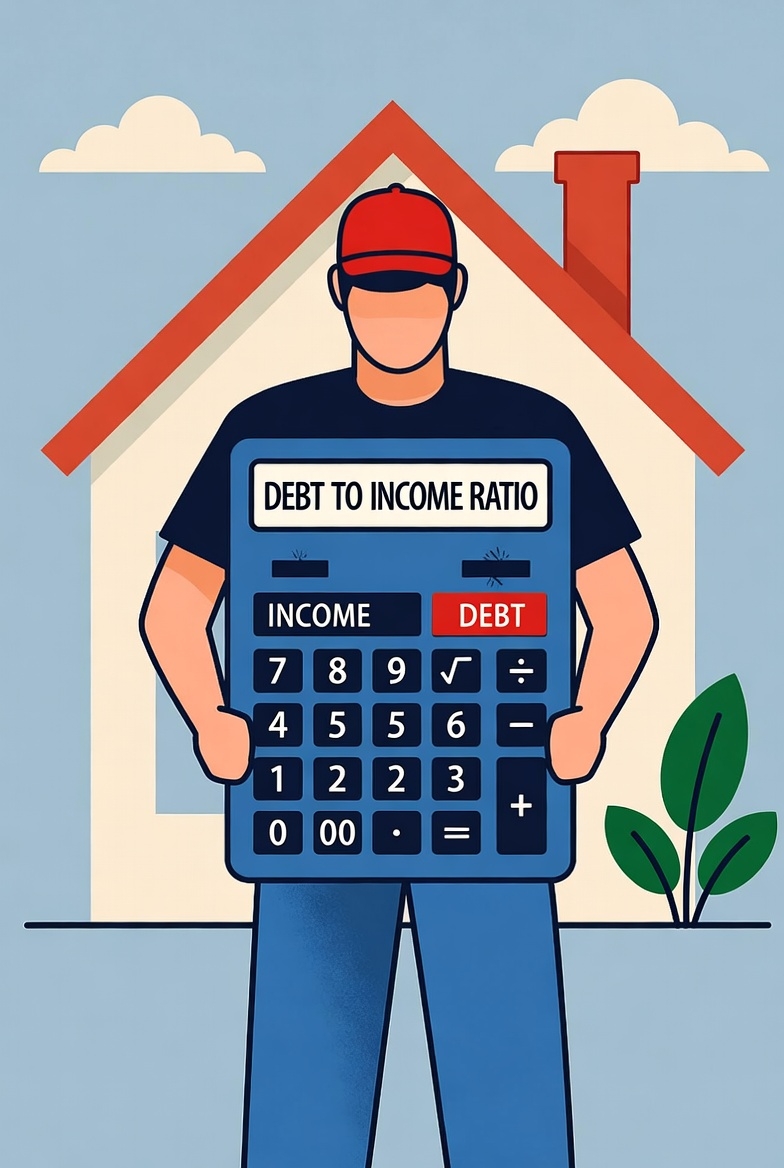
What Exactly Is Your Debt-to-Income (DTI) Ratio?Simply put, your Debt-to-Income (DTI) ratio is a percentage that compares how much you owe in monthly debt payments to how much you earn in gross monthly income (before taxes). Lenders use this ratio to gauge your capacity to take on and repay a new mortgage alongside your existing financial obligations. A lower DTI suggests you have more disposable income, making you a less risky borrower.There are two main types of DTI ratios lenders look at, though they often focus more on the second:
- Front-End DTI (Housing Ratio): This ratio specifically looks at your proposed new monthly housing expenses (principal, interest, property taxes, homeowner’s insurance, and HOA dues, if applicable) as a percentage of your gross monthly income. For conventional loans, a common benchmark for the front-end ratio is typically 28%.
- Back-End DTI (Total Debt Ratio): This is the more comprehensive and, frankly, the more critical number. It includes your new housing expenses plus all your other recurring monthly debt payments, such as car loans, student loans, minimum credit card payments, child support, or personal loans, all divided by your gross monthly income. This ratio gives lenders a full picture of your monthly financial commitments. Importantly, total recurring monthly debt payments for a mortgage application do not include current rent or utility bills.
How do you calculate it? It’s straightforward:
- Add up your total minimum monthly current debts. This includes car payments, student loan payments, the minimum required payments on all your credit cards, personal loans, and any other recurring current debt. Important: Don’t include expenses like utilities, groceries, gas, or car insurance – these aren’t considered debts for DTI purposes.
- Determine your gross monthly income. This is your total income before taxes and other deductions are taken out. If you’re self-employed, use your average monthly income. If you’re applying with a co-borrower, you’ll combine both incomes and debts.
- Divide your total monthly debt payments by your gross monthly income.
- Multiply by 100 to get your DTI as a percentage.
Example: Let’s say your gross monthly income is $6,000. Your debts include:
- Car Payment: $400
- Student Loan: $250
- Credit Card Minimums: $150
- Proposed new Mortgage Payment (PITI + HOA): $1,700 Total Monthly Debts: $400 + $250 + $150 + $1,700 = $2,500 DTI Calculation: ($2,500 / $6,000) * 100 = 41.67%
Why Does Your DTI Matter So Much to Lenders?
Your DTI is a primary tool lenders use to assess risk. A high DTI can signal that you might struggle to make your mortgage payments if your financial situation tightens, increasing the risk of default. Lenders are concerned about losing money if borrowers default on their loans, so they pay close attention to your DTI ratio. Conversely, a lower DTI indicates that you have a healthy buffer, suggesting you’re more likely to manage your monthly obligations comfortably.
For us at 719 Lending Inc., it’s not just about approving a loan; it’s about ensuring you can afford your new home without feeling “house poor.” We want you to thrive in your Southern Colorado community, not just survive. A strong DTI is a key indicator that you’re prepared for the financial responsibilities of homeownership.
What’s a “Good” DTI Ratio? (And How It Varies by Loan Type)
While a DTI under 36% (especially with a front-end DTI of 28% or less) is generally considered ideal by lenders for conventional loans, the “acceptable” range can stretch depending on the loan program, your credit score, and other compensating factors. Colorado’s FHA loans allow for a DTI as high as 57%, although some lenders may require lower DTI ratios.
Here’s a look at how DTI typically works across different loan types we offer:
- Conventional Loans: For conventional mortgages, the maximum back-end DTI is often around 43% to 50%, especially with Automated Underwriting Systems (AUS). However, a DTI of 36% or less is usually seen as favorable. If you have a strong credit score or substantial cash reserves, exceptions might be made for DTIs as high as 45% or even 50% for manually underwritten loans. The loan to value ratio, which is affected by your down payment, also plays a key role in determining your mortgage terms.
- FHA Loans: FHA loans are known for being more flexible with DTI, often allowing higher ratios. While the standard is often around 31% front-end and 43% back-end, DTI can go up to 55% or even 56.9% with strong compensating factors, such as a higher credit score. These loans are insured by the Federal Housing Administration (FHA), which allows for a higher DTI ratio compared to other loan types. FHA loans require an upfront MIP (Mortgage Insurance Premium), which is a one-time payment at loan inception, separate from the ongoing monthly mortgage insurance fees. This upfront MIP increases the initial cost of the loan and should be considered when evaluating the overall affordability of an FHA loan. This flexibility makes FHA loans an excellent option for many first-time buyers in Colorado Springs.
- VA Loans: Exclusively for our esteemed veterans and active military personnel, VA loans are incredibly advantageous. While many lenders prefer a DTI of no more than 41% for manually underwritten loans, the VA doesn’t impose a strict DTI limit if the borrower is approved through an Automated Underwriting System (AUS). The VA places a strong emphasis on “Residual Income,” which ensures you have enough discretionary income left over after all debts are paid, considering family size and geographic region. This unique approach means that even with a DTI over 41%, you might still qualify if you have sufficient residual income or other compensating factors like tax-free income (e.g., VA disability income).
- USDA Loans: USDA loans are another government-backed option, primarily for rural and suburban homebuyers. These loans have specific DTI requirements, with a maximum DTI ratio typically set at 41% for automated approvals, though manual underwriting may allow for exceptions with strong compensating factors.
- Jumbo Loans: For those looking at higher loan amounts, jumbo loans typically have stricter DTI requirements due to the increased risk. While specific limits vary by lender, you’ll generally need a strong credit profile and a lower DTI than conventional or government-backed loans.
- DSCR Loans (for Investors): This is where things get really interesting for real estate investors. DSCR (Debt Service Coverage Ratio) loans are designed specifically for investment properties and do not use your personal DTI. Instead, qualification is based on the cash flow generated by the investment property itself. Lenders look at the property’s rental income compared to its mortgage payment (including principal, interest, taxes, and insurance – PITIA). A DSCR of 1.0 means the property’s income exactly covers its expenses, while a DSCR of 1.25 means it generates 25% more income than needed. This makes DSCR loans a powerful tool for investors, especially self-employed individuals, who might have a high personal DTI but profitable rental portfolios, or those looking to scale their portfolio beyond conventional loan limits. A DTI above 50% makes mortgage qualification very challenging, so keeping it below this threshold is crucial for most loan types.
- Conventional Loans: For conventional mortgages, the maximum back-end DTI is often around 43% to 50%, especially with Automated Underwriting Systems (AUS). However, a DTI of 36% or less is usually seen as favorable. If you have a strong credit score or substantial cash reserves, exceptions might be made for DTIs as high as 45% or even 50% for manually underwritten loans. The loan to value ratio, which is affected by your down payment, also plays a key role in determining your mortgage terms.
- FHA Loans: FHA loans are known for being more flexible with DTI, often allowing higher ratios. While the standard is often around 31% front-end and 43% back-end, DTI can go up to 55% or even 56.9% with strong compensating factors, such as a higher credit score. These loans are insured by the Federal Housing Administration (FHA), which allows for a higher DTI ratio compared to other loan types. FHA loans require an upfront MIP (Mortgage Insurance Premium), which is a one-time payment at loan inception, separate from the ongoing monthly mortgage insurance fees. This upfront MIP increases the initial cost of the loan and should be considered when evaluating the overall affordability of an FHA loan. This flexibility makes FHA loans an excellent option for many first-time buyers in Colorado Springs.
- VA Loans: Exclusively for our esteemed veterans and active military personnel, VA loans are incredibly advantageous. While many lenders prefer a DTI of no more than 41% for manually underwritten loans, the VA doesn’t impose a strict DTI limit if the borrower is approved through an Automated Underwriting System (AUS). The VA places a strong emphasis on “Residual Income,” which ensures you have enough discretionary income left over after all debts are paid, considering family size and geographic region. This unique approach means that even with a DTI over 41%, you might still qualify if you have sufficient residual income or other compensating factors like tax-free income (e.g., VA disability income).
Strategies to Improve Your DTI Ratio
Feeling like your DTI is a bit high? Don’t despair! There are actionable steps you can take to improve it and strengthen your mortgage application.
- Pay Down Existing Debts: This is the most direct way to lower your DTI. Focus on reducing balances with the highest minimum monthly payments. Even paying a little extra on a car loan or credit card each month can make a significant difference over time.
- Pro-Tip: Target high-interest credit card debt first. Paying these off not only lowers your DTI but also improves your credit score by reducing your credit utilization.
- Review Your Credit Report: Check your credit report for errors or unpaid bills. Addressing inaccuracies and resolving outstanding debts can improve your financial profile and may help lower your DTI.
- Increase Your Income: Boosting your gross monthly income will naturally lower your DTI, assuming your debts remain the same. This could involve asking for a raise, taking on a part-time job or side hustle, or even turning a hobby into a revenue stream. Just remember, some lenders may require a consistent income history for a new job or side hustle to count towards qualifying income.
- Avoid Taking on New Debt: This might seem obvious, but it’s crucial. During the mortgage application process, resist the urge to buy a new car, open new credit cards, or take out personal loans. Any new debt will increase your monthly obligations and negatively impact your DTI.
- Consolidate High-Interest Debts: If you have multiple high-interest credit card debts, consider consolidating them into a personal loan with a lower interest rate and a single, more manageable monthly payment. This can decrease your overall monthly debt burden and, consequently, your DTI.
- Refinance Existing Loans (if advantageous): Look into refinancing existing car loans or student loans if you can secure a lower interest rate and, therefore, a lower monthly payment. Even a small reduction can free up valuable income.
- Consider a Co-signer or Co-borrower: If you’re struggling to meet DTI requirements on your own, bringing in a co-signer or co-borrower with strong income and low debt can help. The lender will factor in both incomes and debts, potentially lowering the overall DTI.
Down Payment and Closing Costs
When planning for a home purchase, your down payment and closing costs are just as important as your debt to income ratio. A larger down payment not only reduces your loan amount but can also lower your debt to income ratio, making it easier to qualify for a mortgage. Calculators can estimate the amount of cash needed for a down payment and potential closing cost fees. Closing costs—typically ranging from 2% to 6% of the purchase price—cover expenses like appraisal fees, title insurance, and lender charges. For a $400,000 home in Colorado, that could mean budgeting an additional $8,000 to $24,000.
If saving for these upfront costs feels daunting, you’re not alone. Many Colorado buyers turn to payment assistance programs, such as those offered by the Colorado Housing and Finance Authority, to help with down payments and closing costs. By planning ahead and exploring your options, you can make a larger down payment, reduce your debt to income ratio, and set yourself up for a more affordable mortgage in the long run.
Loan Approval Process
Securing a mortgage in Colorado involves more than just a good debt to income ratio. The loan approval process is a comprehensive review of your financial profile, including your credit score, loan amount, interest rate, employment history, and income stability. Lenders use this information to determine your loan eligibility and the terms they can offer, such as your interest rate and maximum loan amount.
In a competitive market like Colorado Springs, being prepared with detailed financial documentation can make all the difference. Lenders prefer borrowers with a lower debt to income ratio, as it signals lower risk and greater financial readiness. Maintaining a strong credit score, steady income, and a healthy debt to income ratio can help you secure better loan terms and increase your chances of loan approval. By understanding the process and working with a trusted local lender, you’ll be well on your way to achieving your homeownership goals.
Beyond DTI: Other Factors Lenders Consider
While your DTI is a cornerstone of your mortgage application, it’s not the only factor. At 719 Lending Inc., we take a holistic view of your financial picture. Other elements that influence your mortgage approval and terms include:
- Credit Score: A higher credit score indicates responsible borrowing and can unlock better interest rates and loan terms.
- Cash Reserves: Lenders like to see that you have savings remaining after your down payment and closing costs. These reserves demonstrate your ability to handle unforeseen expenses.
- Down Payment: A larger down payment reduces the loan amount and the lender’s risk, potentially allowing for more flexibility in other areas.
- Employment History: Stable employment shows a consistent income stream, which is vital for long-term repayment.
- Tax Returns: Lenders often require your recent tax returns to verify your income and assess your financial stability during the application process.
Your Trusted Partner in Southern Colorado
Understanding your DTI is a powerful step toward confidently pursuing homeownership. It’s a reflection of your financial discipline and a key to unlocking the right mortgage for your needs. Understanding your DTI and related financial ratios is crucial for successful home financing, as these factors directly influence your ability to qualify for favorable loan terms. At 719 Lending Inc., we are committed to providing you with clear, honest, and expert guidance every step of the way.
Whether you’re a first-time buyer in Falcon, a veteran in Fountain, an investor in Manitou Springs, or a real estate professional needing reliable partners, we blend cutting-edge technology with personal care to ensure a seamless experience. We’ll help you analyze your DTI, explore loan options like Conventional, FHA, VA, USDA, Jumbo, and DSCR, and develop a personalized strategy to achieve your homeownership goals.
Don’t let numbers intimidate you. Let’s work together to make your Southern Colorado homeownership dreams a reality. Visit us in Downtown Colorado Springs or explore our intuitive online portal for real-time updates and direct communication. Plus, stay informed about important homebuyer privacy protections, like the recent Senate bill on trigger leads, that can impact your mortgage experience.
What Exactly Is Your Debt-to-Income (DTI) Ratio?
Your Debt-to-Income (DTI) ratio is a simple, yet powerful, percentage. It compares your total minimum monthly debt payments to your gross monthly income (that’s your income before taxes and other deductions are taken out). Lenders use this ratio to understand your financial commitments and assess your capacity to take on a new mortgage. A lower DTI indicates that you have more discretionary income available each month, suggesting you’re a more reliable borrower.
There are two flavors of DTI that lenders typically review, though the second is usually the star of the show:
- Front-End DTI (Housing Ratio): This ratio specifically focuses on your proposed new monthly housing expenses – that’s your mortgage principal and interest, property taxes, homeowner’s insurance, and any applicable HOA dues. These costs are then divided by your gross monthly income. For conventional loans, a healthy front-end ratio is often around 28% or less.
- Back-End DTI (Total Debt Ratio): This is the more comprehensive and, frankly, the more critical number lenders scrutinize. It includes all your recurring monthly debt payments – think car loans, student loan payments, the minimum payments on all your credit cards, child support, alimony, and any other personal loans – plus your proposed new monthly housing expenses, all divided by your gross monthly income. This figure provides a holistic view of your financial commitments.
Ready to calculate yours? It’s simpler than you might think:
- List your minimum monthly debt payments. This is where you tally up car payments, student loan payments, the minimum required payments on all your credit cards (not the total balance), personal loans, and any other regular debt obligations. What not to include? Things like utilities, groceries, gas, cell phone bills, or car insurance – these are living expenses, not considered debts for DTI.
- Determine your gross monthly income. This is your total earnings before taxes and other deductions. If you’re self-employed, use your verifiable average monthly income. If you’re applying for a joint mortgage, combine both applicants’ incomes and debts.
- Divide your total monthly debt payments by your gross monthly income.
- Multiply the result by 100 to express it as a percentage.
Let’s try an example together:
Imagine your gross monthly income is $5,500. Your current minimum monthly debts include:
- Car Payment: $350
- Student Loan: $200
- Credit Card Minimums: $100
- Proposed new Mortgage Payment (including PITI & HOA): $1,600
Your total monthly debts would be: $350 + $200 + $100 + $1,600 = $2,250
Now, calculate your DTI: ($2,250 / $5,500) * 100 = 40.9%
Understanding Gross Income
When it comes to qualifying for a mortgage, your gross income is the foundation of your financial profile. Gross income is the total amount you earn before taxes and deductions—think of it as your starting point for every financial calculation, including your debt to income ratio. Lenders in Colorado Springs and beyond use your gross monthly income to determine how much you can comfortably afford in monthly payments, from your mortgage payments to credit card debt and other obligations.
A higher gross income can make a significant difference in your debt to income ratio, helping you qualify for a larger loan or more favorable terms. This is especially important in Colorado, where the cost of living and home prices can be higher than the national average. By ensuring your gross income is stable and well-documented, you’ll be better positioned to manage monthly payments and demonstrate to lenders that you’re ready for the responsibilities of homeownership. Remember, your income is more than just a number—it’s a key factor in unlocking your dream home and managing your debt to income ratio effectively.
Calculating Your DTI Ratio
Getting a clear picture of your debt to income ratio starts with a simple calculation. First, add up all your monthly debt payments—this includes credit card payments, auto loans, student loans, and your projected mortgage payments. Next, divide this total by your gross monthly income. Multiply the result by 100, and you have your debt to income ratio as a percentage.
For example, if your gross monthly income is $5,000 and your total monthly debt payments (including your new mortgage payment) are $2,000, your debt to income ratio would be 40%. This number is crucial for lenders, as it shows your ability to manage monthly payments and repay debts. For FHA loans, which are a popular choice in Colorado, your debt to income ratio is a key factor in determining loan eligibility. Keeping your monthly debt payments manageable and your income steady can help you qualify for the best loan programs and ensure you’re set up for long-term financial success.
Why Does Your DTI Matter So Much to Lenders?
Your DTI is the primary lens through which mortgage lenders assess the risk associated with your mortgage application. A high DTI can indicate that a significant portion of your income is already allocated to debt, potentially leaving less room for your new mortgage payment. This increases the perceived risk that you might struggle to make payments, particularly if unexpected expenses arise.
On the other hand, a lower DTI signals financial flexibility and responsibility. It tells lenders you have a comfortable buffer, suggesting you’re more likely to manage your monthly obligations without undue stress. For us at 719 Lending Inc., it’s not just about approving a loan; it’s about ensuring you can afford your new home in Southern Colorado without feeling stretched thin. We want you to thrive and enjoy your new property, not just survive the payments.
What’s a “Good” DTI Ratio? (And How It Varies by Loan Type)
While a DTI under 36% (especially with a front-end DTI of 28% or less) is generally considered ideal by lenders for conventional loans, understanding your debt-to-income ratio is crucial when seeking home loans. The “acceptable” range can stretch depending on the loan program, your credit score, and other compensating factors.
Here’s a snapshot of how DTI typically works across some of the popular loan types we offer:
- Conventional Loans: For conventional mortgages, the maximum back-end DTI generally ranges from 43% to 50%, particularly when an Automated Underwriting System (AUS) is used. However, aiming for a DTI of 36% or less is always a strong position. If you boast a robust credit score or significant cash reserves, lenders might be more flexible, sometimes allowing DTIs up to 45% or even 50% for manually underwritten loans.
- FHA Loans: FHA loans are celebrated for their flexibility, especially for first-time homebuyers or those with less-than-perfect credit. While a common guideline is a 31% front-end and 43% back-end DTI, FHA can be more lenient, potentially approving DTIs as high as 55% or even 56.9% if you have strong compensating factors, like a higher credit score. Your DTI directly impacts your monthly mortgage payment, so keeping it lower can help ensure your payment remains affordable. This flexibility makes FHA loans an invaluable option for many aspiring homeowners in the Colorado Springs area.
- VA Loans: For our cherished veterans and active military personnel, VA loans offer incredible benefits, including no down payment options. While many lenders traditionally look for a DTI no higher than 41% for manually underwritten loans, the VA itself doesn’t impose a strict DTI limit if your loan is approved through an Automated Underwriting System. The VA places a unique and significant emphasis on “Residual Income” – ensuring you have enough discretionary income left after all debts are paid, tailored to your family size and regional cost of living. This means that even if your DTI is above 41%, you might still qualify if you demonstrate sufficient residual income or possess other compensating factors, such as verifiable tax-free income (e.g., VA disability income). It’s why it’s always worth exploring your VA loan options with an expert.
- Jumbo Loans: When considering higher loan amounts that exceed conventional limits, jumbo loans typically come with stricter DTI requirements due to the increased risk involved. You’ll generally need a top-tier credit profile and a lower DTI than you might for a conventional or government-backed loan.
- DSCR Loans (for Investors): This is where things get particularly interesting for real estate investors in Southern Colorado. DSCR (Debt Service Coverage Ratio) loans are specifically designed for investment properties and do not use your personal DTI. Instead, qualification hinges entirely on the cash flow generated by the investment property itself. Lenders analyze the property’s projected rental income against its mortgage payment (covering principal, interest, taxes, and insurance – PITIA). A DSCR of 1.0 means the property’s income precisely covers its expenses, while a DSCR of 1.25 indicates it generates 25% more income than needed. This makes DSCR loans an invaluable tool for investors, especially self-employed individuals, who might have a higher personal DTI but a strong portfolio of income-producing rental properties, or those looking to scale their investments beyond traditional loan limits.
Before you start shopping for a home, getting pre qualified for a mortgage can help you understand your budget, strengthen your offer, and streamline the home buying process.
Credit Score and DTI
Your credit score and debt to income ratio work hand-in-hand when it comes to qualifying for a mortgage. A strong credit score can open the door to better loan terms, such as lower interest rates and reduced monthly mortgage insurance premiums. On the flip side, lower credit scores may mean higher borrowing costs and stricter debt to income ratio requirements. For example, if your credit score is on the lower side, you might need to make a larger down payment or accept a higher interest rate to offset the lender’s risk.
In Colorado, FHA loans are a popular option for buyers with a range of credit scores. If your credit score is 580 or higher, you could qualify for an FHA loan with just a 3.5% down payment. However, if your score falls below 580, you may need to put down at least 10%. Managing your credit score and keeping your debt to income ratio in check are both essential for securing favorable loan terms, minimizing monthly mortgage insurance, and making your homeownership journey as smooth as possible.
Practical Strategies to Improve Your DTI Ratio
Feeling like your DTI could use some fine-tuning? Don’t worry, you’re not alone, and there are concrete steps you can take to improve it, strengthening your mortgage application considerably.
- Aggressively Pay Down Existing Debts: This is the most direct and impactful way to lower your DTI. Focus on reducing balances on accounts with the highest minimum monthly payments. Even paying a little extra on a car loan or credit card each month can chip away at your debt and make a significant difference over time.
- Smart Move: Prioritize high-interest credit card debt. Eliminating these not only reduces your DTI but also boosts your credit score by improving your credit utilization.
- Increase Your Income (Consistently): Boosting your gross monthly income will naturally decrease your DTI, assuming your debt payments remain stable. This could involve pursuing a raise, taking on a part-time job, or turning a profitable hobby into a side hustle. Just be aware that some lenders may require a consistent income history (typically 1-2 years) from a new job or side venture for it to be counted as qualifying income.
- Strictly Avoid Taking on New Debt: This piece of advice is critical, especially once you’re seriously considering a mortgage. It’s especially important to avoid new debt during the loan application process, as any new obligations can directly increase your monthly payments and negatively impact your DTI. Lenders perform credit checks throughout the process, and new debt can derail your application.
- Consolidate High-Interest Debts: If you’re juggling multiple high-interest credit card balances, explore consolidating them into a single personal loan with a lower interest rate and a more manageable monthly payment. This can effectively reduce your total monthly debt burden and, consequently, your DTI.
- Refinance Existing Loans (If Advantageous): Look into refinancing existing obligations like car loans or student loans if you can secure a lower interest rate and thus a reduced monthly payment. Even a slight reduction can free up valuable income. Just be mindful of any associated fees or impacts on your credit score from new inquiries.
- Consider a Co-signer or Co-borrower: If you find your DTI challenging to meet on your own, bringing in a co-signer or co-borrower with a strong income and low debt can be a viable option. The lender will then factor in both parties’ incomes and debts, potentially lowering the overall DTI to an acceptable range.
Beyond DTI: A Holistic View of Your Financial Health
While your DTI is undeniably a cornerstone of your mortgage application, it’s important to remember it’s not the only piece of the puzzle. Understanding the mortgage process—including how DTI, credit score, and other factors are evaluated—is essential for successful homeownership. At 719 Lending Inc., we pride ourselves on taking a comprehensive, human-centered approach to your financial picture. Other key elements that influence your mortgage approval and terms include:
- Credit Score: A robust credit score demonstrates a history of responsible borrowing and can lead to more favorable interest rates and loan terms.
- Cash Reserves: Lenders appreciate seeing that you have funds remaining after your down payment and closing costs. These reserves indicate your ability to handle unexpected expenses or temporary financial setbacks.
- Down Payment: A larger down payment reduces the loan amount and the lender’s risk, potentially offering more flexibility in other qualification areas.
- Employment History: A stable and consistent employment history signals a reliable income stream, which is crucial for long-term mortgage repayment.
Your Trusted Mortgage Partner in Southern Colorado
Understanding and strategically managing your DTI is a powerful step towards confidently pursuing homeownership in our beautiful Southern Colorado region. It’s a reflection of your financial discipline and a vital key to unlocking the right mortgage for your unique needs.
At 719 Lending Inc., we are committed to providing you with transparent, honest, and expert guidance every step of the way. Our experienced mortgage brokers can help you analyze your DTI and navigate the mortgage process, ensuring you understand your financial position and loan eligibility. Whether you’re a first-time buyer in Falcon, a veteran in Fountain, an investor eyeing opportunities in Pueblo, or a real estate professional seeking reliable partners, we combine cutting-edge technology with personal care to ensure a seamless and supportive experience. We’ll help you analyze your DTI, explore tailored loan options—from Conventional, FHA, VA, and USDA to Jumbo and DSCR—and develop a personalized strategy to achieve your homeownership and investment goals.
Don’t let numbers intimidate you. Let’s work together to make your Southern Colorado homeownership dreams a confident reality. Visit us in Downtown Colorado Springs for personalized guidance or explore our intuitive online portal for real-time updates and direct communication.Additionally, you can learn more about managing your debt-to-income ratio and mortgage process by watching our informative video here: Understanding Debt to Income Ratio for Mortgages. This resource provides clear explanations and helpful tips to guide you through your home loan journey.
Mortgage Calculators and Tools
Navigating the mortgage process in Colorado Springs can feel overwhelming, but the right tools can make all the difference. Mortgage calculators and online tools are invaluable resources for homebuyers who want to take control of their financial journey. These calculators help you break down the numbers—like your debt to income ratio, monthly payments, and down payment—so you can see exactly how much house you can afford and what your monthly mortgage payment might look like.
By entering your gross monthly income, monthly debt payments, estimated down payment, and credit score, you can quickly get a snapshot of your loan eligibility and financial readiness. Mortgage calculators also let you compare different loan programs, such as FHA loans, VA loans, and conventional loans, so you can see which option best fits your needs. Want to know how private mortgage insurance or monthly mortgage insurance will affect your payment? These tools can show you the impact instantly, helping you manage monthly payments and avoid surprises down the road.
For Colorado homebuyers, understanding your debt to income ratio is especially important, as lenders use this figure to determine your ability to handle monthly debt and mortgage payments. With a debt to income ratio calculator, you can see how your current debts and income stack up against lender requirements for various loan programs. This empowers you to make adjustments—like increasing your down payment or paying down debt—before you even start the loan application process.
Popular tools include mortgage payment calculators, debt to income ratio calculators, and loan comparison tools, all of which are available online or through trusted mortgage lenders and brokers in Colorado. These resources not only help you estimate your monthly mortgage and total payments, but also allow you to explore how different loan terms, interest rates, and down payment amounts will affect your overall borrowing costs.
While mortgage calculators are a great starting point, nothing beats the personalized advice of a local mortgage expert. At 719 Lending, we combine the latest technology with hands-on guidance to help you understand your options and make confident decisions. By using these tools alongside the expertise of our team, you’ll be better equipped to manage monthly payments, choose the right loan program, and achieve your homeownership goals in Colorado Springs.
Ready to see what you can afford? Try out our mortgage calculators or connect with one of our experienced mortgage brokers for a personalized review of your debt to income ratio and loan options. With the right tools and expert support, you’ll be on the path to a smart, successful home purchase.

Related Posts